Why Emotional Spending Happens and How to Stop It

Quick Summary: Emotional spending is not a lack of discipline or intelligence. It is a learned response to stress, fatigue, boredom, and insecurity. Understanding why impulse spending happens—and how to interrupt it—allows you to regain control without extreme restriction or guilt.
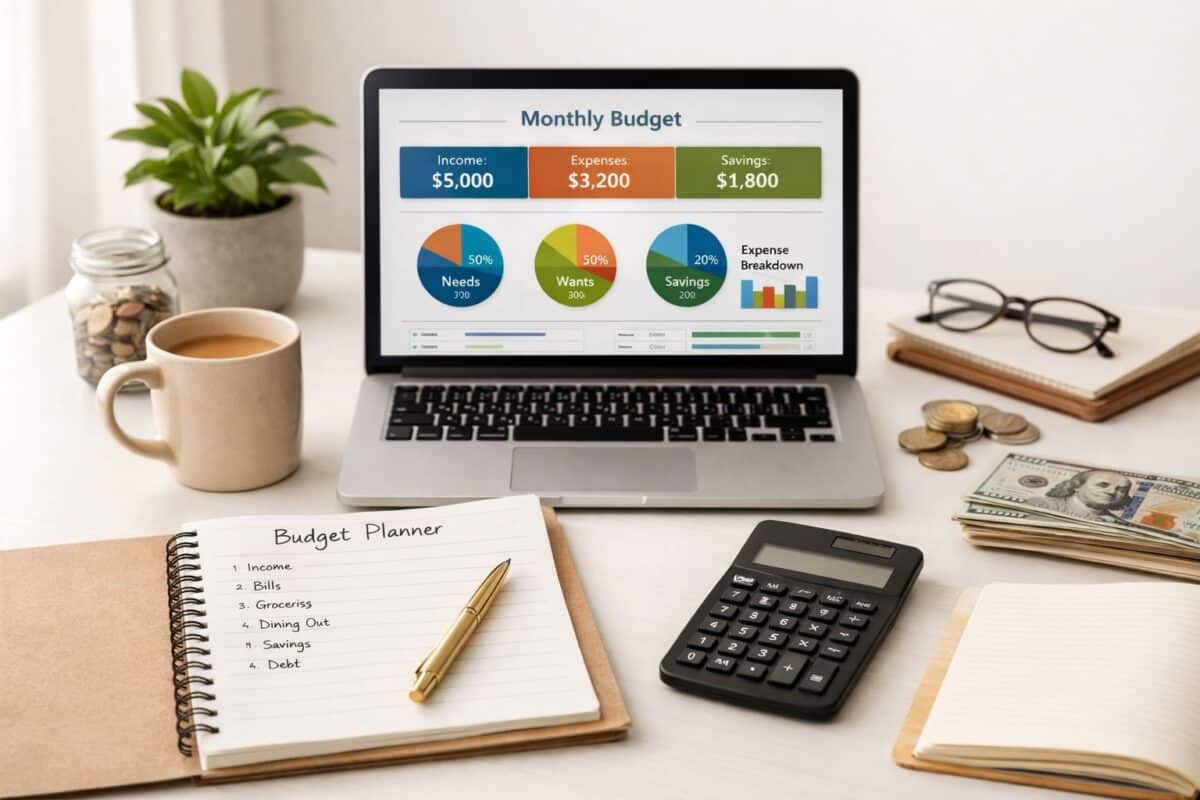
Many people promise themselves they will “be better with money next time,” yet find themselves repeating the same spending patterns again and again. This repetition is not a personal failure. It is the result of emotional triggers acting faster than conscious decision-making. A working budget can help by giving spending clear limits before those moments happen.
This guide explains what emotional spending really is, how it quietly drains progress, why willpower alone fails, and how to break the cycle in a realistic way that supports long-term financial stability.
Get the Free Monthly Money Plan
Plan your income, expenses, savings, sinking funds and debt on one simple printable page.
What Emotional Spending Really Is
Impulse spending occurs when money is used to manage feelings instead of meeting planned needs. The purchase itself is rarely the core problem. The pattern behind it is.
Emotional spending can be triggered by negative emotions like stress, frustration, sadness, or loneliness. It can also be triggered by positive emotions such as excitement, celebration, or the desire to reward yourself after a long day.
Most impulse spending does not look reckless or dramatic. It often appears as small, frequent purchases that feel justified in the moment and barely noticeable afterward. Over time, these purchases add up and quietly undermine financial goals.
The challenge is not the occasional emotional purchase. The challenge is relying on spending as a primary coping mechanism for emotional discomfort.
Why Emotional Spending Happens
Spending driven by emotion is a neurological response, not a moral failure.
When the brain experiences stress or fatigue, it seeks fast relief. Spending activates the brain’s reward system, releasing dopamine and creating a temporary sense of control or pleasure.
This response is amplified when mental energy is depleted. After a long day of decision-making, your ability to resist impulses is reduced. This phenomenon—often referred to as decision fatigue—makes unplanned emotional purchases more likely at night or during stressful periods.
Common emotional spending triggers include:
- Work-related stress
- Feeling behind financially
- Social comparison
- Boredom or loneliness
- Reward-seeking after effort
According to behavioral research summarized by Psychology Today, money decisions are often driven by emotion first and logic second.
The Emotional Spending Cycle
Most people experience this financial behavior as a predictable loop:
- An emotional trigger appears
- Spending provides short-term relief
- Temporary satisfaction fades
- Guilt or regret sets in
- A promise is made to “do better next time”
Without changing the response to the initial trigger, the cycle repeats—often with increasing intensity.
This is why this financial behavior cannot be solved through restriction alone. Restriction addresses behavior without addressing the underlying emotional driver.
Why Willpower Isn’t Enough
Willpower is a finite resource. It weakens under stress, fatigue, hunger, and emotional overload.
Relying on willpower alone assumes you will always be calm, rested, and rational—conditions that rarely exist consistently in real life.
Systems and habits outperform willpower because they reduce the number of decisions required during vulnerable moments.
This idea fits into a broader framework for building a strong money mindset that supports long-term wealth , where beliefs, systems, and behavior work together over time.
This is why strengthening daily money mindset habits is so effective. Habits create structure that supports better decisions even when emotions run high.
For a habit-based approach to strengthening your relationship with money, see: Daily Money Mindset Habits That Quietly Build Long-Term Wealth.
How to Break the Emotional Spending Cycle Without Feeling Deprived
Breaking this financial behavior does not require extreme budgeting or eliminating enjoyment. In fact, deprivation often intensifies emotional spending.
Step 1: Identify Emotional Triggers
Pay attention to patterns. Notice when this habit occurs and what feelings precede it.
Step 2: Create a Pause
Introduce a short delay—ten minutes, one hour, or a full day—before non-essential purchases.
Step 3: Plan Enjoyment
Allocate guilt-free discretionary money so enjoyment is intentional rather than reactive.
Step 4: Reduce Environmental Triggers
Unsubscribe from promotional emails, limit social media comparison, and remove saved payment methods.
Step 5: Build Replacement Habits
Replace spending with alternative relief methods such as walking, journaling, or stepping away from screens.
Many of the same emotional patterns that affect spending also show up when people hesitate to invest. If fear or uncertainty has kept you on the sidelines, this connects directly to how to build an investing mindset based on confidence instead of anxiety.
Interactive & Printable Tools to Break Emotional Spending
The tools below are designed to be used in real life — not just read once. You can interact with them on screen or print this section and use it like a worksheet.
Tool 1: Emotional Spending Trigger Map
Purpose: This tool helps you identify why emotional spending happens for you. Most people try to fix spending without understanding the trigger, which is why the cycle repeats.
How to use: Check every trigger that applies most of the time. Don’t overthink it — patterns matter more than precision.
Interpretation:
- 1–2 checked: Emotional spending is situational. Focus on awareness.
- 3–4 checked: Patterns are forming. Start interrupting the cycle.
- 5–6 checked: Emotional spending is acting as a coping mechanism. Replacement habits are essential.
Printable tip: Circle the top two triggers and focus only on those this month.
Tool 2: The 10-Minute Pause Script
Purpose: Emotional spending thrives on speed. This tool slows the moment just enough for logic to re-enter the decision.
How to use: Read this script out loud or silently before any unplanned purchase.
- “What am I feeling right now?”
- “Will this still matter tomorrow?”
- “What problem am I actually trying to solve?”
- “If I wait 10 minutes, what changes?”
Why this works: Naming the emotion reduces its intensity. Even a short pause can break the automatic response.
Printable tip: Keep this script near your phone or wallet.
Tool 3: Old Thought → New Action Converter
Purpose: Emotional spending is often driven by unexamined thoughts. This tool converts reactive thinking into intentional action.
How to use: When you notice a familiar money thought, match it to a new action below — or write your own.
| Old Thought | Intentional Replacement Action |
|---|---|
| “I’m behind.” | Track one monthly metric and aim for gradual improvement. |
| “I deserve this.” | Use planned fun money instead of impulse spending. |
| “I’ll fix this later.” | Automate one small financial action today. |
| “I’m bad with money.” | Identify one system that would make things easier. |
Printable tip: Add one personal thought-action pair to the table.
Tool 4: Weekly Emotional Spending Review
Purpose: This tool replaces guilt with learning. It helps you review emotional spending without judgment.
How to use: Once per week, answer these questions briefly. One sentence is enough.
- What emotions showed up most this week?
- When did I feel the strongest urge to spend?
- What did I do instead (or what happened)?
- What worked better than expected?
- What is one small change I’ll try next week?
Important: The goal is awareness, not perfection. Progress comes from noticing patterns.
Printable tip: Keep weekly reviews short to stay consistent.
Want to print these tools?
Use your browser’s Print option and select “Hide headers and footers” for a clean worksheet-style layout.
Frequently Asked Questions
Is emotional spending always bad?
No. Emotional spending becomes a problem only when it replaces intentional planning and awareness.
Does emotional spending mean I’m bad with money?
Not at all. Emotional spending is human. Awareness and systems are far more effective than guilt.
How long does it take to change emotional spending habits?
Most people notice reduced urges within weeks once triggers and pauses are identified.