12 Budgeting Mistakes That Keep You Broke (and How to Fix Every One)
Find the budgeting mistake that is actually costing you money, understand why it keeps happening, and fix it with one practical change you can keep using.

Most budgets do not fail because someone forgot what a budget is. They fail because the system underneath the budget is too hard to maintain, built on unrealistic numbers, or missing a way to catch problems before the month gets away from you.
This guide breaks down 12 common budgeting mistakes, why each one causes trouble, and the simplest fix. A few sections also include an EDG tool where it naturally solves the exact problem being discussed, but most of these mistakes can be improved with a better habit or a simpler system.
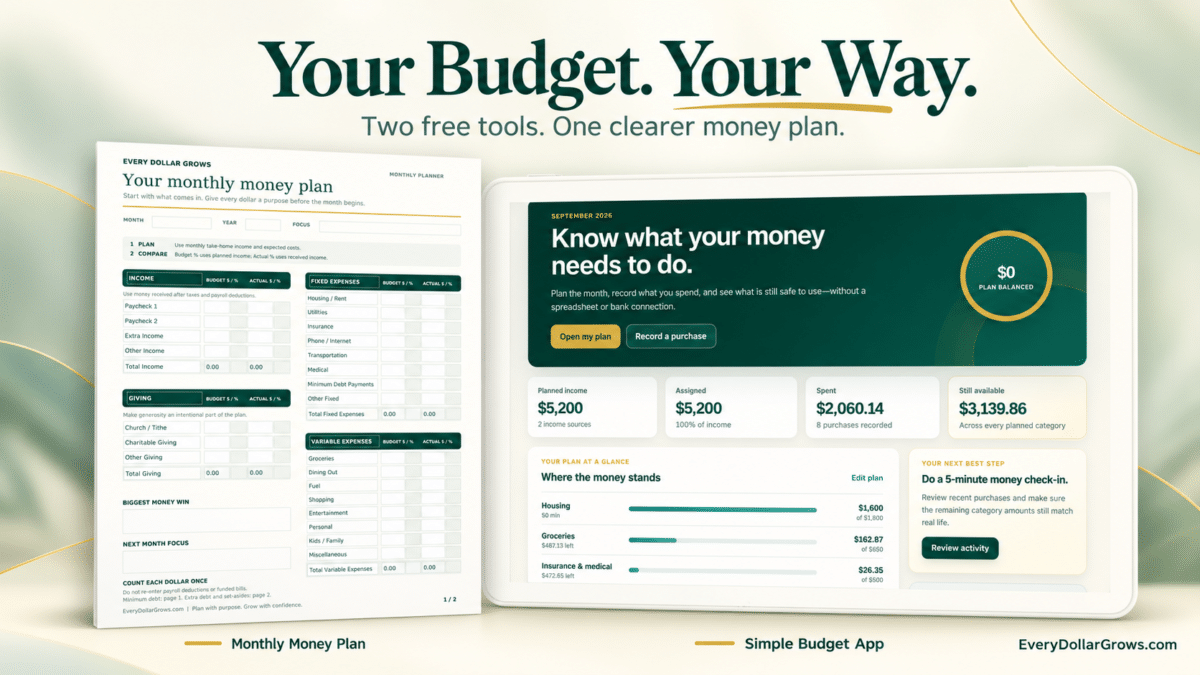
Get the Free Monthly Money Plan
Plan your income, expenses, savings, sinking funds and debt on one simple printable page.
If you need the full beginner framework first, start with How to Make a Budget for Beginners. If you know the problem but need the right solution, use the EDG Budgeting Guide or browse the Digital Budgeting Tools.
Budgeting Mistake #1: Guessing Instead of Tracking
This is the #1 budgeting mistake — and it quietly wrecks even the most beautiful spreadsheet.
If you’re “eyeballing” what you spend on groceries, gas, Amazon, or eating out, your budget is built on guesses instead of reality. And when the numbers in your head don’t match the numbers in your bank account, your budget will always feel like it’s failing.
Why This Keeps You Broke
- You underestimate how much small purchases add up.
- Your categories are off by hundreds of dollars without you realizing it.
- You feel like you’re “trying to budget,” but nothing actually changes.
How to Fix It
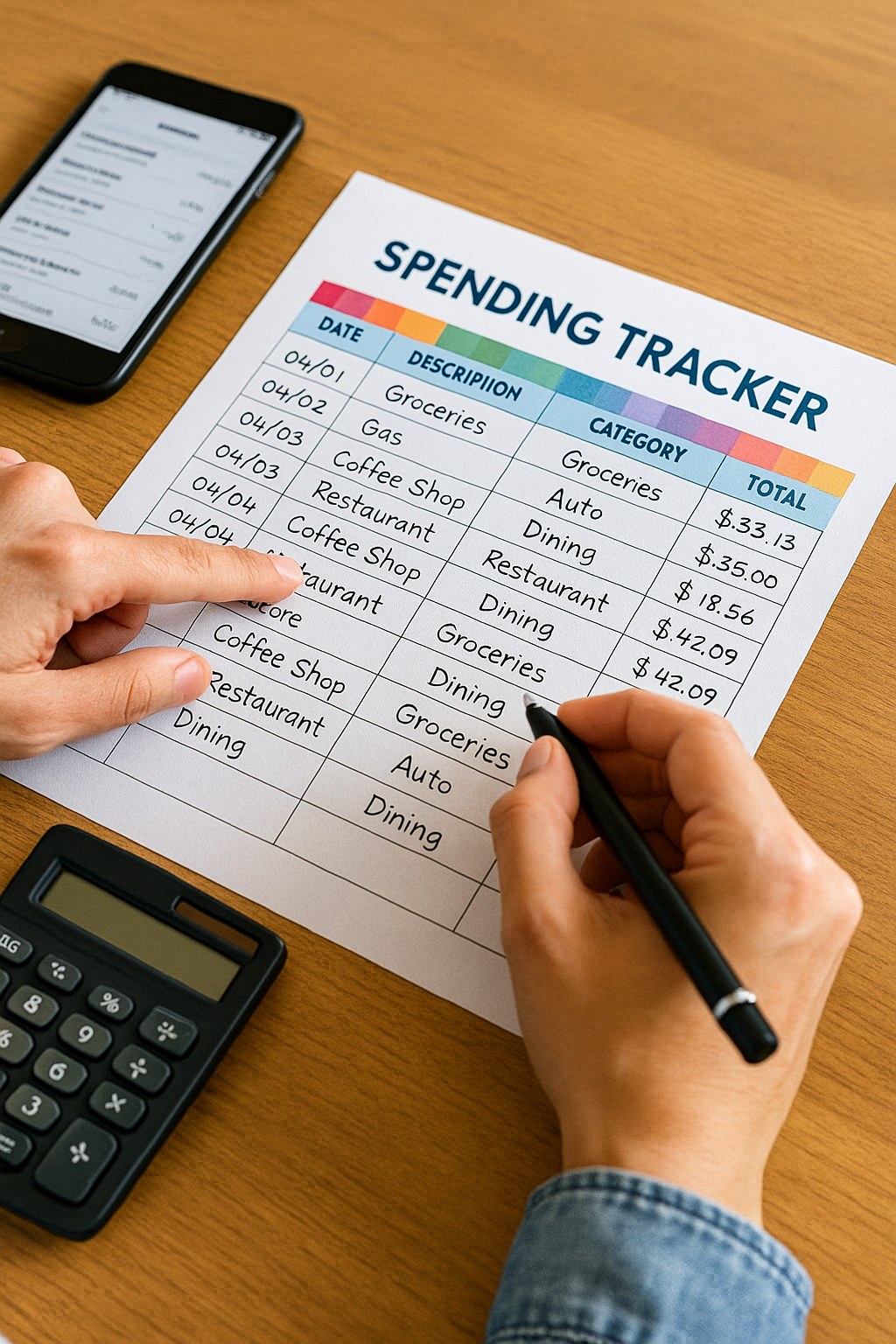
Track your spending for the next 30 days — not forever, just long enough to see your real habits.
- Use your banking app history.
- Export transactions into a simple spreadsheet.
- Or grab a printable from How to Make a Budget You’ll Actually Stick To.
If you already have a budget but still cannot tell where the money is going, the Budget Review System helps you review one month of real spending, identify the biggest pressure point, and choose one clear next action.
For more help tracking expenses, tools from the Consumer Financial Protection Bureau and NerdWallet can walk you through building a realistic spending picture.
Once you know your actual averages, your budget stops feeling like a guess and starts feeling like a plan.
Budgeting Mistake #2: Forgetting Irregular Expenses
It’s easy to budget for rent, groceries, and utilities. But what about:
- car repairs and oil changes
- back-to-school costs
- birthdays and holidays
- annual memberships and Amazon Prime
- pet vet visits and medications
These expenses aren’t truly “emergencies” — but if you don’t budget for them, they feel like one every time they show up. This is one of the biggest budgeting mistakes most people make.
Why This Keeps You Broke
- Your month gets derailed by every “unexpected” bill.
- You swipe a credit card to cover things you could have prepared for.
- You start believing “budgets don’t work for my life.”
How to Fix It
Create simple sinking funds: mini savings buckets for predictable-but-irregular costs.
- List 5–10 non-monthly expenses you know are coming.
- Divide the yearly cost by 12.
- Set that amount aside each month in a separate savings or labeled categories.
When the bill arrives, the money is already waiting. For a deeper walkthrough, see the sinking fund section in How to Make a Budget You’ll Actually Stick To.
Budgeting Mistake #3: Not Paying Yourself First
If you save “whatever is left” at the end of the month… there will almost never be anything left.
This mindset keeps millions of people living paycheck to paycheck — even when their income goes up.
Why This Keeps You Broke
- Savings becomes optional instead of automatic.
- Every extra dollar gets spent on “right now” wants.
- You never see your emergency fund, sinking funds, or investments grow.
How to Fix It
Flip the script: pay yourself first.
- Decide on a savings amount, even if it’s just $20 per paycheck.
- Move that money into savings immediately after payday.
- Treat it like a non-negotiable bill — because future you depends on it.
This “save first” mindset is the foundation of long-term wealth, and it’s one of the core principles in Money Mindset That Builds Wealth.
Budgeting Mistake #4: Using Too Many Budget Categories
Colorful, hyper-detailed budgets look impressive… until you try to live with them. This is one of the simple budgeting mistakes that is easily avoided.
If you have 37 micro-categories — “coffee,” “snacks,” “fast food,” “sit-down restaurants,” “delivery,” “takeout,” etc. — your budget becomes a part-time job.
Why This Keeps You Broke
- You get overwhelmed and stop tracking altogether.
- You spend more time reorganizing categories than changing habits.
- Your budget turns into something you avoid instead of use.
How to Fix It
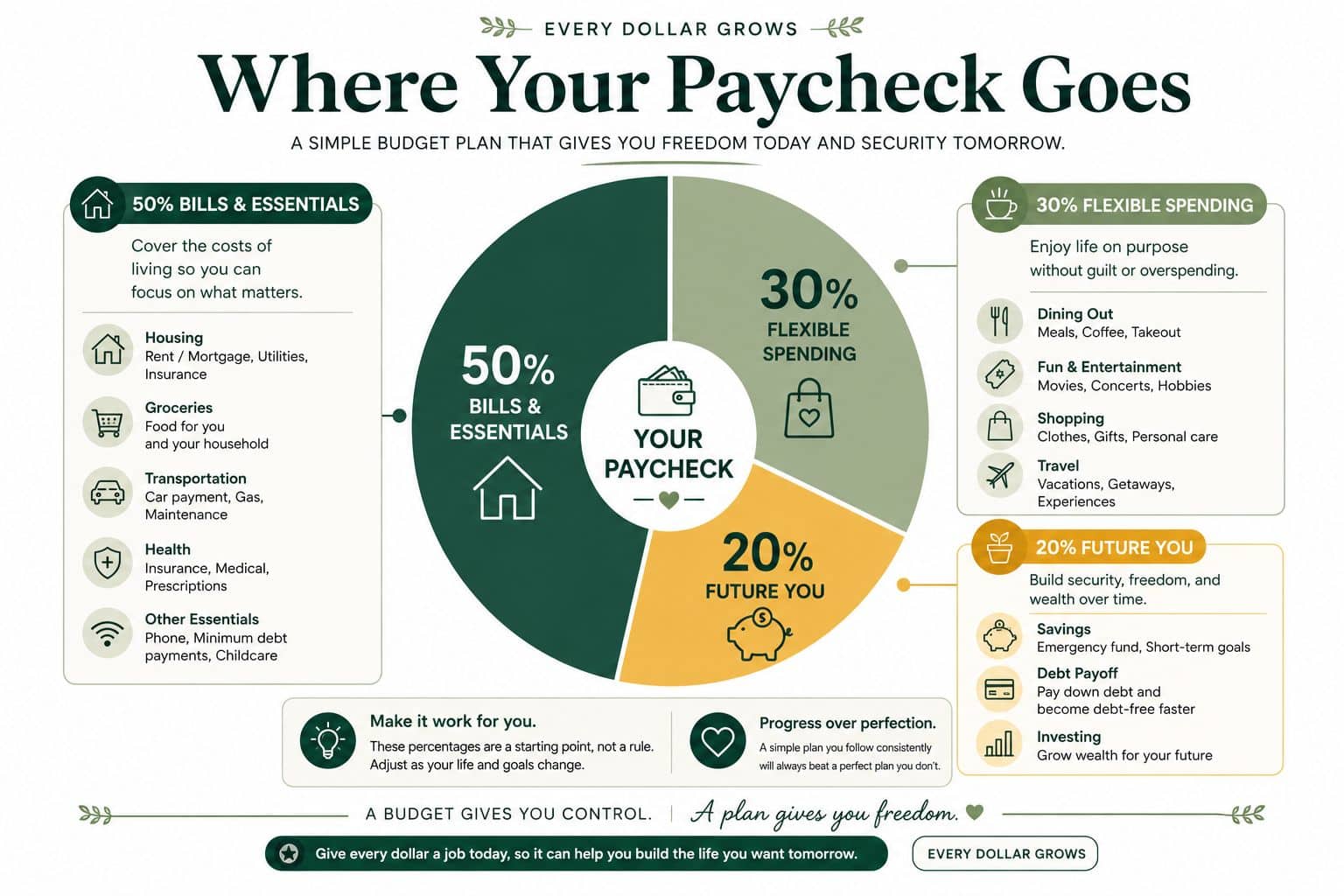
Simplify. Start with just a few big buckets:
- Essentials (housing, utilities, groceries, transportation)
- Financial Goals (savings, debt payoff, investing)
- Flexible Spending (fun money, eating out, hobbies)
- Irregular Expenses (sinking funds, annual bills)
You can always add more detail later. A simple budget you use is better than a perfect budget you abandon.
If the budget is already behind, use the catch-up-on-bills plan to prioritize essentials and rebuild breathing room.
For a step-by-step example, check out the 8-step plan in How to Make a Budget You’ll Actually Stick To. This is a great guide for avoiding this and other budgeting mistakes.
Budgeting Mistake #5: Never Reviewing Your Budget
Budgeting isn’t a “set it and forget it” document. Life changes — and your budget has to change with it.
Why This Keeps You Broke
- Small overspending goes unnoticed until your account is empty.
- You feel blindsided by bills you could have seen coming.
- You miss opportunities to adjust before things get tight.
How to Fix It
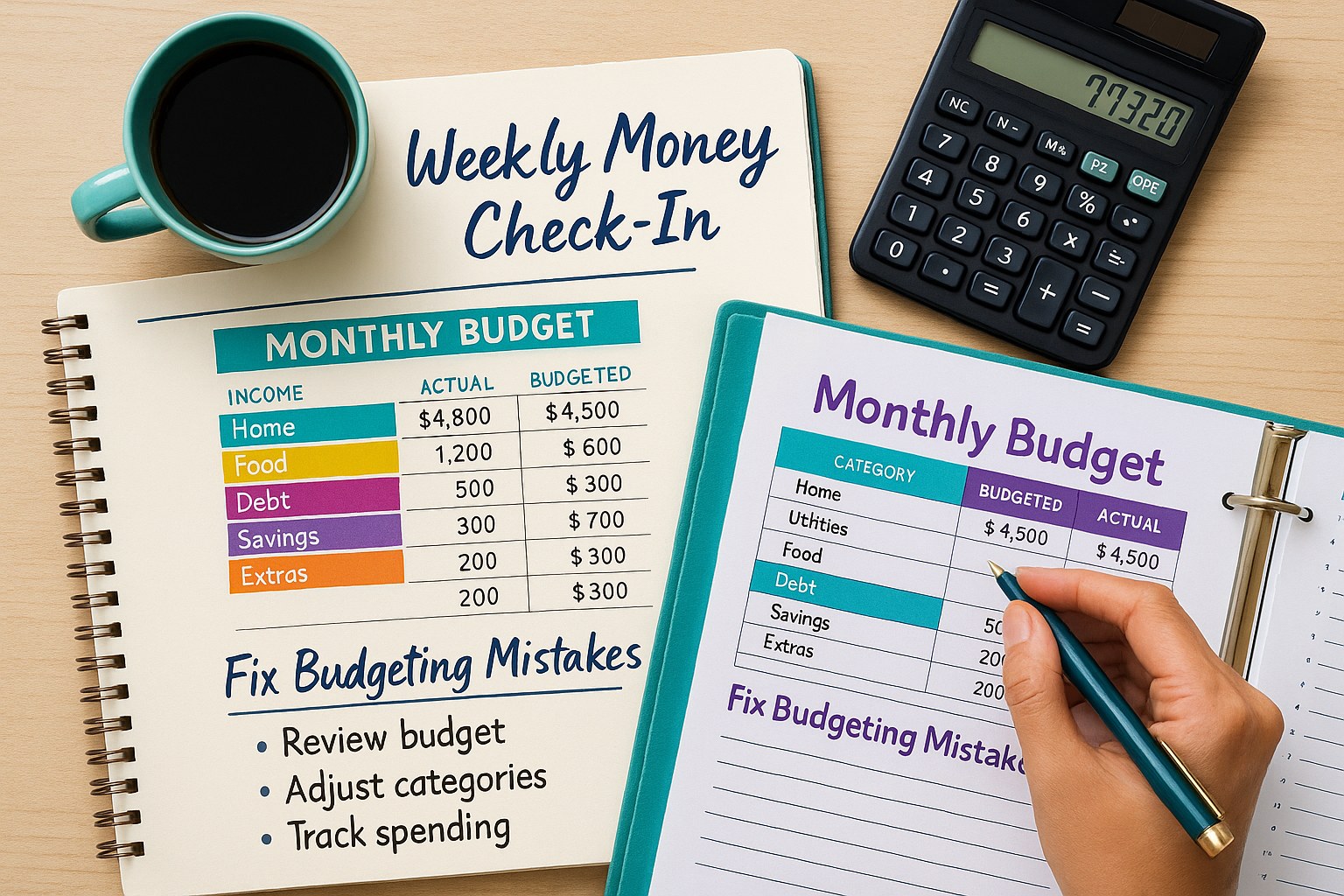
Schedule a quick weekly money check-in — 10–15 minutes is plenty.
- Look at what you spent in each category.
- Move money around if one category is tight and another has extra.
- Glance ahead at the next 1–2 weeks for upcoming bills or events.
This simple habit turns your budget from a static document into a living tool you actually interact with.
Your Budget Exists. But Do You Know What Is Actually Wrong?
The Budget Review System is built specifically for this mistake. Instead of rebuilding your entire budget, review one month of actual spending, find the biggest pressure point, and decide what deserves attention next.
- ✔ Review one month of real spending
- ✔ Find the category creating the most pressure
- ✔ Separate a one-off bad month from a recurring problem
- ✔ Choose one practical change instead of twelve
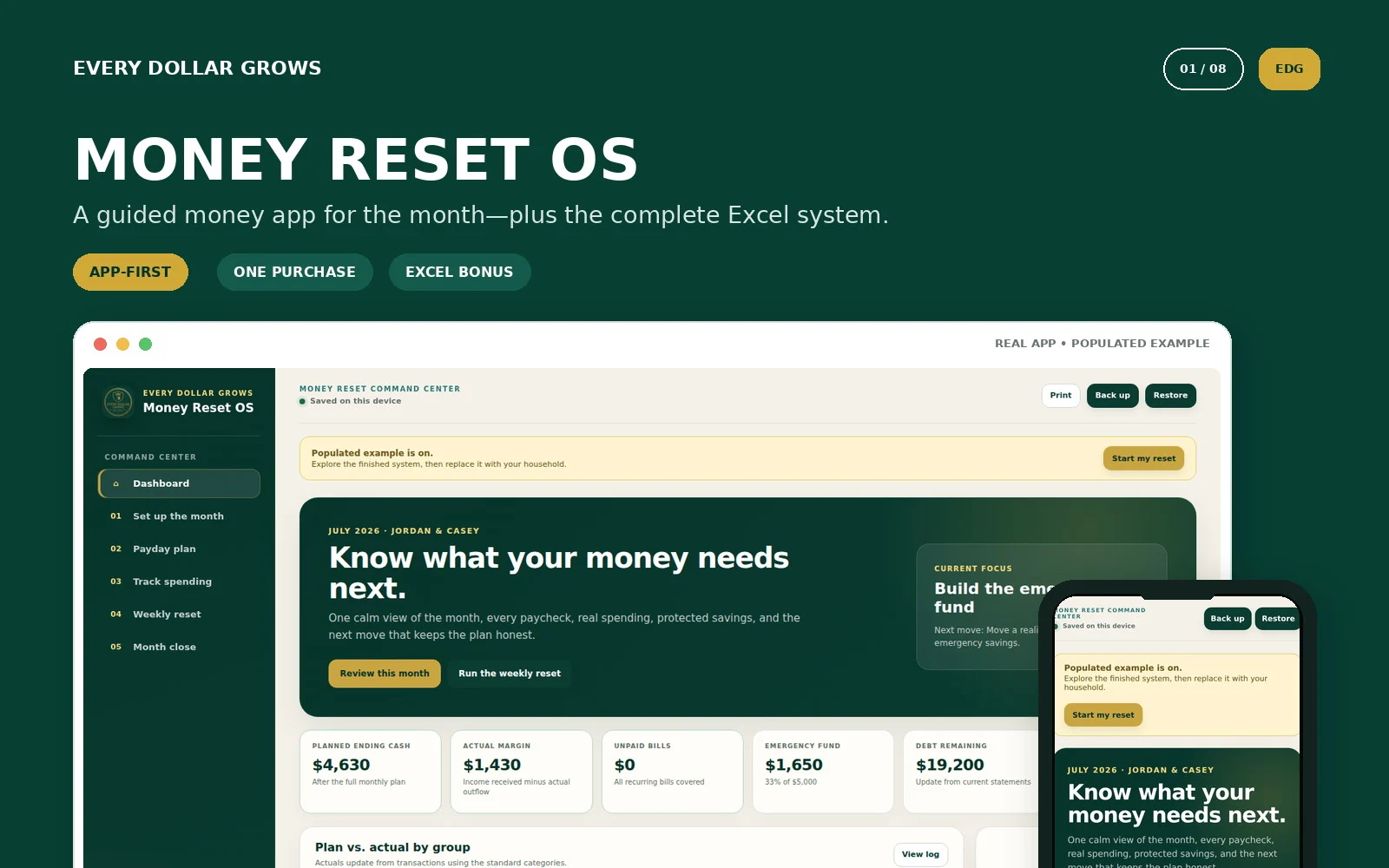
If you want an ongoing system after the review, Money Reset OS can carry the plan forward into regular paycheck, bill, savings, and debt check-ins.
Budgeting Mistake #6: Budgeting Based on Your Best Month
When you build a budget around your “ideal month” instead of your average month, you set yourself up to fail.
Maybe last month you worked overtime, skipped eating out, and your car didn’t need anything. That’s great — but it’s not typical. Avoid this and other budgeting mistakes by being realistic.
Why This Keeps You Broke
- You assume every month will go as smoothly as your best one.
- You forget about months with extra costs (back-to-school, holidays, travel).
- You feel discouraged when reality doesn’t match the plan.
How to Fix It
Base variable categories on several months of real spending, not one “perfect” month. If your income changes from paycheck to paycheck, build the plan around the amount you can reasonably count on and decide in advance what extra income will do when it arrives.
If fluctuating income is what makes monthly budgeting difficult, the Paycheck Budget guide explains how to plan around the money that actually arrives instead of forcing every month into the same template.
- Look back at your bank statements for patterns.
- Note your high and low months for irregular categories.
- Budget using realistic middle-ground numbers.
This is also where an emergency fund becomes your safety net. If you don’t have one yet, start with How to Build a 1000 Dollar Emergency Fund (Step-by-Step Guide). It is impossible to avoid budgeting mistakes without a means to mitigate small emergencies.
Budgeting Mistake #7: Not Having a Buffer Category
No matter how carefully you plan, something always pops up that doesn’t fit neatly into your categories: a last-minute school event, a random parking fee, or that one time you forgot your lunch.
Why This Keeps You Broke
- You constantly “borrow” from your savings to cover tiny surprises.
- Your categories are always slightly off, and you feel like you failed.
- You’re tempted to give up because your budget never matches perfectly.
How to Fix It
Add a small “Miscellaneous” or “Buffer” category to your budget. (Note: don’t abuse a miscellaneous account as a “catch all” account. This just adds to budgeting mistakes.)
- Start with $25–$100 per month, depending on your income.
- Use it only for small, truly random expenses.
- If you don’t use it one month, roll it into savings or debt payoff.
This small buffer makes the plan more forgiving because every tiny surprise no longer forces you to raid another category.
Budgeting Mistake #8: Ignoring Small Daily Purchases
It’s rarely the one big purchase that wrecks your budget — it’s all the tiny ones you don’t think about:
- the $6 coffee
- the $3 app subscription
- the $12 fast-food run
- the $18 “just a few things” Target trip
Why This Keeps You Broke
- You underestimate how much “only a few bucks” really is.
- Your flexible spending category quietly balloons.
- You feel like you’re cutting back… but your account doesn’t show it.
How to Fix It
Try a 7-day or 14-day experiment where you:
- Write down every purchase you make — no matter how small.
- Highlight anything that didn’t truly make your life better.
- Cut or reduce just 1–2 of those habits next month.
If you want ideas for where to cut without feeling miserable, you’ll love 12 Proven Ways to Save Money Without Feeling Deprived.
When the Small Purchases Are Groceries
Use the category balance — not the checking balance.
Grocery trips are especially easy to underestimate because one extra item does not feel expensive in the moment. Grocery Envelope™ keeps the remaining grocery balance visible, records purchases, and helps you judge the next trip against the category itself.
See Grocery Envelope™Budgeting Mistake #9: Overestimating Your Willpower
We love to believe future us will be more disciplined: “Next month I’ll stop eating out,” “Next month I’ll finally stick to this plan.” Reality is we all make budgeting mistakes! We just need to limit them.
But willpower is unreliable — especially at the end of a long, stressful day.
Why This Keeps You Broke
- You rely on motivation instead of systems.
- You feel guilty when you “fail,” which makes you want to avoid your budget.
- You stay stuck in an all-or-nothing cycle.
How to Fix It
Design your budget so it requires less willpower, not more:
- Automate savings and bill payments (see budgeting mistake #10).
- Keep cash or a prepaid card for discretionary spending.
- Remove temptation by unsubscribing from marketing emails and one-click shopping.
Systems reduce the number of decisions you have to make when you are tired, rushed, or tempted to ignore the plan.
Budgeting Mistake #10: Not Automating Your Money
If every bill, transfer, and savings deposit depends on you remembering to log in and do it… something will get missed.
Why This Keeps You Broke
- Late fees stack up when due dates slip your mind.
- You forget to move money to savings or debt payoff.
- It’s too easy to talk yourself out of “just this month.”
How to Fix It
Automation is your best friend. Set up:
- Automatic bill pay for fixed expenses (rent/mortgage, utilities, phone).
- Automatic transfers to savings right after payday.
- Automatic contributions to your 401(k) or IRA.
The Consumer Financial Protection Bureau also offers guidance on setting up safe automatic payments and avoiding overdrafts.
When you’re ready to go deeper into investing and automated wealth-building, check out Unlock Your Wealth Potential with Smart Investing and Index Funds vs Stocks for Beginners.
Budgeting Mistake #11: Treating Wants Like Needs
There’s nothing wrong with enjoying your money — but problems start when wants quietly masquerade as needs:
- “I need to upgrade my phone.”
- “We have to go on this trip.”
- “My kids need brand-name clothes.”
Why This Keeps You Broke
- You justify overspending in categories that should be flexible.
- You have no room left to save for emergencies or the future.
- You feel constantly behind, even with a decent income.
How to Fix It
Draw a clear line between needs and wants in your budget:
- Needs: housing, utilities, groceries, transportation, basic health care.
- Wants: dining out, entertainment, subscriptions, upgrades, impulse buys.
Then, give yourself a realistic but firm amount for “fun money.” You’re allowed to enjoy your life — just not at the cost of constant money stress.
For more perspective shifts like this, read 7 Personal Finance Lessons I Wish I Learned Sooner.
Budgeting Mistake #12: Budgeting Without a Clear Goal
A budget with no purpose feels restrictive. A budget with a goal feels powerful.
If your only reason for budgeting is “because I should,” you’ll eventually burn out. But when your budget is clearly connected to something you deeply care about, every “no” you say today turns into a bigger “yes” later.
Why This Keeps You Broke
- You don’t know what you’re working toward, so it’s hard to stay motivated.
- Every sacrifice feels pointless.
- It’s easy to abandon the plan after one bad week.
How to Fix It
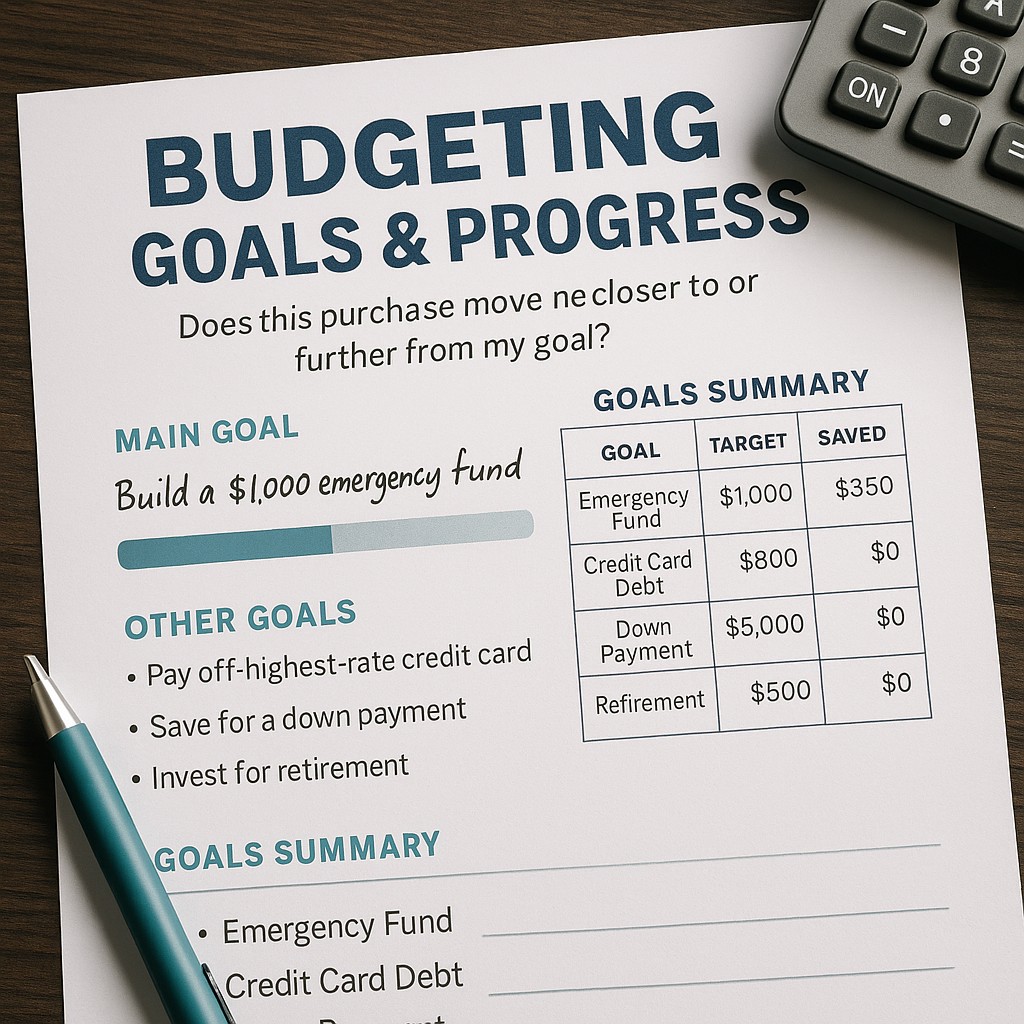
Choose 1–3 specific goals your budget is funding:
- Building a $1,000 emergency fund
- Paying off your highest-interest credit card
- Saving for a down payment or next car
- Investing consistently for retirement
Write your main goal at the top of your budget or on a sticky note by your desk. When you’re tempted to overspend, ask: “Does this purchase move me closer to or further from my goal?”
If your first goal is simply “save more,” the Save $500 Starter Kit gives that goal a concrete finish line and a step-by-step path to reach it.
Whatever the goal is, it becomes easier to protect when you can see exactly how much has been funded and what is still missing.
What to Do Next (So Your Budget Finally Works)
You do not have to fix all 12 budgeting mistakes at once. Pick one or two that sound most like your real life and start there.
- Track your real spending before changing your categories.
- Add sinking funds for predictable non-monthly expenses.
- Review the budget weekly so small problems stay small.
- Build a small buffer and one clear savings goal.
If you need a full walkthrough, go to How to Make a Budget for Beginners. If you need help choosing the right next guide or tool, use the Budgeting Guide.
And if one of the specific problems above matches an EDG tool, use it there. The goal is not to add more complexity to your money — it is to remove the friction that keeps the same mistake happening.
Budgeting isn’t about perfection — it’s about progress. When you remove these common budgeting mistakes and add a few simple systems, you stop feeling like money is constantly happening to you and start feeling like you’re in control.
Every small change you make today is one less money worry tomorrow. And that’s exactly how every dollar grows.