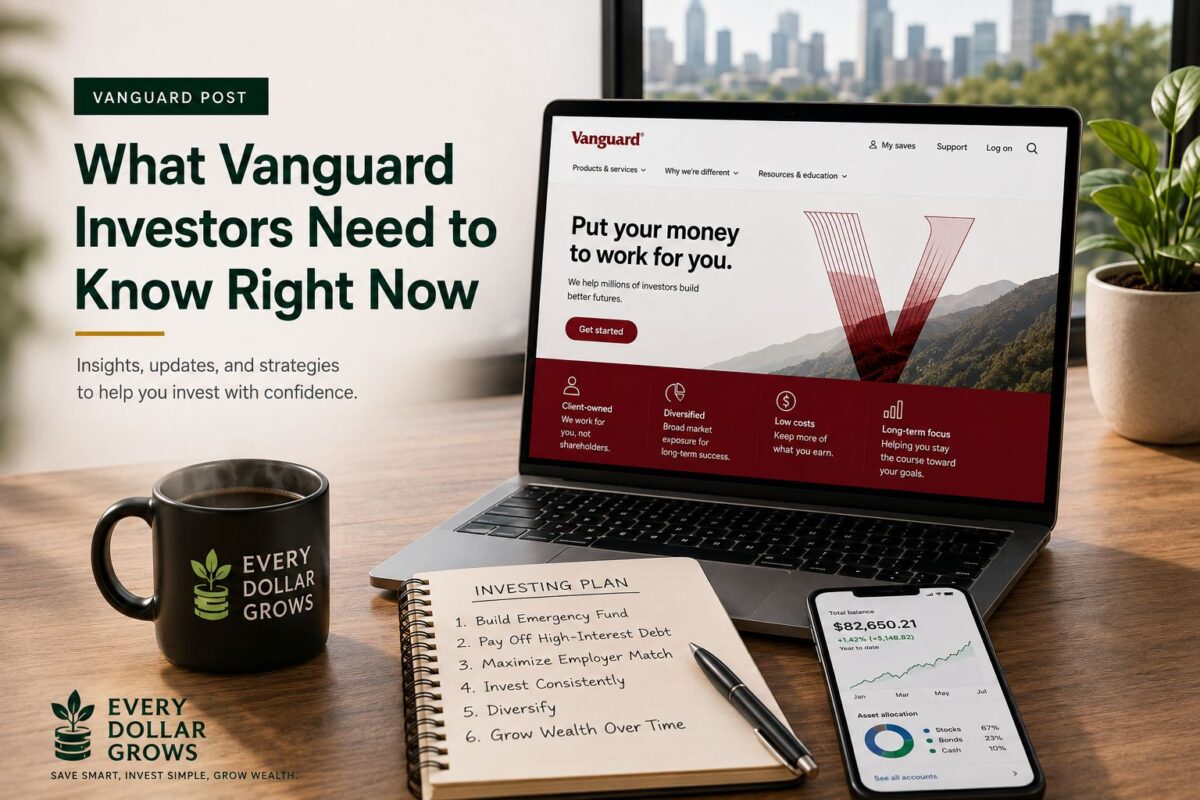
Index Funds vs Stocks: What Beginners Should Actually Invest In
Quick answer: For most beginners, index funds are the smarter starting point because they offer instant diversification, low costs, and a simple long-term strategy. Individual stocks can outperform, but they also carry much higher risk and require more research, patience, and discipline.
For readers researching index funds vs stocks for beginners, the biggest difference usually comes down to diversification, simplicity, and how much risk you want to take on personally.
If you are trying to decide between index funds vs stocks, this guide will show you the difference, who each strategy fits best, how to avoid common beginner mistakes, and how to build a simple portfolio you can actually stick with.
Before you invest, make sure your money basics are in place. If you need help organizing cash flow first, start with How to Make a Budget for Beginners and the Ultimate Guide to Budgeting and Saving Money.
In this guide:
- What index funds are
- How stocks are different
- Why most beginners do better starting with diversification
- A practical “core + satellite” portfolio strategy
- Common investing mistakes to avoid
- Tools and next steps to build your first portfolio
Table of Contents
- Quick Answer: Index Funds vs Stocks
- What Are Index Funds?
- What Are Individual Stocks?
- The Biggest Difference Between Index Funds and Stocks
- Which Is Better for Beginners?
- A Simple Example of Diversification
- A Practical Beginner Strategy: Core + Satellite
- Simple Beginner Portfolio Examples
- What To Do Before You Start Investing
- Popular Beginner-Friendly Index Fund Types
- Common Beginner Investing Mistakes
- Helpful Investing Tools
- How To Start Investing Step by Step
- FAQ
- Bottom Line
Quick Answer: Index Funds vs Stocks
If you are brand new to investing, index funds are usually the best place to start. They spread your money across many companies at once, which reduces single-company risk and makes investing easier to manage long term.
| Question | Best Answer |
|---|---|
| Best for most beginners | Index funds |
| Higher upside potential | Individual stocks |
| Lower single-company risk | Index funds |
| Requires more research | Individual stocks |
| Easier to automate and hold | Index funds |
| Strong practical compromise | Mostly index funds with a small stock allocation |
What Are Index Funds?
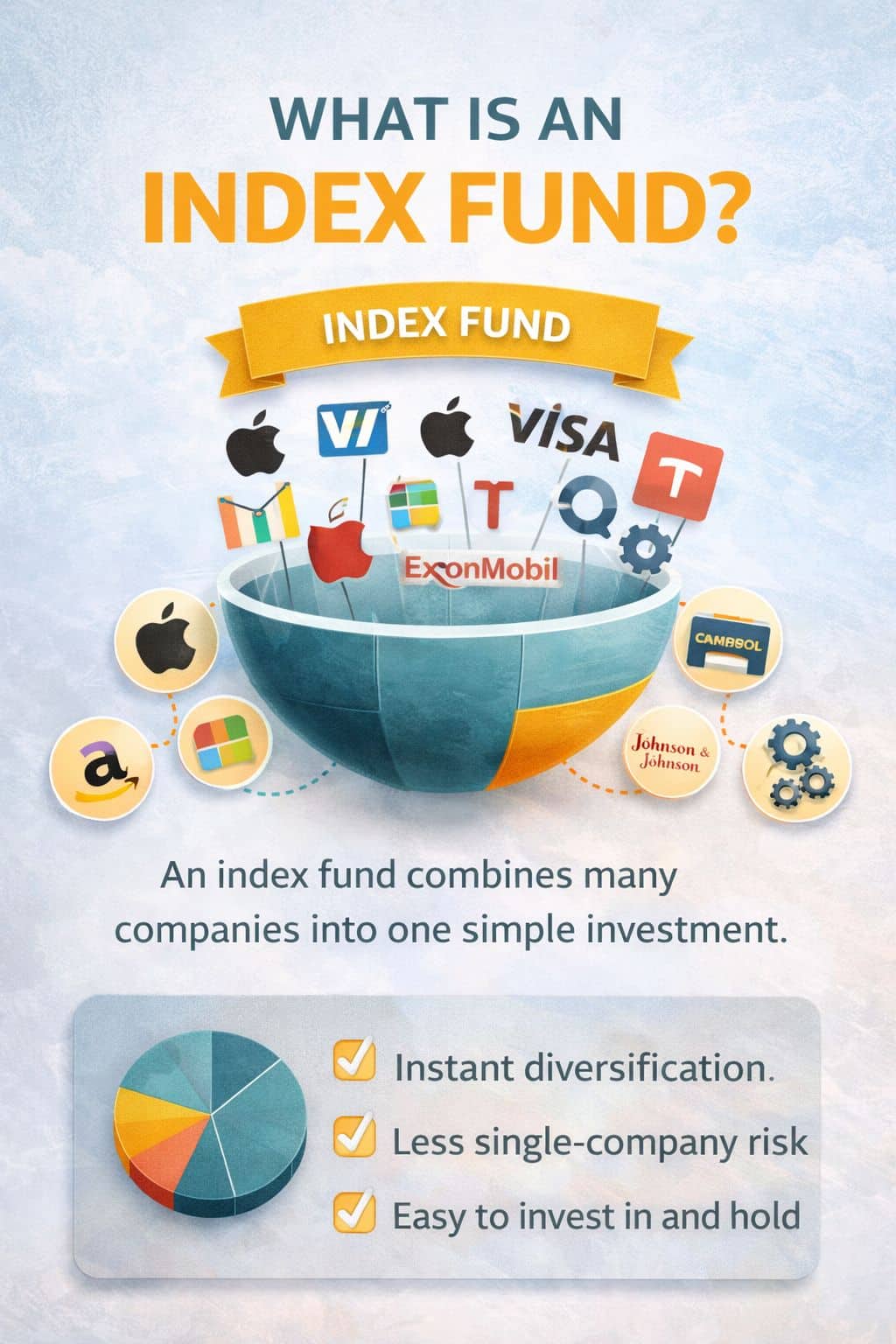
Index funds are investment funds built to track a market index instead of trying to outsmart it. That index might be the S&P 500, the total U.S. stock market, an international stock index, or a bond index.
In plain English, that means one fund can give you exposure to a large collection of companies at once. Instead of betting on one business, you own a small piece of many. That is one of the biggest reasons index funds are so popular with beginners.
Official investor education materials consistently emphasize diversification, fees, and asset allocation as major building blocks of sound investing. Mutual funds and ETFs make diversification easier, especially for newer investors. Investor.gov explains diversification here. You can also review FINRA’s asset allocation and diversification guide.
Why beginners often start with index funds
- Instant diversification: one fund can hold hundreds or thousands of investments.
- Lower maintenance: you do not need to constantly research individual companies.
- Low costs: many index funds and ETFs are designed to keep fees low.
- Simple to automate: they work well with regular monthly contributions.
- Emotion-resistant: they reduce the temptation to chase hype stocks.
If you want to go deeper on fund providers, read our guides to Vanguard Mutual Funds and ETFs, Fidelity Mutual Funds and ETFs, and How to Choose ETFs and Mutual Funds.
What Are Individual Stocks?
Buying an individual stock means buying ownership in one specific company. If you buy Apple stock, you own a tiny slice of Apple. If you buy Amazon stock, you own a tiny slice of Amazon.
This is where the appeal comes in: if that company performs exceptionally well over many years, your return can be far higher than the broad market. But the trade-off is equally real: if the business struggles, your investment can stagnate or fall hard.
Why some people prefer stocks
- They want the chance to beat the market.
- They enjoy researching businesses.
- They want direct control over which companies they own.
- They believe they can identify long-term winners.
Why stocks are harder for beginners
- One mistake matters more.
- You must follow earnings, competition, debt, management, and valuation.
- Volatility feels more personal when one company drops sharply.
- It is easier to make emotional decisions.
Individual stocks are not automatically bad. They are simply less forgiving than a diversified index fund strategy.
The Biggest Difference Between Index Funds and Stocks
The core difference is this:
Index funds spread risk.
Individual stocks concentrate risk.
That one principle explains almost everything else.
Investor.gov notes that diversification helps lower the risk of losing money through exposure to different investments, and FINRA similarly emphasizes diversification and asset allocation as key tools for managing investment risk.
| Feature | Index Funds | Individual Stocks |
|---|---|---|
| Diversification | High | Low unless you build a large portfolio |
| Research required | Low | High |
| Single-company risk | Much lower | Much higher |
| Potential to beat market | Designed to track the market | Possible, but hard |
| Ease for beginners | Very strong | Much harder |
| Emotion management | Usually easier | Usually harder |
Which Is Better for Beginners?
For most beginners, index funds are better.
That does not mean stocks are never worth owning. It means beginners usually benefit more from a strategy that is easier to understand, easier to automate, and less dependent on perfect decision-making.
Index funds are usually better for beginners because:
- They reduce the damage of a single bad investment decision.
- They keep you invested in the overall market.
- They make long-term investing feel simpler and more sustainable.
- They remove much of the pressure to find “the next big winner.”
If you like researching companies, you do not need to avoid stocks entirely. You just do not need to make them the foundation of your portfolio on day one.
Beginner rule of thumb:
If you do not yet know exactly how to evaluate a company’s earnings, debt, valuation, and competitive advantage, start with index funds.
A Simple Example of Diversification
One reason stock picking is tricky is that winners get all the attention. Everyone talks about the few companies that soared. Fewer people talk about the many businesses that lagged, declined, or disappeared.
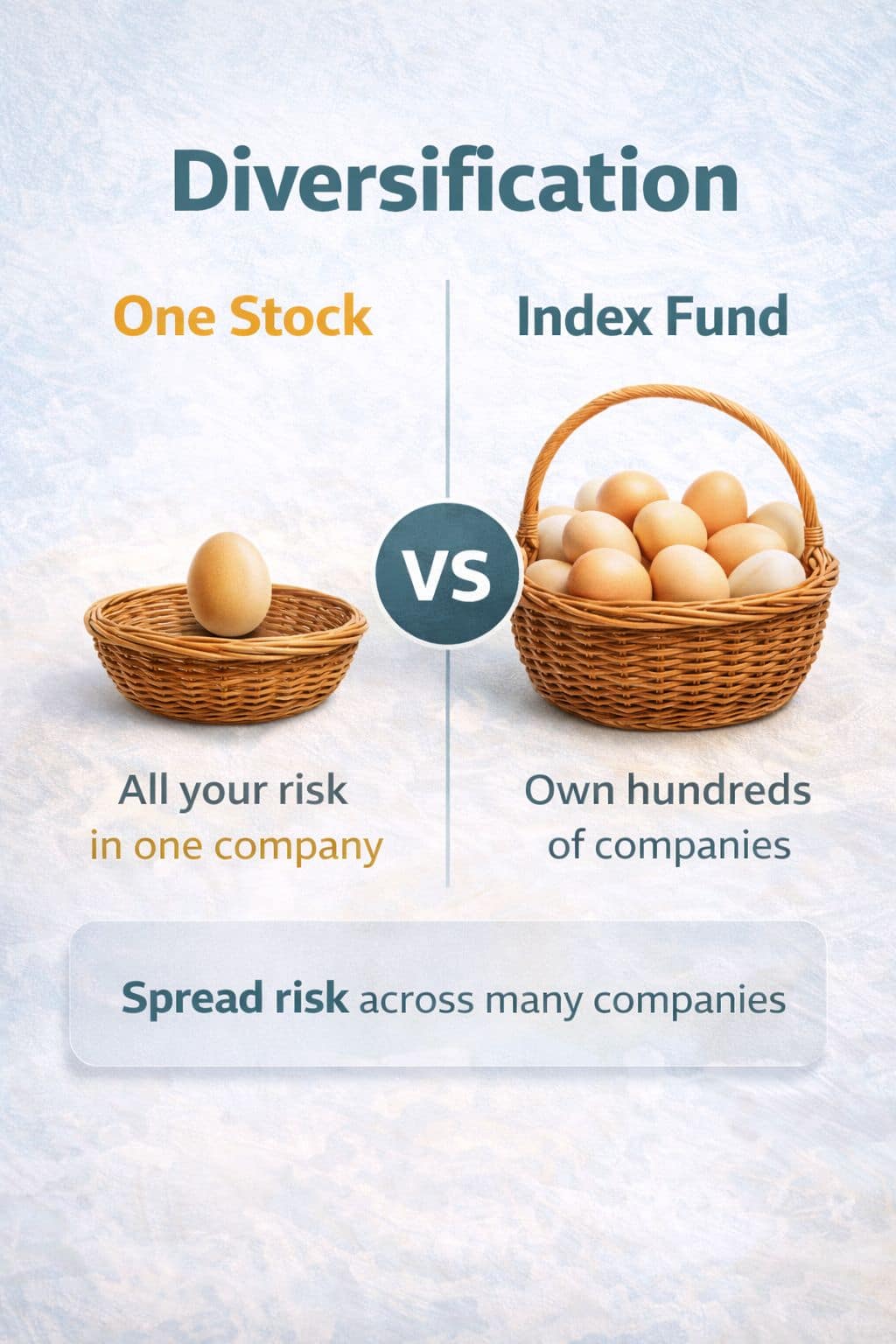
That is one reason diversification matters so much. Broad diversification is one of the main advantages of index funds compared with holding only a handful of individual stocks.
Think of it this way:
- If you buy one stock, your success depends heavily on one company.
- If you buy a broad index fund, your success depends more on the long-term performance of the broader market.
That does not eliminate risk, but it changes the type of risk you are taking. Instead of betting your financial future on a single business being exceptional, you are participating in a much wider slice of the market.
A Practical Beginner Strategy: Core + Satellite
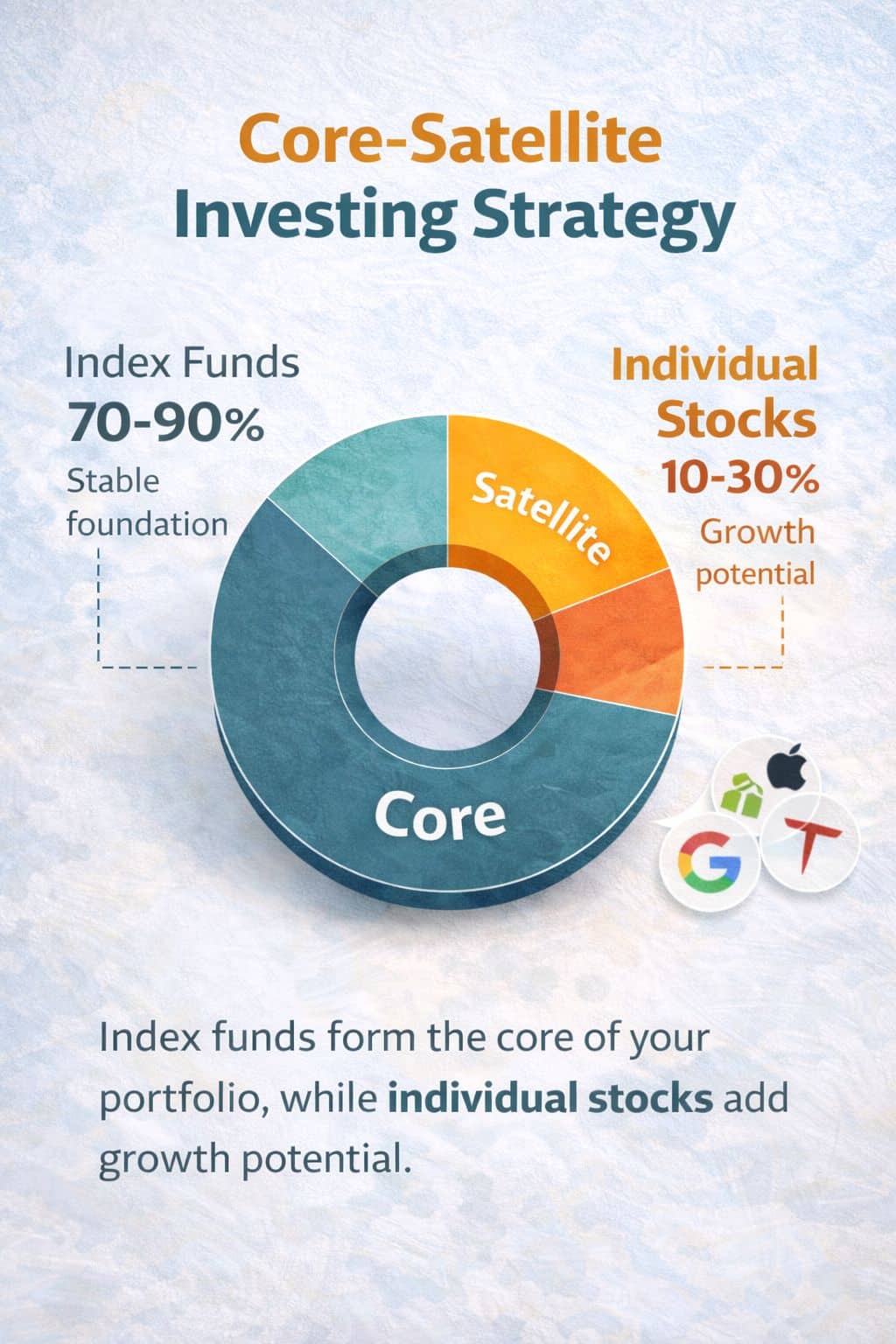
If you do not want to choose between index funds and stocks completely, you do not have to. A practical middle-ground strategy is a core + satellite portfolio.
How it works
- Core: the majority of your portfolio goes into broad index funds.
- Satellite: a smaller portion goes into individual stocks or more targeted ideas.
This keeps the foundation of your portfolio diversified while still allowing you to own a few individual companies if you enjoy it.
Example allocations
- 90/10: 90% index funds, 10% stocks
- 80/20: 80% index funds, 20% stocks
- 100/0: 100% index funds if you want maximum simplicity
For many beginners, this approach is more realistic than going all-in on stock picking.
Build Your Portfolio With Less Guesswork
If you are asking questions like Which funds should I pick?, How much should go into stocks?, or Should I use Vanguard, Fidelity, or Schwab?, the What Should I Invest In? Beginner Portfolio Builder was made for exactly that stage.
Simple Beginner Portfolio Examples
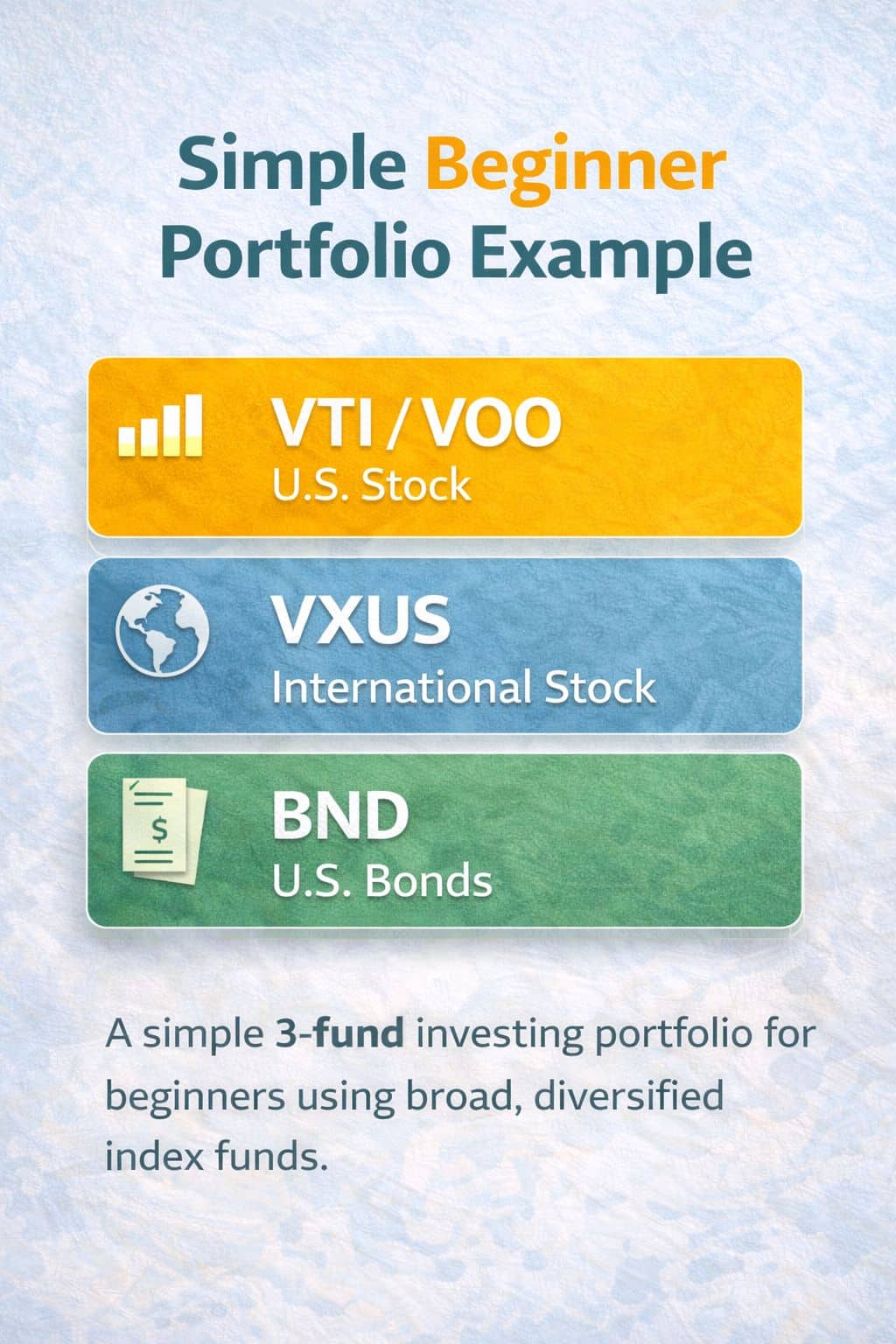
These are not personal recommendations. They are simple educational examples to help you understand how beginner portfolios are often structured.
Example 1: Maximum simplicity
- 100% broad U.S. stock market index fund
This is simple and easy to maintain, but it is still stock-heavy and can be volatile.
Example 2: Broad stock diversification
- 70% U.S. total market index fund
- 20% international stock index fund
- 10% bond fund or cash reserves depending on goals and timeline
Example 3: Core + satellite
- 80% diversified index funds
- 20% individual stocks
The right mix depends on your time horizon, risk tolerance, and goals. Vanguard and FINRA both stress that asset allocation should match those personal factors rather than a one-size-fits-all rule.
What To Do Before You Start Investing
Investing is powerful, but it works best when built on top of healthy financial habits. Before you start, make sure you have the basics in place.
- Build a basic budget. Know what comes in, what goes out, and what you can consistently invest. Use How to Make a Budget for Beginners.
- Create an emergency fund. Having cash reserves helps prevent you from selling investments during unexpected expenses. Start with How to Build a $1,000 Emergency Fund.
- Reduce money chaos. If your finances feel disorganized, review Budgeting Mistakes That Keep You Broke.
- Get your mindset right. Read Investing Mindset so you do not sabotage yourself emotionally.
Need To Strengthen Your Foundation First?
If you are not quite ready to invest yet, that is okay. A stronger money foundation makes investing easier and less stressful.
Popular Beginner-Friendly Index Fund Types
You do not need hundreds of options. Most beginners simply need to understand the types of funds available.
1. S&P 500 index funds
These track 500 large U.S. companies. They are a common starting point for investors who want broad exposure to major American businesses.
2. Total U.S. stock market funds
These include large, mid, and small U.S. companies and are often used as a core holding.
3. International index funds
These add exposure outside the United States and can broaden diversification.
4. Bond funds
Bond funds can add stability and income characteristics, especially for investors with shorter timelines or lower risk tolerance.
Vanguard’s educational materials describe index funds as a low-cost, diversified approach designed to track a benchmark, and also note that diversification can include stocks, bonds, sectors, company sizes, and geographies.
To compare specific fund families, explore:
Common Beginner Investing Mistakes
Plenty of people know they should invest. The bigger issue is how easy it is to start badly. Here are some of the most common mistakes:
Trying to pick winners too early
Many beginners want to jump straight into stock picking before they understand diversification, valuation, or risk. That often leads to chasing trends instead of building a stable plan.
Ignoring fees
Fees may look small, but over long periods they can matter. Investor.gov highlights fees as something investors should pay attention to because costs can affect portfolio outcomes over time.
Investing without an emergency fund
If one surprise expense forces you to sell your investments, your plan becomes fragile.
Checking your portfolio too often
Watching every move can lead to emotional reactions instead of disciplined investing.
Confusing excitement with strategy
A stock being exciting does not make it appropriate for your long-term portfolio.
Letting mindset sabotage consistency
Fear, greed, comparison, and impatience can ruin an otherwise good plan. That is why long-term investing is as much about behavior as knowledge.
Helpful Investing Tools
A useful article should not just explain investing. It should help you do something with the information.
That is why this topic works so well with calculators, portfolio builders, and planning tools.
- Use Digital Investing Tools to model scenarios and investment ideas.
- Use Free Budget Tracker to free up monthly investing cash flow.
- Use Free Savings Goal Planner if you need to build reserves before investing.
Build Your Portfolio With Less Guesswork
If you want the done-for-you version of this process, the Beginner Portfolio Builder helps you choose a simple portfolio structure using major broker/fund families.
How To Start Investing Step by Step
If you want a practical starting plan, keep it simple:
- Set your monthly investing amount. Start with an amount you can sustain consistently.
- Choose your account. Open a brokerage account or use a retirement account available to you.
- Choose a simple diversified fund strategy. Do not overcomplicate your first move.
- Automate contributions. Consistency beats intensity for most beginners.
- Reinvest and review periodically. You do not need to constantly tinker.
- Only add stocks if you understand why you are buying them.
If you need a broader roadmap beyond just this article, visit Start Here and browse the Investing category.
Recommended Learning Resources
One of the best ways to become a better investor is to study the ideas behind diversification, long-term thinking, and index investing.
- Index Fund Books
- Investing and Retirement Library
- Personal Finance Books Library
- Unlock Your Wealth Potential With Smart Investing
Frequently Asked Questions
Are index funds better than stocks for beginners?
For most beginners, yes. Index funds usually make more sense because they provide diversification, lower single-company risk, and a simpler long-term strategy.
Can I invest in both index funds and stocks?
Yes. Many investors use a core + satellite strategy where most of the portfolio is in index funds and a smaller portion is in individual stocks.
Do index funds make you rich slower than stocks?
They usually offer less extreme upside than picking the single best-performing stock, but they also reduce the odds of a devastating miss. For many people, a steadier strategy is easier to sustain long term.
How many stocks would I need to be diversified?
True diversification with individual stocks generally requires far more than just a few names. That is one reason many beginners use funds and ETFs instead of trying to build diversification stock by stock.
Should I start investing before I build an emergency fund?
In many cases, building at least a basic emergency fund first is wise. It helps prevent you from being forced to sell investments during financial surprises.
What is the easiest investing strategy for beginners?
One of the simplest approaches is regularly buying diversified index funds and holding them long term.
What if I like researching companies?
That is fine. You can still keep most of your money in diversified funds and use a smaller portion for individual stocks.
Bottom Line
If you are deciding between index funds vs stocks for beginners, the simplest answer is this:
Start with index funds unless you already have a strong reason not to.
Index funds give most beginners what they actually need: diversification, simplicity, and a structure they can stick with through market ups and downs. Individual stocks can still have a place, but they usually make more sense as a smaller, more intentional part of the portfolio instead of the whole strategy.
If you are ready to take the next step, use the Digital Investing Tools, visit Start Here, or build your first allocation with the Beginner Portfolio Builder.
Affiliate disclosure: Some links on EveryDollarGrows may be affiliate links, which means we may earn a commission at no extra cost to you. Read our affiliate disclosure for details.
Educational disclaimer: This article is for educational purposes only and should not be considered personalized financial advice. Always evaluate your own goals, time horizon, and risk tolerance before investing.