
How Much Car Can I Afford? Real Monthly Car Cost Calculator
If you are asking how much car can I afford, the real answer is not just the monthly loan payment. It is the full monthly vehicle cost your life can carry after insurance, gas, maintenance, registration, savings, debt, and normal living expenses. This page helps you run the numbers fast, pressure-test the payment, compare loan terms, and choose the cheapest vehicle that still fits real life.
Quick Summary
This guide is built to answer the question how much car can I afford with real monthly cost planning, not just dealership payment math. It helps you answer three practical questions: Can I afford this payment? What will the vehicle really cost each month? and Which loan term actually fits my budget best? Start with the fast check, then move to the full planner and term comparison tool for a stronger answer.
If you want a structured check-in instead of rebuilding the plan, use the budget review.
Get the Free Monthly Money Plan
Plan your income, expenses, savings, sinking funds and debt on one simple printable page.
Fast Car Affordability Check
This first tool is built for speed. Enter the basics and get a quick answer about whether the vehicle looks comfortable, manageable, tight, or high risk once the full monthly transportation cost is considered.
Quick-check assumptions
What this result means
Enter your numbers and calculate to get an explanation.
Watch-outs
- Your pressure notes and warnings will appear here.
Quick-check formula includes the estimated loan payment plus insurance, gas / charging, maintenance reserve, and registration / fee reserve.
What Your Result Means
A fast result is not the same thing as a final car decision. If you are still asking how much car can I afford, this section helps you interpret the answer in a real-life way instead of only looking at the loan payment. A payment can be technically possible and still be a weak fit once the rest of the transportation cost shows up.
Comfortable
The full monthly vehicle cost fits inside a healthier slice of take-home pay, debt is manageable, and the car is not crowding out savings or normal life.
Tight
The vehicle may technically work, but it can slow down goals, squeeze flexibility, and make every repair or insurance increase feel bigger than it should.
High Risk
The vehicle is likely too expensive for this season. That usually means the price, term, insurance burden, or debt load needs to come down before the decision becomes healthy.
For most people, a safer car decision is not about buying the most impressive vehicle they can barely fit. It is about buying the cheapest vehicle that still handles the real needs of commute, family, weather, work, and reliability.
Best next step if the car still feels too expensive
How Much Car Can I Afford Based on My Real Budget?
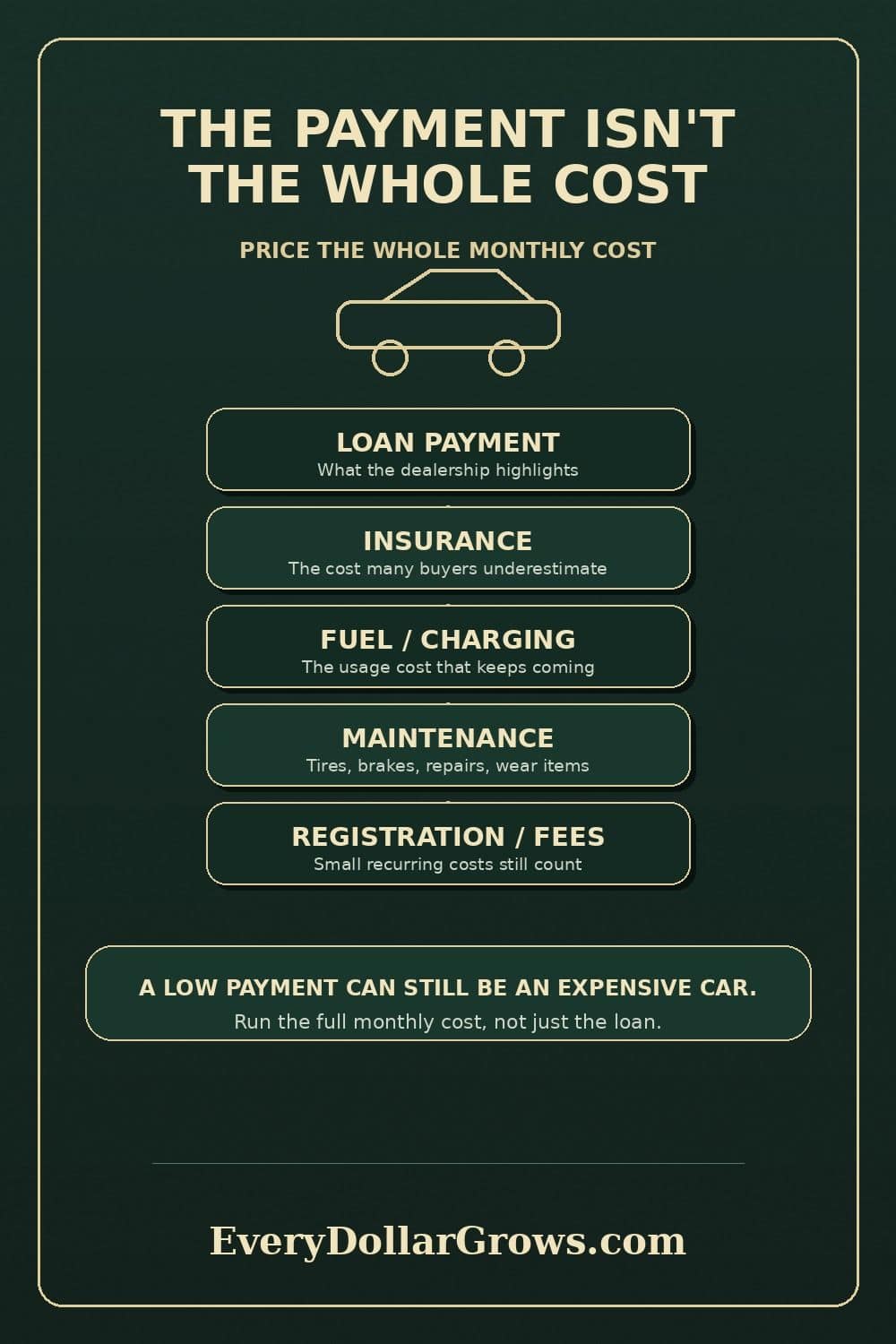
The sticker price and the monthly payment are not enough by themselves. What matters is the full monthly transportation cost: loan payment, insurance, gas or charging, maintenance, tires, registration, and the budget pressure that comes from everything happening at once.
This is where people overbuy. They focus on whether the dealership payment fits, but they do not test the full cost against the budget they already live in. That is why a vehicle can look “fine” in the finance office and feel heavy a few months later.
What raises the real monthly cost
- Long loan term
- Higher insurance bracket
- Poor fuel efficiency
- Higher repair risk
- Tire and maintenance burden
- Registration and recurring fees
What usually lowers the pressure
- Lower price point
- Shorter term when possible
- More down payment or trade-in value
- Vehicle choices that fit the actual use case
- Shopping insurance before buying
- Choosing reliability over image
Real Monthly Car Cost Planner
This is the flagship tool in the post. It is built to show the full monthly cost of the vehicle, not just the loan. It also includes browser save so you can come back to the same scenario without retyping it.
How this planner interprets pressure
This planner looks at the full vehicle cost and the margin left after transportation, debt, and your savings target. The goal is not just to see whether the payment is possible; it is to see whether the vehicle still leaves room for the rest of your life.
| Cost category | Monthly amount |
|---|---|
| Loan payment | $0 |
| Insurance | $0 |
| Gas / charging | $0 |
| Maintenance reserve | $0 |
| Registration / fee reserve | $0 |
| Total monthly vehicle cost | $0 |
Pressure readout
Run the planner to see how safe or stretched the vehicle looks.
- Your pressure notes and watch-outs will show here.
Best next move
The strongest car decisions usually come from buying the cheapest vehicle that still matches your real needs around commute, climate, family size, and work use.
Loan Term Comparison Tool
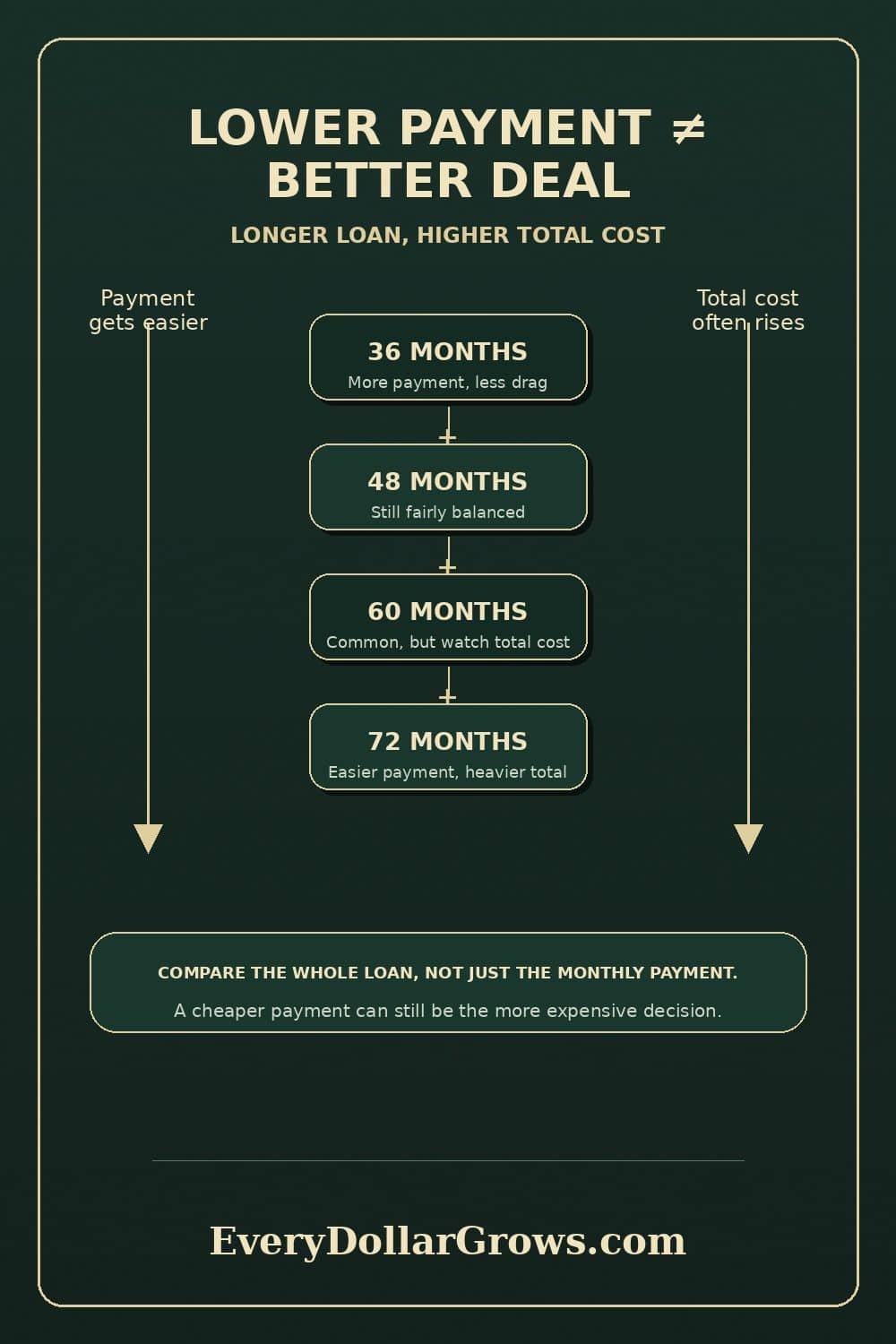
This tool is here to solve one of the biggest car-buying mistakes: choosing the lowest monthly payment without noticing how much more the loan costs over time. Lower payment does not always mean better deal.
| Loan term | Monthly payment | Total interest | Total paid |
|---|---|---|---|
| Run the comparison to see the tradeoffs between 36, 48, 60, 72, and 84 months. | |||
What to watch for
- The longer the term, the easier the payment may feel at first.
- The longer the term, the more total interest you usually pay.
- Long terms can keep you attached to a car longer than you want.
Use this comparison correctly
A lower payment is useful only if the vehicle still fits your broader budget and the total loan cost still makes sense. Use the planner above first, then use this tool to pressure-test the term.
What Type of Vehicle Do You Actually Need?
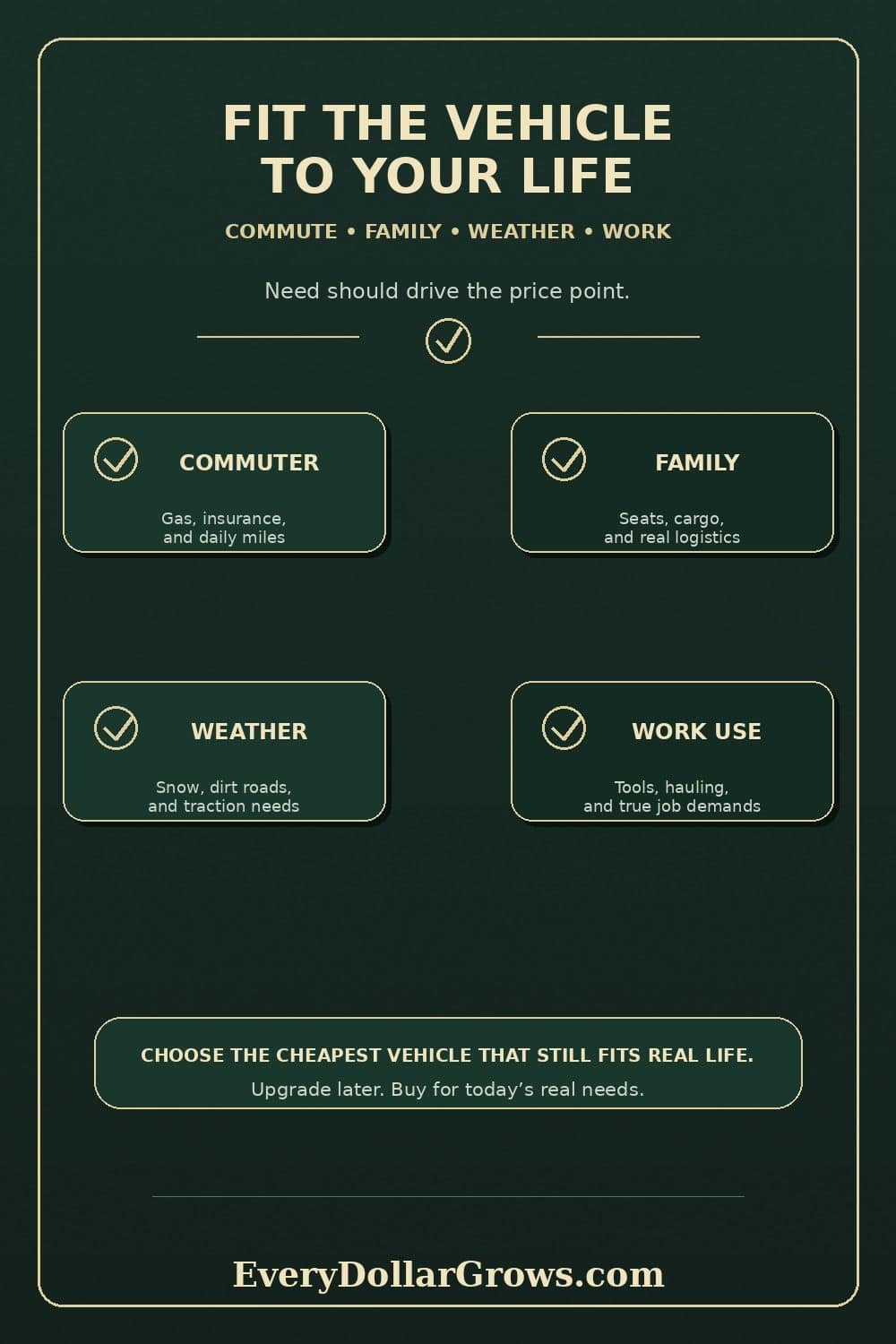
The best affordability decision is not always the cheapest vehicle on paper. It is the cheapest vehicle that still fits real life. Climate, family size, commute, work use, towing, and reliability all matter. The key is separating real needs from upgrade rationalizations.
Commuter-first
For many solo drivers and long commuters, a smaller reliable car or hatchback can be the strongest budget choice. Better gas mileage, lower insurance pressure, and lower total cost often matter more than a larger vehicle you rarely use fully.
Family-first
A larger SUV or minivan can make sense when seating, car seats, cargo, and family logistics truly demand it. The vehicle should solve a real daily problem, not just feel nicer.
Weather / terrain-first
AWD or 4×4 can be worth paying for in snowy winters, dirt-road areas, or rural routes. But if the climate and roads do not truly demand it, the added cost may not be necessary.
Work-first
Pickups and utility-focused vehicles can make sense when hauling, tools, towing, or job-site demands are real. They are weaker budget choices when the truck identity is stronger than the actual need.
Mixed-use buyer
Some shoppers need one vehicle to handle commute, family, weather, and occasional hauling. The goal here is balance: enough capability without paying for features you almost never use.
Lifestyle creep warning
Wanting a larger or more impressive vehicle is normal. The budget question is whether the need is real enough to justify the full monthly cost that follows.
New vs Used
For many buyers, the biggest affordability decision is not just monthly payment or loan term. It is whether the budget points toward new, lightly used, or older reliable used. A vehicle can become much more affordable when you stop trying to buy at the top end of the market.
Why new can feel easier
- Warranties reduce short-term repair fear
- Financing may look simpler or more attractive
- Predictability can feel safer
Why used can be stronger
- Lower purchase price
- Lower financing burden
- Less pressure if the budget is already tight
The right answer depends on your cash position, repair tolerance, insurance cost, and how much room the vehicle leaves in the rest of the budget.
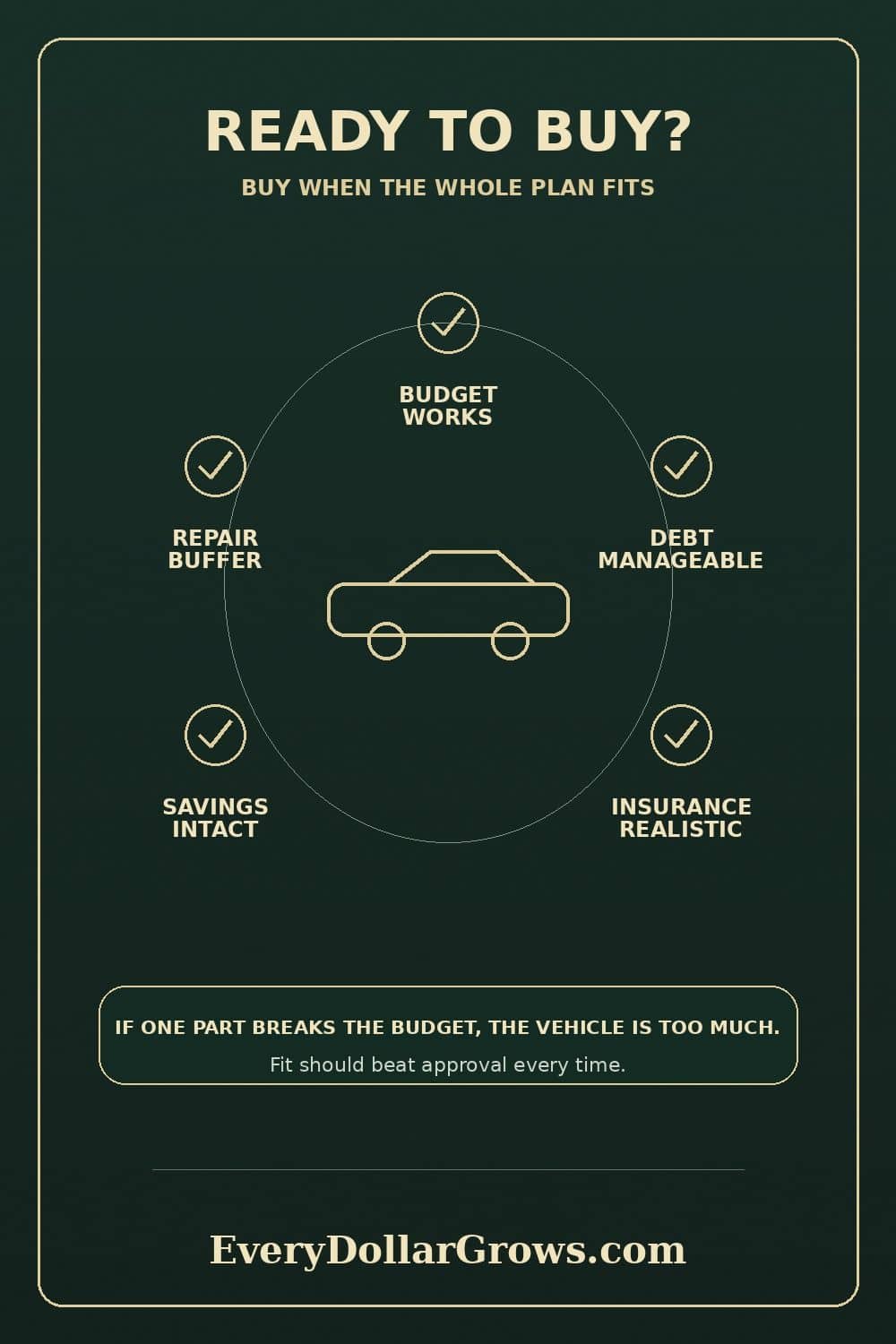
Signs the Payment Is Too High
A car can be technically affordable and still be a bad move. One of the biggest mistakes buyers make is treating “I can get approved” as the same thing as “this fits my life.” It is not.
- You are relying on a very long loan term just to make the payment feel possible.
- You have little or no monthly margin left after the vehicle, debt, and savings.
- Insurance pushes the full cost much higher than expected.
- You are skipping maintenance reserve because the payment is already heavy.
- You are buying a bigger or more capable vehicle than your real use case demands.
- You are telling yourself the income increase or overtime will “cover it later.”
Best next move if the payment still feels heavy
Sample Buyer Scenarios
These examples are here to help you interpret the tools, not to hand out one-size-fits-all rules. The same income can produce very different car answers depending on debt, climate, insurance, family size, and work demands.
Single commuter
The strongest answer is often a reliable commuter-first vehicle that keeps gas, insurance, and monthly loan cost lower.
Family with kids
Space and logistics may justify spending more, but the family vehicle still has to leave room for the rest of the budget.
Snow-state buyer
AWD or 4×4 may be worth it when winter and roads make it a real need, but the extra cost should still be pressure-tested.
Worker who needs utility
A truck or work-use vehicle can be justified when the job truly demands it. The key is separating actual work needs from preference.
Good income, weak margin
A higher income does not automatically make a bigger vehicle wise. Debt, savings goals, insurance, and lifestyle still matter.
Used-car value buyer
A lightly used reliable option can often create a much healthier transportation budget without sacrificing what matters most.
Current Authority Resources
These official resources can help you cross-check car affordability logic, loan shopping, and total cost planning as you work through the tools on this page:
Want a stronger budget before you buy?
The best car decisions usually come from a better budget, stronger savings, and less fixed-cost pressure — not from stretching harder. If the vehicle decision is exposing weaknesses in the rest of the plan, use the budgeting guide to rebuild the monthly system before taking on a new payment.
Need a more guided budgeting system?
These EDG tools fit this post especially well if you want a more structured plan before taking on a vehicle payment.
FAQ
How much car can I afford based on my take-home pay?
The safer answer comes from your take-home pay after you account for insurance, gas, maintenance, registration, savings, debt, and the rest of your real-life budget. A vehicle can fit the loan payment and still be a weak financial choice once the rest of the cost is included.
What percentage of my income should go to transportation?
There is no perfect rule that fits everyone, but transportation should not dominate the monthly plan. The tools above are built to show whether the full vehicle cost looks comfortable, tight, or risky inside your actual budget.
Should I shop by monthly payment or by vehicle price?
Neither one alone is enough. Vehicle price matters, but the full monthly cost matters more. A low payment can hide a long loan term, more interest, and a heavier total deal.
How much should I put down on a car?
A larger down payment usually lowers the loan burden, total financing stress, and monthly payment. But the right amount depends on your cash position, emergency fund strength, and how much other pressure is already in the budget.
Is a 72- or 84-month loan ever worth it?
Longer terms can make the payment easier month to month, but they often increase total interest and keep you attached to the car longer. That is why the loan term comparison tool is part of this guide.
Should I buy new or used if money is tight?
Many people find that used or lightly used creates a healthier budget. The right answer depends on reliability, insurance, financing, maintenance expectations, and how much margin you need to keep.
How do I know if the car payment is too high?
It is too high when the full vehicle cost slows your savings, crowds out maintenance, keeps your margin too thin, or depends on a stretched budget to feel possible.
What type of vehicle should I choose if I live in snow or have a family?
The best choice is the cheapest vehicle that still fits your real needs. Snow, dirt roads, car seats, cargo, and work demands can justify paying more, but only when the need is real enough to support the cost.