How Much House Can I Afford? Real Monthly Cost Calculator for First-Time Buyers
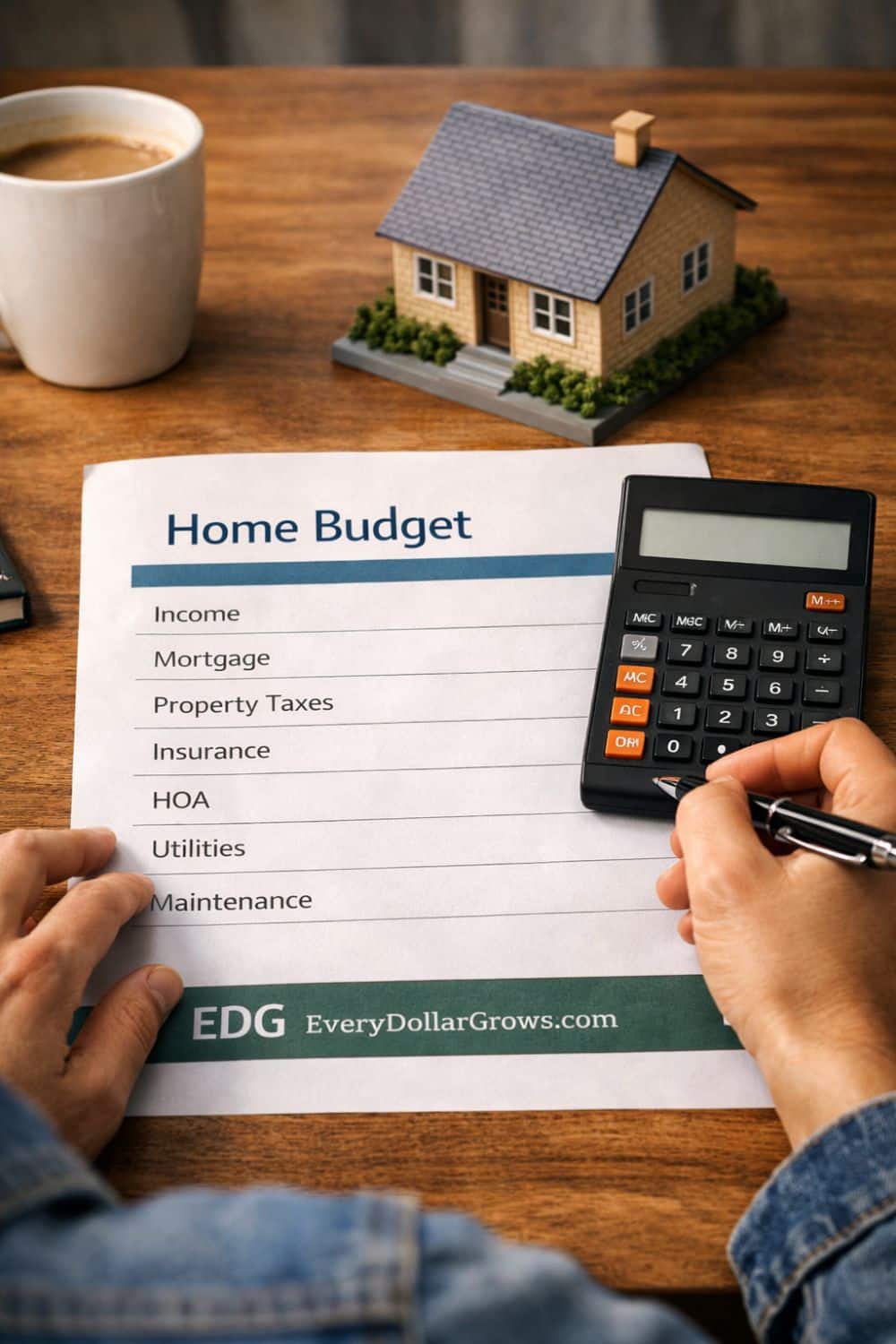
If you are asking how much house can I afford, the real answer is not just what a lender approves. It is the payment your budget can handle after taxes, insurance, debt, savings, and real life expenses. This page gives you a fast answer, a full ownership-cost planner, and a down payment timeline so you can make a budget-safe decision before you shop.
Quick Summary
This guide is built to answer the question how much house can I afford with real monthly cost planning, not just mortgage math. It helps you answer three practical questions: Can I afford this payment? What will the home really cost each month? and How long until I have enough saved? Use the fast calculator first, then move to the full planner and timeline tool for a deeper answer.
Fast House Affordability Check
This first tool is built for speed. Enter the basics and get a quick answer about whether the payment looks comfortable, manageable, tight, or high risk based on your budget reality rather than just a lender’s formula.
Get the Free Monthly Money Plan
Plan your income, expenses, savings, sinking funds and debt on one simple printable page.
Quick-check assumptions
What this result means
Enter your numbers and calculate to get an explanation.
Watch-outs
- Your warnings and pressure notes will appear here.
Quick check formula includes estimated principal and interest, property tax, homeowners insurance, PMI when down payment is under 20%, HOA, and a maintenance reserve.
What Your Result Means
A fast affordability result is not the same thing as a final buying decision. If you are still asking how much house can I afford, this section helps you interpret the answer in a real-life way instead of only looking at loan math.
Comfortable
The estimated cost fits inside a healthier slice of take-home pay, debt is not crowding you, and there is still room for maintenance, saving, and normal life.
Tight
The payment may technically work, but it can leave very little margin for repairs, lifestyle changes, or bad months. Tight usually means proceed with caution.
High Risk
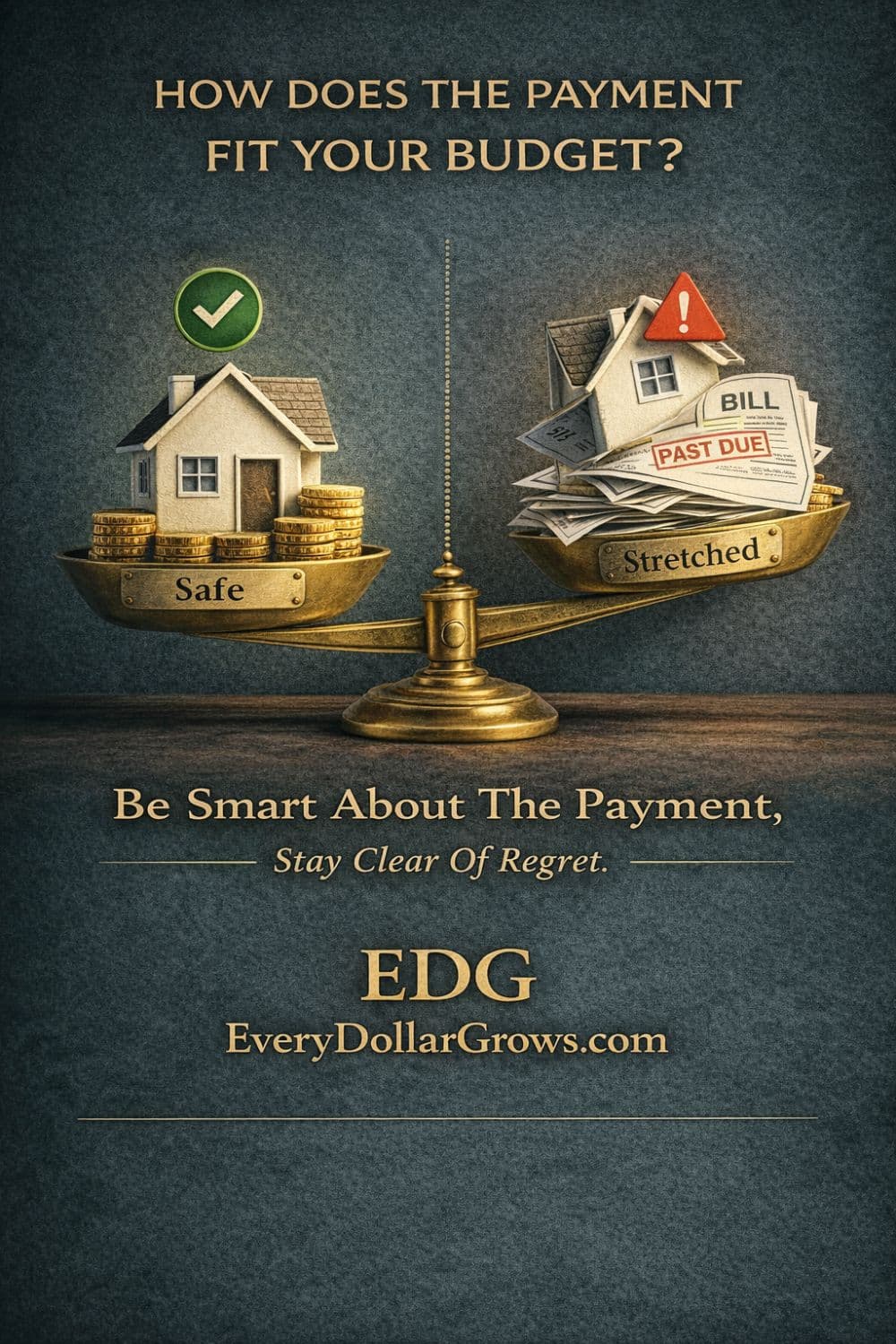
The payment is likely too aggressive for your current structure. This is where buyers get house poor, rely on cards, or stop saving because the home cost is eating the rest of the plan.
If your result is tighter than you hoped, the next step is not discouragement. It is better planning. Tight results often improve after a better budget, a stronger down payment, lower debt, or a lower target price.
How Much House Can I Afford Based on My Real Budget?
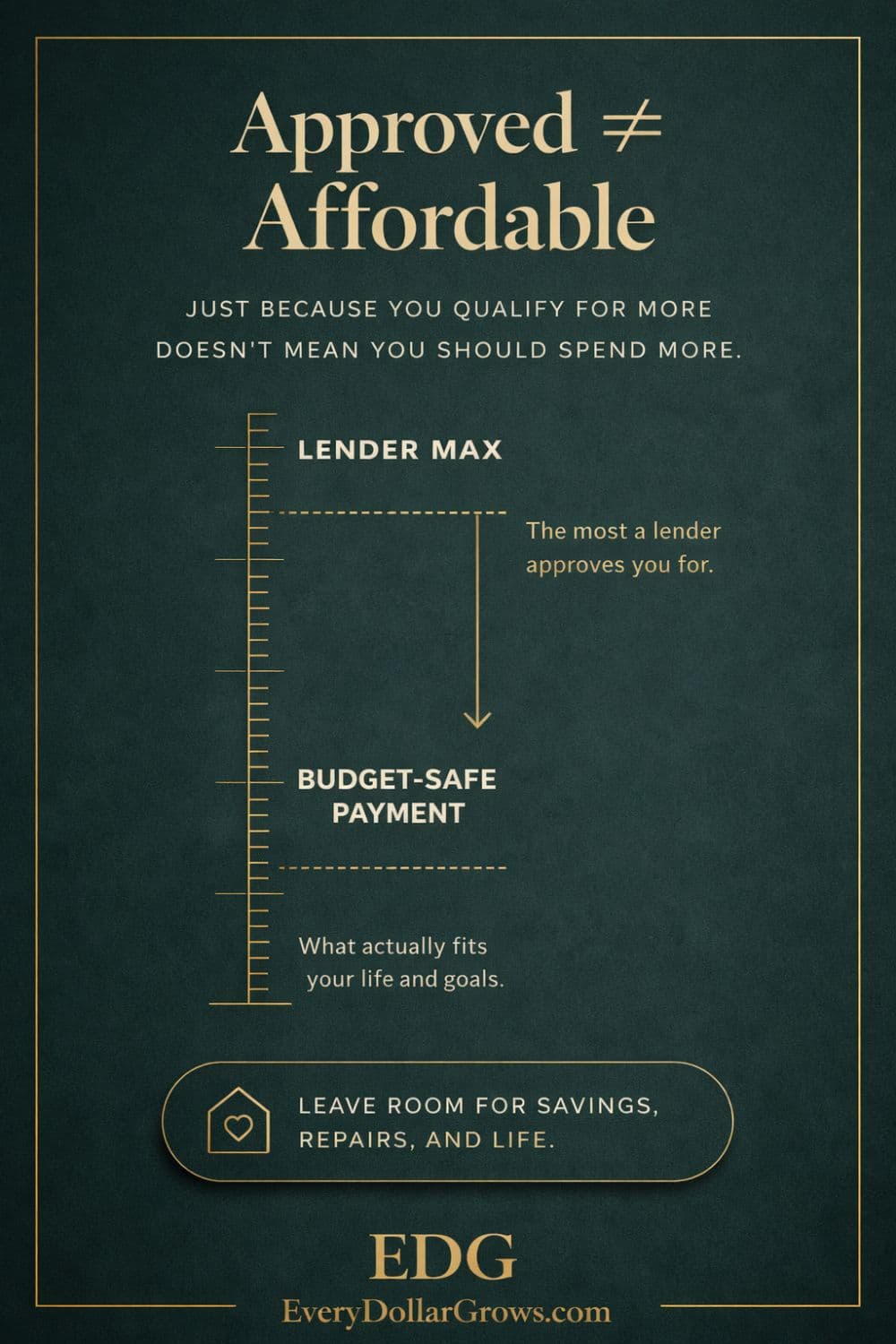
This page is intentionally built around the idea that a lender’s approval number and a budget-safe payment are not the same thing. A lender is mainly focused on whether you meet underwriting guidelines. You are the one who has to live inside the payment after groceries, transportation, utilities, savings, car repairs, and actual life.
That is why EDG treats housing as a real-life budget question, not just a mortgage-qualification question. A payment can be technically possible and still be a poor fit. If a house payment crowds out your emergency fund, debt payoff, or normal breathing room, it is usually too high.
Best next step if the payment feels tight
Start with a clearer monthly plan before you shop. These are the most helpful EDG pages to tighten the numbers fast:
Real Monthly Ownership Cost Planner
This is the flagship tool on the page. It is built to show the real monthly cost of owning the home, not just principal and interest. It also includes house-poor risk logic and browser save so you can come back to the same scenario later.
How this planner interprets risk
This planner looks at full monthly ownership cost, not just the loan payment. Risk rises when housing takes too much of take-home pay, when debt is already heavy, and when little monthly margin is left after housing, debt, and your savings target.
| Cost category | Monthly amount |
|---|---|
| Principal + interest | $0 |
| Property taxes | $0 |
| Homeowners insurance | $0 |
| PMI | $0 |
| HOA | $0 |
| Utilities | $0 |
| Maintenance reserve | $0 |
| Total monthly housing cost | $0 |
House poor risk readout
Run the planner to see how safe or stretched the payment looks.
- Your pressure notes and watch-outs will show here.
Best next move
Tip: a home can be mathematically possible and still be a weak fit. Strong affordability means the home cost fits while leaving room for saving, maintenance, and a normal life.
What Costs People Miss
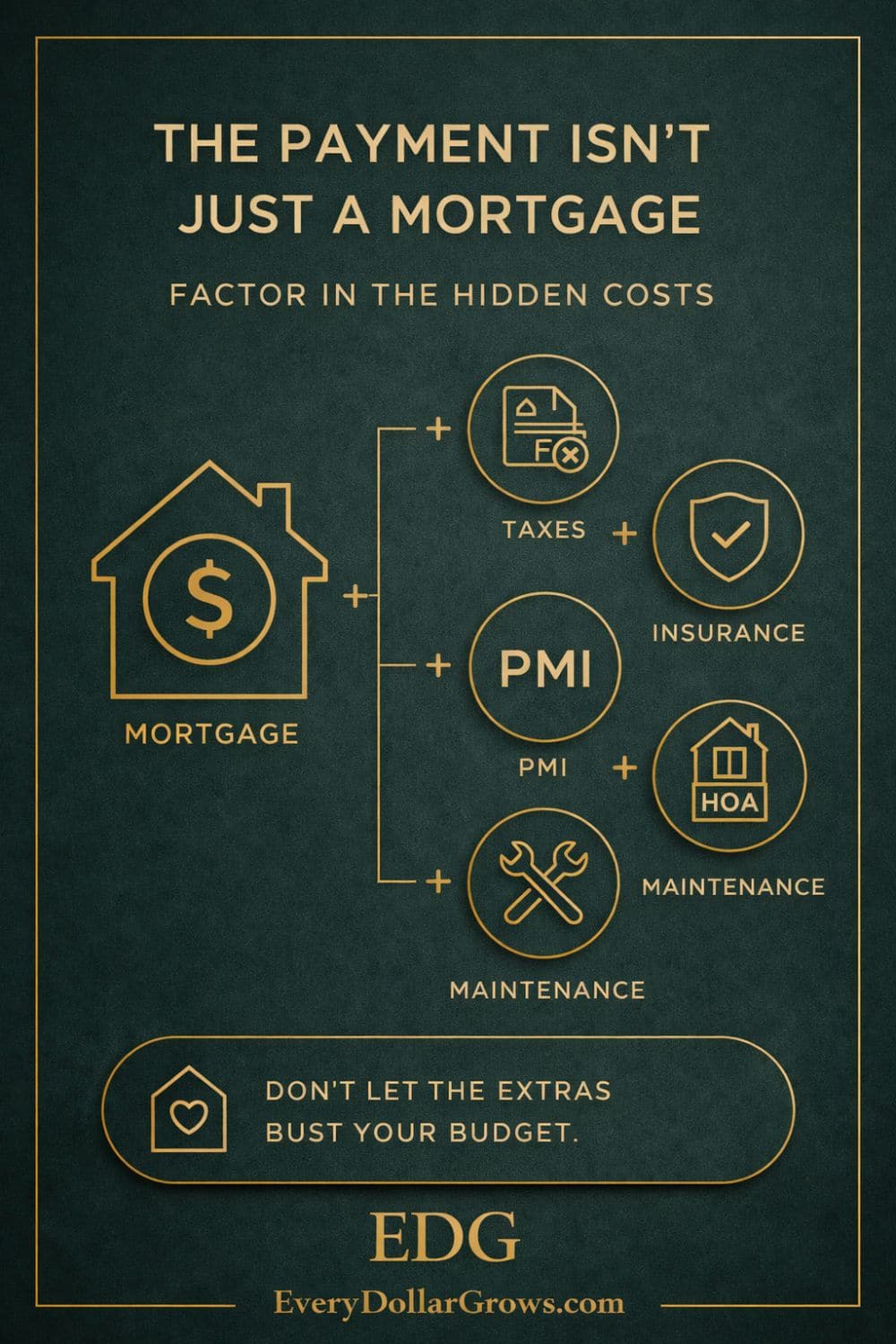
Many buyers get into trouble because they underestimate the parts of ownership that do not show up in the headline mortgage number. A payment that looks fine in a quick online estimate can start to feel completely different after taxes, insurance, PMI, HOA, utilities, maintenance, and moving-related cash needs show up at the same time.
- Property taxes: these are real monthly costs whether they are escrowed or not.
- Homeowners insurance: a required cost that buyers often understate.
- PMI: common when down payment is under 20%.
- HOA: can materially change the affordability picture.
- Utilities: home size and region can shift these costs higher than expected.
- Maintenance reserve: the monthly amount that protects you from turning home repairs into debt.
This is one reason a stronger down payment and a stronger emergency fund matter so much. The goal is not just getting into the home. The goal is staying stable after you get there.
Use these EDG pages to strengthen the foundation first
Down Payment + Closing Cost Timeline Planner
This tool turns a vague savings goal into a date and a target. It is built for buyers who want to know how much cash they really need and how long it may take to get there.
Timeline results
Amount still needed: $0
Months to goal: 0
Needed per month to hit goal in 12 months: $0
Needed per month to hit goal in 24 months: $0
How to strengthen the timeline
- Use a bigger monthly savings pace.
- Lower the target home price.
- Increase the time horizon.
- Reduce debt and fixed costs first if saving feels too tight.
This planner is educational and meant to create a practical target. Local taxes, loan type, assistance programs, and market conditions can change the exact cash you need.
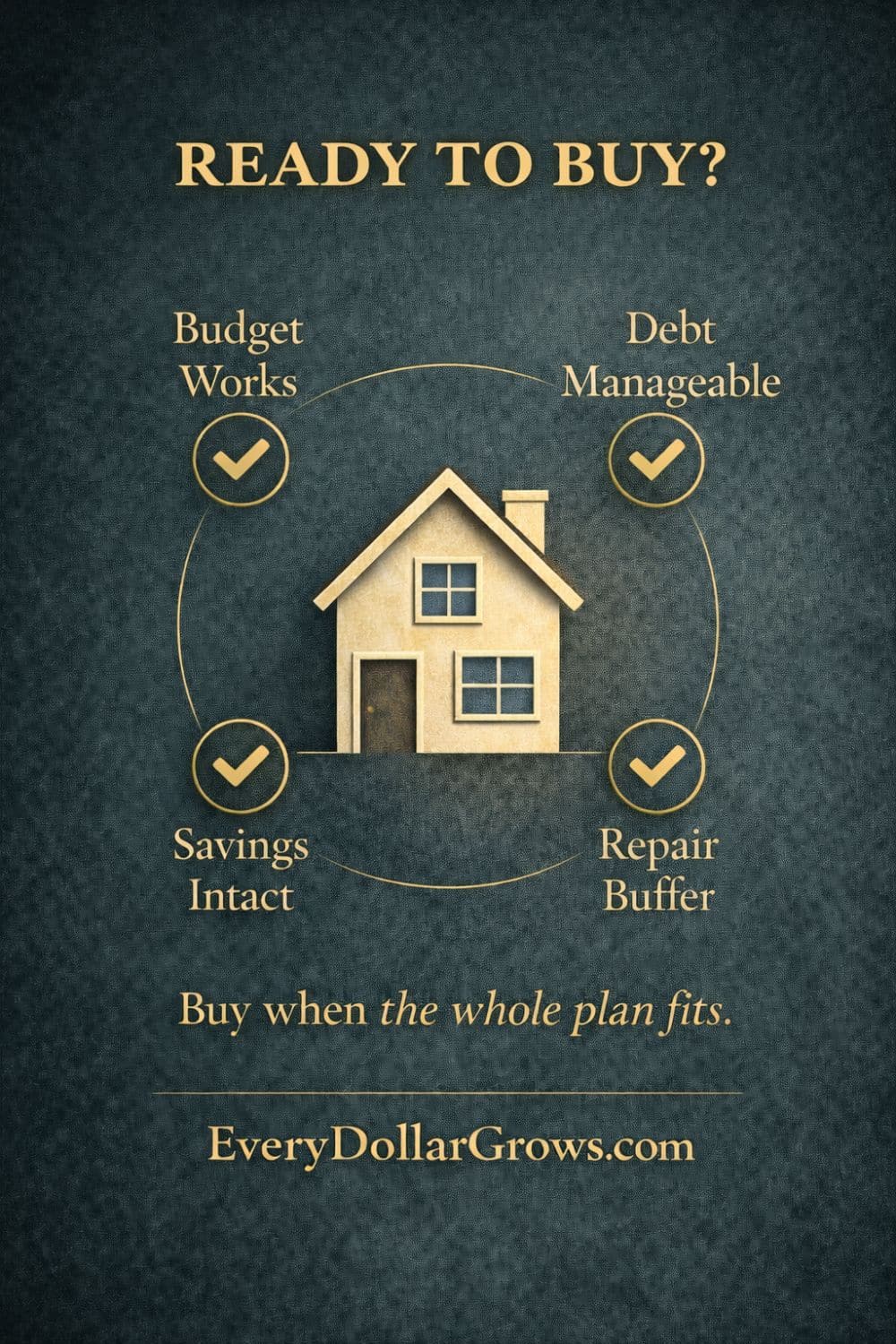
Are You Ready to Buy?
Readiness is not just about income. It is about whether the home fits without pushing the rest of your plan into chaos. A smart buyer is not only asking, “Can I get approved?” but also, “Can I still save, repair, breathe, and handle surprises after I move in?”
Ready now
- You have a stable budget.
- You have real cash saved.
- Your debt is manageable.
- The monthly margin is still healthy after housing.
Close, but needs work
- The payment is possible but tight.
- You need a larger cushion or more down payment.
- One or two weak spots are making the numbers heavier than they need to be.
Not ready yet
- The payment crowds out savings.
- Debt or fixed costs are already too high.
- There is little margin for maintenance and life.
- The house target is too aggressive for the current season.
Best EDG next steps by readiness level
Sample Buyer Scenarios
These examples are here to help you interpret the tools. They are not universal rules, but they show how the same income can produce very different outcomes depending on debt, down payment, and the structure of the monthly budget.
Scenario 1: Good income, heavy car payment
A buyer with solid take-home pay can still feel stretched if a large car payment and credit card minimums are already taking up monthly room. This is where affordability often looks stronger on paper than it feels in real life.
Scenario 2: Modest income, strong savings discipline
Buyers with more modest pay can sometimes afford more responsibly than expected when their debt is low, their down payment is stronger, and their monthly plan already leaves room for margin.
Scenario 3: High income, weak emergency cushion
Income alone does not make the purchase safe. A buyer can earn well and still be one large repair away from financial stress if the emergency fund and maintenance buffer are too thin.
Current Authority Resources
These official resources can help you double-check assumptions, budgeting logic, and planning steps as you work through the tools on this page:
Want a stronger budget before you buy?
The most useful next step for many buyers is not finding a bigger approval number. It is building a cleaner monthly plan, a stronger savings system, and a better margin before taking on the home payment. If the house decision is exposing weaknesses in the rest of the plan, use the budgeting hub to strengthen the monthly system before you buy.
If you want a structured check-in instead of rebuilding the plan, use the budget review.
Need a more guided system?
For buyers who want a stronger hands-on budgeting structure, these EDG tools fit this post especially well:
FAQ
How much house can I afford based on my take-home pay?
The safer answer comes from your take-home pay, not just gross income. A house is usually a better fit when the full monthly ownership cost leaves room for debt payments, savings, repairs, and normal life expenses instead of consuming nearly all available margin.
What percentage of income should go to housing?
There is no perfect universal rule, but many people feel much safer when full housing cost stays in a reasonable range of take-home pay instead of pushing toward the edge. The tools above are designed to show whether your number looks comfortable, tight, or risky.
How do I know if I’m becoming house poor?
House poor usually means the payment leaves too little margin for maintenance, savings, emergencies, groceries, transportation, and normal life. If the home causes constant cash stress, slows all other goals, or pushes you toward debt, the payment is probably too high.
Is a 3% down payment enough to buy a home?
In some cases it may be enough to get into the home, but a lower down payment can increase the loan size, PMI, and monthly stress. That is why this page includes both the full-cost planner and the timeline tool instead of only focusing on minimum entry.
How much should I save before buying a house?
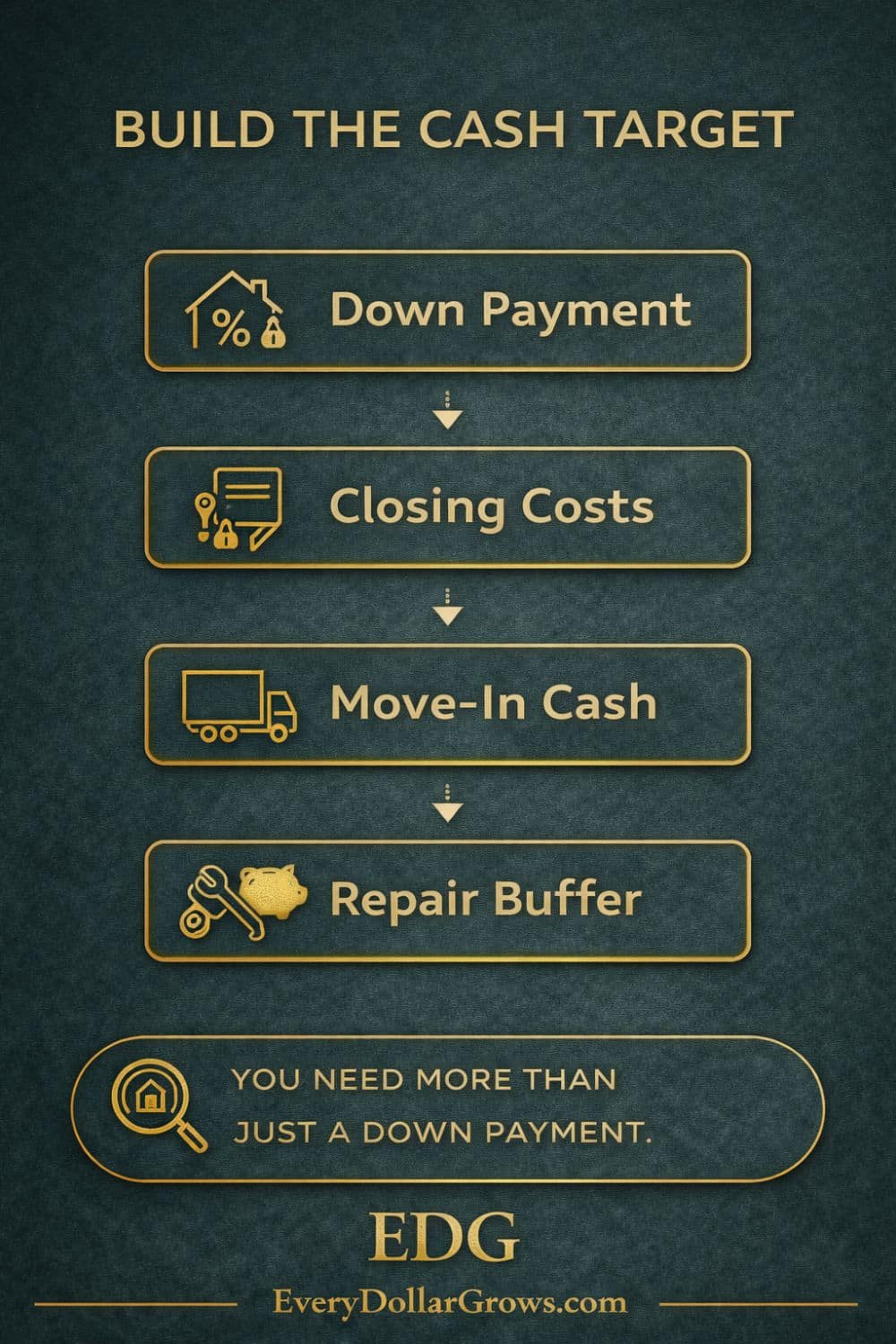
A stronger target usually includes more than just the down payment. Closing costs, moving costs, early repair needs, and emergency reserves all matter. The timeline planner above helps you estimate total cash needed instead of looking only at the down payment line.
Should I pay off debt before buying a house?
That depends on the size and type of debt, but lowering monthly obligations often improves affordability more than buyers expect. Less debt can mean a safer payment, better monthly margin, and a stronger overall fit.
Does owning a home cost more than the mortgage payment?
Yes. Taxes, insurance, PMI, HOA, utilities, and maintenance are all real parts of the ownership cost. That is exactly why the main planner on this page includes those categories directly.
What should I do first if the payment looks too high?
Tighten the budget, cut fixed-cost pressure, save more, lower the target home price, or give yourself more time. For most buyers, better preparation solves more than stretching harder ever does.
Keep the momentum going
Once you finish this page, keep building the money side of the plan with the most relevant EDG resources below.