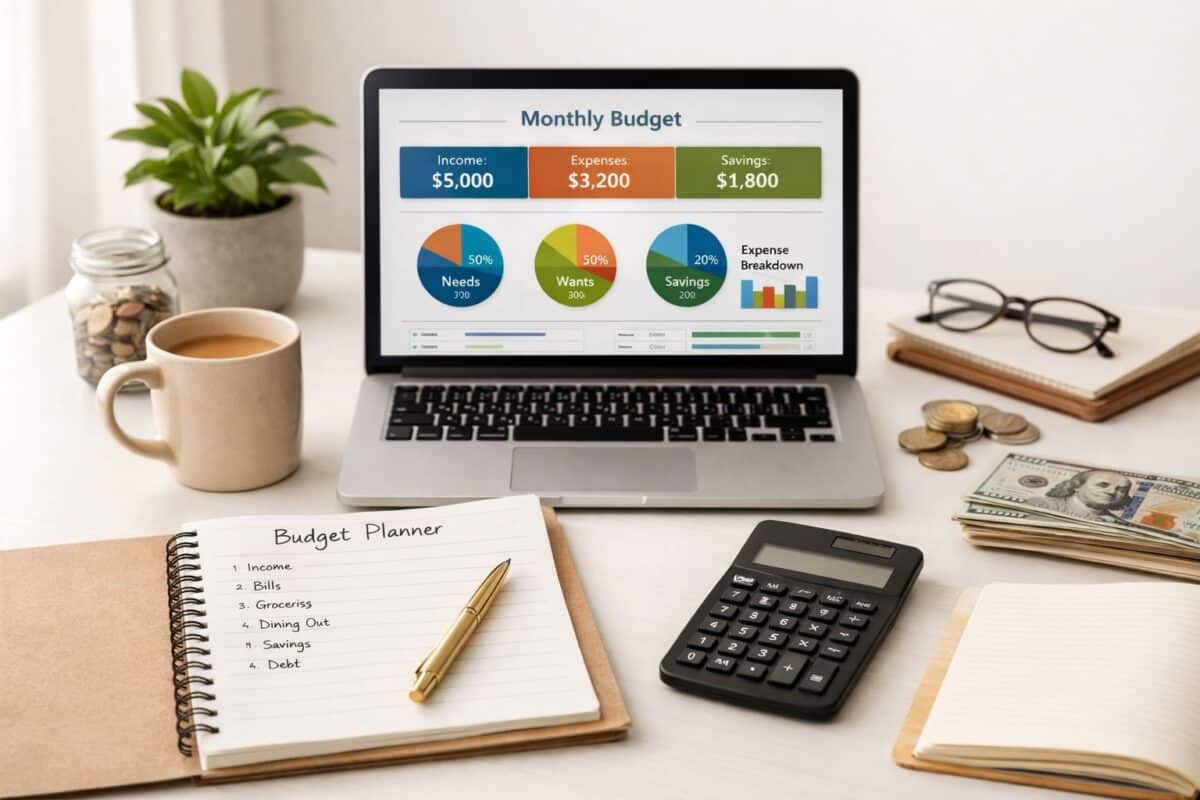
This image shows a woman reviewing her budget at home, capturing the mindset and environment of someone learning how to save money fast with simple, real-life steps.
How to Save Money Fast: 7-Day Quick Wins, Monthly Systems, Grocery Savings, and Long-Term Strategies
The fastest ways to save money fast are: cancel unused subscriptions, sell items you already own, complete pantry meals, freeze non-essential spending for 48 hours, and negotiate your bills. Most people save $250–$500 within 7–14 days using these steps.
If you’re trying to learn how to save money fast, you’re in the right place — because saving money quickly is not about deprivation, extreme budget cuts, or punishing yourself.
Saving money fast is about leverage: using smart, immediate actions that create momentum, reduce anxiety, and give you the breathing room you need to finally stay on track.
This Ultimate Saving Guide goes far beyond quick hacks. It teaches you how to save money fast this week, but also how to build a lifelong system that saves money automatically, even during stressful, busy seasons of life.
This is the most complete “how to save money fast” guide you will find online. It’s designed for real families, real budgets, and real life — not unrealistic, influencer-style advice that ignores how chaotic life actually gets.
By the end of this guide, you’ll learn:
- How to save $250–$500 in the next 7 days without working extra hours
- How to build saving systems that run on autopilot
- How to cut grocery spending without sacrificing good food
- How to lower your monthly bills with simple scripts
- The psychology behind saving and how to avoid self-sabotage
- A 30-day and 90-day savings roadmap that works for any income
- Real case studies of families who saved $500–$1,000 quickly
This guide also includes links to deeper budgeting tools, resources, and step-by-step saving guides.
Whether you’re brand new to budgeting or you’ve tried saving for years, this guide will give you the clarity, structure, and momentum you need to finally get ahead.
Why Learning How to Save Money Fast Matters More Than Ever
This section explains why saving money fast isn’t just helpful — it’s a foundation for financial stability, especially for families facing rising costs and unpredictable expenses.
Financial stress is now one of the leading causes of anxiety in the United States. According to the Consumer Financial Protection Bureau, more than half of Americans cannot cover a $400 emergency without borrowing.
That means even a single unexpected bill can throw an entire household into chaos — late fees, overdrafts, credit card debt, and stress.
This is why learning how to save money fast is no longer a “nice idea.” It’s a survival skill.
When you build savings quickly, you gain:
- Breathing room — your stress goes down immediately
- Control — you stop reacting to money and start planning with it
- Options — you no longer feel stuck in financial emergencies
- Confidence — you feel capable instead of overwhelmed
And most importantly — saving money fast helps you break the cycle of paycheck-to-paycheck living.
How Fast Savings Build Long-Term Success
Here you’ll see why quick wins are the secret to saving money consistently. Fast progress builds momentum, confidence, and lasting financial behavior change.
One of the biggest myths in personal finance is that saving is “mostly discipline.” In reality, discipline plays only a small role.
People save more consistently when they experience success quickly.
This is backed by behavioral finance research, including studies published at BehavioralEconomics.com. When people see progress early, they stay engaged longer.
Fast wins → Momentum → Identity shift → Lifelong saving.
Here’s what happens when you save your first $100–$300 quickly:
- Your brain shifts from “saving is hard” to “saving works.”
- You reduce anxiety because you finally have cash on hand.
- You feel in control instead of overwhelmed.
- You build identity: “I’m someone who handles money well.”
- You have a safety buffer to break the cycle of emergencies.
This is why this Ultimate Guide begins with a 7-Day Quick-Start Plan — because you need fast progress first, THEN systems for sustainable progress.
7-Day Quick-Start Plan: Save $250–$500 Fast
This is your structured, step-by-step plan for saving money quickly — designed for real people with busy lives who need fast results without overwhelm.
This plan is specifically engineered to help real people save real money — not in months, not in weeks, but in the next 7 days.
Most EDG readers save $250–$500 during this week.
Every day comes with a simple, high-impact action. No guesswork. No confusion. No motivation needed.
Day 1: The House Money Hunt (Save $50–$200)
Walk through your home and gather anything you can sell, return, or eliminate. Most homes contain $100–$300 worth of unused items.
Day 2: Subscription Purge (Save $15–$60/mo)
Cancel or pause unused subscriptions. Check the App Store, Google Play, and banking apps for recurring charges.
Day 3: No-Spend Day (Save $10–$40)
Today — no Amazon, no fast food, no impulse buying. You’ll be shocked how much you normally spend without noticing.
Day 4: Sell 2–3 Items (Earn $40–$150)
List items from Day 1 on Facebook Marketplace. Tools and kid items sell fastest.
Day 5: Pantry Challenge Meal (Save $15–$30)
Replace one dinner with ingredients you already have. This small step creates immediate grocery savings.
Day 6: Renegotiate a Bill (Save $10–$50/mo)
Call your internet or phone provider and ask for promotions. They will almost always offer one.
Day 7: Transfer ALL Savings to a Separate Account
Move every dollar saved this week into a high-yield savings account. This locks in your progress and gives you an emotional win.
This 7-Day Plan provides your first burst of success — the spark you need to continue.
According to recent data from the Federal Reserve, nearly 40% of Americans would struggle to cover an unexpected $400 expense, which highlights why learning how to save money fast is more essential than ever. Fast savings provide the first layer of financial stability that most households are missing.
Fast Savings (0–14 Days)
The strategies in this section produce immediate results — perfect if you need to save money fast and want simple, high-impact actions you can complete today.
For more saving strategies, visit the full EDG Saving Category Page to explore challenges, templates, and step-by-step guides.
These strategies produce immediate results. If you need to save money fast, these actions will give you measurable progress within 24–48 hours. They are designed for busy people, parents, and anyone who doesn’t have hours to track spreadsheets or analyze bank statements.
Choose 3–5 of the strategies below and complete them this week. Most households generate their first $150–$400 quickly by implementing these steps.
For deeper guidance on building a stronger saving routine, explore the Dave Ramsey Financial Advice page. It breaks down simple, practical principles for staying motivated, avoiding financial setbacks, and creating long-term money habits that actually stick.
1. Cancel forgotten subscriptions
The average household underestimates subscription spending by nearly 200%, according to a CNBC report. That’s because subscriptions hide inside app stores, bank statements, and old email accounts.
Common “ghost subscriptions” include:
- Streaming (especially lesser-used ones like Starz or Paramount+)
- Cloud storage upgrades
- Gym memberships
- Business tools you no longer use
- Forgotten free trials that renewed
Canceling just two unused subscriptions often saves $20–$60 per month instantly — one of the easiest ways to save money fast without changing your lifestyle.
2. The 48-Hour No-Spend Reset
A 48-hour no-spend reset disrupts your habitual spending patterns. During these two days:
- No fast food or drive-thru stops
- No Amazon purchases
- No convenience-store snacks
- No new apps, digital add-ons, or impulse buys
In just 48 hours, most people naturally save $20–$50. But the real win is awareness — you’ll start to notice where your money leaks happen most.
3. Sell unused items
If you need cash quickly, selling items is one of the most effective and fastest strategies. You already own the money — it’s just hiding in your home.
Fastest-selling items on Facebook Marketplace:
- Kids’ bikes, toys, or gear
- Small appliances
- Power tools
- Fitness equipment
- Seasonal décor
Families frequently make $100–$300 within a weekend simply by clearing out unused clutter.
4. Return unopened purchases
Walk through your home and look for purchases still in boxes or with tags attached. Returns are one of the fastest ways to save money because you’re reclaiming cash you’ve already spent.
Common returnable items:
- Duplicate household items
- Clothes with tags
- Home décor you didn’t end up using
- Amazon items you forgot to open
This simple step can produce $25–$200 instantly.
5. The Pantry & Freezer Challenge
A Pantry Challenge eliminates the need for 1–2 grocery trips. Since groceries are one of the top household expenses, skipping even one trip saves $40–$100 for most families.
Use what you already have:
- Frozen vegetables
- Rice, pasta, beans
- Canned ingredients
- Leftover proteins
You may be shocked at how many meals are sitting in your freezer right now.
6. Switch or renegotiate your phone plan
Phone bills are quietly draining many budgets. Carriers like Mint Mobile, Visible, and US Mobile offer reliable service at a fraction of the big carriers’ costs.
Potential savings: $20–$60 per month
7. Rotate premium streaming services
Instead of paying for multiple streaming services, rotate one at a time. Watch the shows you want on Netflix, pause it, switch to Hulu, repeat.
Potential savings: $30–$80 per month
8. Eliminate “micro-spending” leaks
Micro-spending refers to small, unnoticed purchases like:
- $7 coffees
- $12 fast food stops
- $3 snacks
- $5 digital upsells
These add up faster than people realize. Removing small leaks frees up $50–$150 each month.
9. Cash-envelope your biggest problem category
If one category consistently ruins your budget (like eating out or groceries), switch to cash envelopes for that category. Physically seeing money leave your hands makes overspending dramatically harder.
Families report saving $40–$100 in the first week alone just by switching to cash for problem categories.
10. Unsubscribe from retail emails
Marketing emails are engineered to make you spend emotionally. Remove the triggers and the temptation disappears. This is a huge factor in saving money fast.
11. Food Stretch Nights
Stretch one meal into two by doubling the sides or repurposing leftovers. This very small habit saves $10–$30 per week.
12. Freeze your credit card
Yes — literally put it in a cup of water and freeze it. When you need it, the thawing process forces you to think twice before spending. Most impulses evaporate before the ice melts.
Part 2: Monthly Saving Systems (The Real Long-Term Strategy)
This section teaches how to turn short-term wins into long-term savings with predictable monthly systems that remove stress and eliminate decision fatigue.
Fast savings get you started. Monthly systems keep you going. Systems are the difference between short-term progress and long-term transformation.
This section is crucial because saving money fast only works long-term when paired with predictable systems that protect you from “future tired you.”
Saving money doesn’t depend on discipline — it depends on structure. These monthly systems build a financial foundation that works even during busy or stressful periods.
13. Automate savings every payday
Automation is the #1 most effective long-term saving method. When money leaves your checking account before you touch it, saving becomes effortless.
Set up automatic transfers:
- On payday
- To a separate savings account
- At the same amount every check
This is called “paying yourself first,” a principle reinforced throughout the EDG Personal Finance Library, where many authors emphasize automating your most important goals.
14. Build a Bill Calendar
A Bill Calendar is your financial command center. It prevents missed payments, overdrafts, and surprises.
Your Bill Calendar should include:
- Due dates
- Amounts
- Which paycheck pays each bill
When paired with a paycheck-based budget, this becomes one of the most powerful saving tools available.
15. Paycheck budgeting (the budgeting method that actually matches real life)
Most people are paid weekly, biweekly, or semi-monthly — not monthly. That’s why traditional monthly budgets fail. Paycheck budgeting simplifies everything by helping you plan each check individually so you always know what’s coming and what’s covered.
To learn how to structure a paycheck-based budget step-by-step, use the Ultimate Guide to Budgeting and Saving Money. It walks you through setting up categories, organizing bills, and assigning every dollar to a purpose without overwhelm.
16. Switch recurring services to annual billing
Many apps, memberships, and software platforms offer discounts for annual billing — usually 15–40% off.
This saves money without sacrificing anything you actually use.
17. Save raises, bonuses, and tax refunds
Every time your income increases, your savings should increase too. This simple rule prevents lifestyle creep and accelerates long-term financial growth.
18. Annual bill negotiation
Internet, auto insurance, home insurance, and phone plans often have hidden promotions. Calling annually and asking for discounts saves $200–$600 per year for most families.
19. The Fun-Money Envelope
Eliminating fun spending entirely causes burnout. Instead, assign a controlled amount of “fun money” to avoid impulse spending later.
20. Energy-saving home adjustments
Small household changes add up quickly:
- Use LED bulbs
- Raise the thermostat by 2 degrees
- Check window drafts
- Wash clothes in cold water
These micro-adjustments save $10–$30 per month.
This photo represents a real monthly saving system built on bill calendars, automation, and organized financial routines.
21. Weekly theme nights for meals
Theme nights reduce decision fatigue and simplify grocery shopping. Popular weekly themes include:
- Taco Tuesday
- Pasta Night
- Breakfast-for-Dinner Thursday
- Chicken Night
The more predictable your meals, the more predictable your spending.
22. Use the 24-hour rule for non-essential purchases
The 24-hour rule prevents emotional and impulsive spending. Write the item down, wait 24 hours, and revisit it later. Most impulse desires vanish.
23. Choose store-brand groceries
Store brands are 20–40% cheaper and often identical in quality. A single switch can save $20–$60 per week for families.
Part 3: Grocery Savings (Your Biggest Monthly Opportunity)
Groceries are most families’ biggest flexible expense. This section shows how to cut costs intelligently without sacrificing food quality or nutrition.
Groceries are the #1 flexible expense most families struggle to control — and it’s also where the biggest savings opportunities exist. Learning how to save money fast almost always involves tightening grocery spending intelligently, not harshly.
A few strategic changes can save $50–$150 every single month without sacrificing food quality.
24. Shop once per week (non-negotiable)
Every extra grocery trip adds impulse purchases — snacks, drinks, “just one more thing.” Committing to one weekly grocery trip is one of the most effective ways to control food spending.
25. Build 5–7 “go-to” meals
Decision fatigue leads to overspending. A go-to meal plan rotates a small set of easy, affordable meals such as tacos, pasta, stir fry, rice bowls, and baked chicken.
26. Always shop with a list
A list reduces grocery spending by 20–30%. Without a list, you shop emotionally. With a list, you shop intentionally.
27. Use bulk purchases wisely
Bulk purchases only save money when you’re buying foods you already eat regularly. Staples like rice, beans, oats, and chicken are excellent bulk items.
However, bulk snacks and desserts usually increase spending. Buy bulk strategically.
28. Switch to store-brand groceries
Store brands save 20–40% compared to name-brand items. Quality is typically identical, and many are produced by the same manufacturers.
29. Build meals around cheaper proteins
Protein is usually the most expensive part of a meal. Use cheaper proteins such as:
- Chicken thighs
- Eggs
- Beans
- Lentils
- Canned tuna
This small shift can save $10–$20 per meal.
30. Use leftovers intentionally
Leftovers can become tomorrow’s lunch or be frozen for later. Every leftover you use prevents a $5–$15 food purchase.
31. Compare price per ounce, not sticker price
The sticker price tells you nothing. The price per ounce is what matters. Learn to compare real value and your grocery bill drops immediately.
32. Choose frozen produce
Frozen fruits and vegetables are cheaper, last longer, and prevent waste — one of the biggest drains on grocery budgets.
33. Reduce drink purchases
Buying soda, bottled tea, energy drinks, juices, or sports drinks can add $30–$80 to your grocery bill. Switch to water or make your own diluted juice at home.
34. Use loyalty programs wisely
Use loyalty programs for stores you already shop at — not ones you’re tempted to visit just for deals. Chasing deals leads to overspending.
This grocery cart shows simple, budget-friendly foods that help families save money fast without sacrificing quality.
Part 4: 7-Day Frugal Meal Plan (Cheap, Fast, and Family-Friendly)
This frugal meal plan gives you a full week of cheap, simple meals designed to reduce grocery spending immediately and support a sustainable food budget.
Food is one of the easiest places to overspend — but it’s also one of the easiest places to save money fast. This simple, repeatable 7-day frugal meal plan feeds individuals or families affordably without sacrificing nutrition.
Every meal below costs approximately $1.20–$2.50 per serving depending on location.
Day 1 – Chicken + Rice Bowl
Use leftover chicken, frozen vegetables, and soy sauce. Total cost: $1.80 per serving.
Day 2 – Pasta Night
Pasta + store-brand sauce + garlic toast. Total cost: $1.40 per serving.
Day 3 – Breakfast for Dinner
Eggs + toast + fruit. Total cost: $1.20 per serving.
Day 4 – Veggie Stir Fry
Frozen mixed vegetables + rice + simple sauce. Total cost: $1.50 per serving.
Day 5 – Tacos
Beans or chicken + tortillas + lettuce. Total cost: $1.70 per serving.
Day 6 – Lentil Soup
Lentils + carrots + onions + broth. Total cost: $1.10 per serving.
Day 7 – Leftover Night
Use whatever remains from earlier meals. Zero cost.
This meal plan alone can cut your grocery bill by **$30–$60 per week**, or over $1,500 per year.
Part 5: Lower Your Monthly Bills (High-Impact Monthly Savings)
Monthly bills drain more money than most people realize. This section covers realistic, high-impact ways to reduce recurring costs and save money fast every month.
Lowering monthly bills creates recurring savings — the kind that compounds over months and years. If you want to know how to save money fast AND keep saving consistently, this section is essential.
35. Renegotiate your internet bill
Internet companies nearly always offer a promotional rate. Call and say: “I’d like to check if there are any loyalty or promotional discounts available on my account.”
Most families save $10–$40 per month.
36. Shop around for insurance annually
Auto and home insurance should be compared once per year. Rates can vary by hundreds of dollars between companies.
37. Switch to low-cost phone carriers
Mint Mobile, Visible, and US Mobile offer plans that are 40–60% cheaper than major carriers.
38. Cancel cable
Cable prices have exploded. Most households can save $60–$120 per month by switching to streaming — and rotating services, not stacking them.
39. Review subscriptions quarterly
Subscription creep is real. Review your bank statement every 3 months for recurring charges. Cancel anything unused for 30+ days.
40. Reduce utilities
Small changes add up:
- Raise AC by 2º
- Use cold-water laundry cycles
- Unplug unused devices
- Seal door and window drafts
These changes save $10–$30 per month.
This image reflects a couple lowering monthly bills by reviewing statements, negotiating rates, and making small practical changes.
Part 6: How to Save Money Fast on a Low Income
Saving money on a low income requires a different approach. This section focuses on structural changes — not deprivation — to help you build savings quickly and sustainably.
Saving money fast on a low income is absolutely possible — but it requires a different strategy than “stop buying lattes.” The key is focusing on structural savings, not tiny cuts.
41. Prioritize big wins
The three biggest expenses are:
- Housing
- Transportation
- Food
Small cuts help, but big wins change everything.
42. Use a paycheck-based budget
A monthly budget fails when paychecks don’t align. Paycheck budgeting is the most powerful method for inconsistent incomes.
43. Use community resources strategically
Food banks, local charities, and community centers exist to support families. Using them temporarily can help you build savings faster.
44. Reduce vehicle costs
Car payments are one of the biggest barriers to saving. Consider:
- Selling a vehicle with a high payment
- Using public transportation
- Carpooling
45. Avoid “fees spiral” traps
Overdraft fees, late fees, and check-cashing fees hit low-income families hardest. A Bill Calendar prevents these entirely.
46. Create a micro-emergency fund
Start with $50–$100 — enough to stop the next crisis. Small buffers change everything.
Part 7: Negotiation Scripts That Actually Work
These simple negotiation scripts lower your bills fast. Use them word-for-word to save on internet, insurance, phone plans, and more.
If you want to save money fast, negotiation is one of the most powerful tools — especially for bills like internet, insurance, and phone plans.
Internet Bill Script
“I’ve been a loyal customer, and my bill has increased. Are there any promotions available that could lower my monthly cost?”
Insurance Script
“I’m getting quotes from other providers. Can you review my account and see if there’s a lower rate available?”
Phone Carrier Script
“I’m considering switching carriers. Before I do, I wanted to ask if there’s a more affordable plan you could offer.”
Most families save $10–$50 per month per bill with simple, polite negotiation.
30-Day Savings Roadmap (Your First Full Month of Success)
This roadmap organizes everything you’ve learned into a practical 30-day system that helps you build real momentum and save $500–$1,000 quickly.
By now, you’ve learned multiple fast savings strategies and the systems to sustain them. This 30-day roadmap puts everything together into a structured plan you can follow immediately.
You can realistically save $500–$1,000 in your first 30 days.
Week 1 — Quick Wins
- Cancel subscriptions
- Sell unused items
- Complete 2–3 Pantry Challenge meals
- One No-Spend Day
Typical savings: $100–$250
Week 2 — Grocery + Meal Adjustments
- Follow the 7-Day Frugal Meal Plan
- Shop once per week
- Switch to store brand options
- Reduce drink purchases
Typical savings: $50–$100
Week 3 — Monthly Systems Setup
- Create your Bill Calendar
- Set your automatic savings transfer
- Set up sinking funds
- Review insurance and phone plans
Typical savings: $50–$200 (recurring)
Week 4 — Momentum & Refinement
- 1 more No-Spend Day
- Sell 2–3 more unused items
- Implement the 24-hour rule
- Refine grocery shopping habits
Total 30-Day Savings: $500–$1,000+
This roadmap builds the foundation for long-term saving, increased stability, and reduced money stress.
90-Day Saving System (Transform Your Finances in 3 Months)
This section turns early wins into long-term transformation. In 90 days, you can stabilize your budget, reduce stress, and build consistent savings habits.
The first 30 days give you quick wins. The next 60 days build the structure that changes your financial life permanently. A 90-day plan is long enough to see strong results but short enough to feel manageable.
Month 1 — Build Momentum
- Complete 7-Day Quick Start
- Create your Bill Calendar
- Start paycheck budgeting
- Automate savings
Month 2 — Reduce Big Expenses
- Audit insurance rates
- Renegotiate internet
- Reduce grocery spending by $10–$25/week
- Switch phone carriers if needed
Month 3 — Stabilize & Scale
- Start sinking funds for predictable expenses
- Increase savings automation by $10–$50
- Eliminate one major spending leak (Amazon, DoorDash, Target trips)
- Build a consistent meal rotation
People often save between $1,500 and $3,000 across 90 days by following these steps.
Why People Fail at Saving (And How to Fix It Forever)
Saving money isn’t just about math — it’s about psychology. This section helps you understand and fix the mental traps that cause overspending and budget failures.
Most people don’t fail because they’re irresponsible. They fail because traditional budgeting advice relies on discipline — which collapses during stress, chaos, or fatigue.
The key to saving money fast AND consistently is understanding the psychological forces behind spending.
Psychology Trap #1 — Decision Fatigue
Every financial choice drains mental energy. Without systems, the average person makes hundreds of small decisions a week about money — leading to burnout.
Fix: Use Bill Calendars, meal rotations, and automation to eliminate unnecessary decisions.
Psychology Trap #2 — Emotional Spending
People spend more when they’re tired, stressed, or overwhelmed. Emotional spending is often temporary self-soothing.
Fix: Use the 24-hour rule and cash envelopes to create friction between desire and action.
Psychology Trap #3 — “Future Me Will Fix It” Syndrome
People assume they’ll save more “next month” when things calm down — but next month rarely gets calmer.
Fix: Automate savings immediately the morning you get paid.
Psychology Trap #4 — Overwhelm
When everything feels wrong financially, the brain shuts down. Overwhelm leads to avoidance, which leads to more problems.
Fix: Start with the fastest, easiest wins to build confidence. Momentum reduces overwhelm naturally.
Psychology Trap #5 — Lack of Identity
People who say “I’m bad with money” often act in line with that identity. The reverse is also true — when you see yourself as someone who saves, your actions follow.
Fix: Celebrate progress. Track wins visually. Build a new financial identity.
Big Wins Saving Strategies (High-Impact Savings Most People Miss)
Big Wins are the handful of categories where most of your money disappears. Improving even one of these areas can save thousands each year — no cutting lattes required.
Most “save money fast” tips focus on small wins — skipping coffee, using coupons, switching to store brands. Those are helpful, but they aren’t the strategies that change a family’s financial life.
Big Wins are the 5–10 categories where the MAJORITY of your money disappears every month:
- Housing
- Transportation
- Food
- Medical & insurance
- Utilities
- Childcare
- Debt interest
Cutting small expenses saves a little. But improving your Big Wins can save you $3,000–$12,000 per year.
Below are the most powerful, realistic strategies for real people — especially families — to save more money fast through meaningful, structural changes.
Big Win #1 — Saving Money on Housing
Housing is the biggest monthly expense for most families. Improving this one category creates massive financial breathing room.
1. Negotiate rent (yes — it works)
Landlords almost always prefer keeping a good tenant over finding a new one. Ask:
“Hi! I love living here. I’ve been a great tenant, always pay on time, and want to stay long-term. Are you open to lowering the rent by $75–$150 if I sign a 12-month lease?”
This works more often than people realize.
2. Ask for a maintenance-for-rent credit
If you’re handy, offer to handle small repairs in exchange for $50–$100 off rent.
3. Challenge your property tax assessment
Homeowners often save $500–$1,500 per year by requesting a reassessment if market conditions justify it.
4. Consider a roommate or housemate
Even renting one room can reduce housing expenses by $300–$700 per month depending on your city.
5. Refinance if rates drop
Even a 0.5–1% rate reduction on a mortgage can save tens of thousands long-term.
Big Win Potential: $1,000–$6,000+ per year
Big Win #2 — Saving Money on Transportation
Cars quietly drain more money than nearly any other category — payments, insurance, gas, depreciation, repairs.
1. Re-shop your car insurance annually
Rates creep up every 6–12 months. Get 3–5 quotes once per year. Most people save $300–$900.
2. Increase your deductible responsibly
Raising your deductible from $250 → $500 or $500 → $1,000 lowers premiums significantly.
3. Drive your car longer
Every year you delay replacing your car is thousands saved. Payments are one of the biggest money drains today.
4. Avoid new cars (biggest money trap)
New cars lose 15–20% value in the FIRST year. Buying 2–4 years used saves thousands instantly.
5. Ask about low-mileage discounts
If you drive less than 7,500 miles a year, many insurers offer 10–25% off.
Big Win Potential: $1,500–$4,000+ per year
Big Win #3 — Saving Money on Medical & Health Costs
Medical bills are confusing and expensive. But there are ways to reduce them dramatically.
1. Always ask for the cash price
Hospitals often offer 20–80% discounts for paying cash instead of going through insurance.
2. Negotiate medical bills
Use this script:
“I want to pay this bill, but I cannot afford the full amount. Can you offer a discount if I pay today?”
3. Request an itemized bill
Studies show that up to 80% of hospital bills contain errors. An itemized bill gives you the chance to dispute incorrect charges.
4. Use preventive care (often free)
Wellness visits, vaccines, and screenings are covered by most insurance plans and prevent larger issues later.
5. Compare pharmacies
Use GoodRx to compare nearby prices. The difference can be massive.
Big Win Potential: $500–$3,000+ per year
Big Win #4 — Saving Money on Utilities
1. Negotiate your internet bill annually
This is the easiest bill to reduce with one call. Ask for loyalty discounts or promotional pricing.
2. Reduce electric usage with automation
- Use LED bulbs
- Install a programmable thermostat
- Run laundry with cold water
3. Lower the water heater temperature
Setting your water heater to 120º reduces energy use without affecting comfort.
Big Win Potential: $200–$800+ per year
Big Win #5 — Saving Money on Insurance (Home, Auto, Life, Renters)
Insurance premiums rise constantly — but rarely because of YOU. Companies quietly increase rates year after year.
1. Shop 3–5 quotes annually
People often save $200–$1,000 with a 15-minute online request.
2. Bundle policies (but compare separately!)
Bundling can save money, but sometimes separate insurers are cheaper. Compare both.
3. Drop unnecessary coverage
For example, if your car is older (8–10 years+), you may not need full coverage.
4. Improve credit score
Insurance companies use credit tiers to set rates. Even small improvements can reduce premiums.
Big Win Potential: $300–$1,200+ per year
Big Win #6 — Saving Money on Childcare
Childcare is one of the largest expenses for young families — sometimes rivaling rent.
1. Use childcare provider tax credits
Many families forget to claim the Child and Dependent Care Credit.
2. Consider childcare swaps
Families trade occasional babysitting — free and community-building.
3. Adjust work schedules
If two parents work, shifting schedules can reduce paid childcare hours.
4. Explore school-based programs
Before/after-school programs are often dramatically cheaper than private childcare.
Big Win Potential: $1,000–$5,000+ per year
Big Win #7 — Reducing Debt Interest (One of the Fastest Ways to “Save” Money)
High-interest debt quietly drains thousands every year — far more than most people realize. Reducing interest is one of the fastest ways to increase savings.
1. Use a 0% balance transfer
This can stop interest completely for 12–18 months.
2. Snowball method (fast wins)
Pay off smallest debts first to build momentum.
3. Avalanche method (lowest cost)
Pay highest interest rates first for the mathematically lowest cost.
4. Consolidation (case-by-case)
Useful if it reduces interest AND monthly payment.
Big Win Potential: $500–$4,000+ per year
Total Big Win Savings Potential: $5,000–$20,000+ per year depending on lifestyle, family size, and location.
This section alone massively increases your long-term saving capacity — and is one of the most underused strategies for families learning how to save money fast and every month.
30 Cheap Meal Ideas That Cut Your Grocery Bill Fast
These cheap, practical meals help you cut grocery spending fast without sacrificing nutrition. Perfect for busy families and tight budgets.
Food is one of the biggest expenses for families. But the good news? It’s also the category with the MOST flexibility. When money is tight, or when you’re trying to save money fast, having a list of cheap meals ready to go makes a massive difference.
The goal isn’t to eat poorly — the goal is to remove decision fatigue, reduce waste, and build meals around affordable staples like rice, beans, potatoes, eggs, pasta, and frozen vegetables.
These 30 cheap meal ideas can cut $30–$120 per week off your grocery bill.
This simple, budget-friendly meal illustrates how low-cost ingredients can significantly lower grocery spending.
Cheap Breakfast Ideas
- 1. Oatmeal with peanut butter & banana — nutrient-dense and under $1 per serving.
- 2. Egg + cheese breakfast burritos — make in batches and freeze.
- 3. Yogurt + frozen berries — cheaper than fresh and lasts longer.
- 4. Scrambled eggs on toast — a classic under-$1 breakfast.
- 5. Smoothies using frozen fruit — eliminate waste, reduce cost.
Cheap Lunch Ideas
- 6. Leftovers from dinner — the #1 way to save on lunches.
- 7. Rice bowl with veggies & chicken — easy, customizable, low cost.
- 8. Peanut butter & jelly — timeless and extremely affordable.
- 9. Pasta with marinara & frozen veggies — filling and inexpensive.
- 10. Bean & cheese quesadillas — under $0.75 per serving.
- 11. Tuna salad wraps — protein-packed and budget-friendly.
- 12. Potato soup or baked potatoes — cheap, warm, versatile.
Cheap Dinner Ideas
- 13. Spaghetti with garlic bread — simple and universally loved.
- 14. Chicken stir fry — use frozen veggies to avoid waste.
- 15. Chili made with canned beans — cheap, filling, freezes well.
- 16. Sheet-pan chicken & vegetables — minimal prep, minimal cost.
- 17. Tacos with ground turkey or beans — make meat a side.
- 18. Fried rice — add leftover veggies + eggs + soy sauce.
- 19. Ramen stir fry — add eggs, veggies, chicken, or tofu.
- 20. Burrito bowls — rice, beans, corn, salsa, lettuce.
- 21. Sausage & cabbage skillet — $1.50 per serving.
- 22. Sloppy joes — affordable and kid-friendly.
- 23. Pancakes & eggs — breakfast-for-dinner is cheap and fun.
Ultra-Cheap Family Meal Ideas
- 24. Bean soup with rice — one of the cheapest family meals.
- 25. Mac & cheese with frozen broccoli — inexpensive and easy.
- 26. Vegetable soup — use whatever you have on hand.
- 27. Pasta bake — add pasta, sauce, cheese, optional veggies.
- 28. Lentil curry over rice — rich, filling, and under $1/serving.
- 29. DIY pizza night — use tortillas or French bread as crust.
- 30. Chicken thighs + potatoes + carrots — cheap cuts + root veggies = savings.
These meals reduce both grocery spending and food waste. If you want to save $200+ per month on food, cheap meal rotation is one of the highest-impact habits you can build.
For help keeping food spending on track without feeling restricted, check out the practical strategies in Save Money Without Feeling Deprived. It’s a great guide for making smarter grocery decisions while still enjoying meals that fit naturally into your paycheck-based budget.
The Money Reset Weekend (Reset Your Finances in 48 Hours)
This 48-hour reset helps you regain control, reduce stress, and save money fast when life feels chaotic or your budget has slipped off track.
Sometimes the best way to start saving money fast is to wipe the slate clean and reset your financial life over a single weekend.
The Money Reset Weekend is a powerful, structured 48-hour plan that helps you:
- Fix your budget
- Reduce bills
- Clear financial clutter
- Stop bad spending patterns
- Build momentum fast
Day 1 — Clearing the Financial Clutter
1. Clean out your wallet and purse
This removes emotional clutter and makes spending intentional again.
2. Organize your banking apps
Delete unused apps. Move important ones to the home screen. This reduces decision fatigue.
3. Review the last 30 days of spending
Look for categories that quietly drain money — delivery, eating out, Amazon, and subscriptions.
4. Cancel or pause 3 subscriptions
This alone saves most families $20–$60 per month.
5. Reduce bills using negotiation scripts
Call your internet, phone, or insurance company and ask:
“Are there any loyalty discounts, promotions, or plan adjustments that can lower my bill?”
This works far more often than you expect.
6. Do a mini pantry audit
You’ll likely find 2–4 meals you can make this weekend without spending money.
Day 2 — Rebuilding Your Financial System
1. Create or update your Bill Calendar
This single system eliminates stress, late fees, and chaotic spending. It should list:
- Every bill
- Amount due
- Due date
- Which paycheck covers it
2. Build your paycheck budget
Plan each paycheck individually. This is far easier and more realistic than monthly budgeting.
Use the Ultimate Guide to Budgeting and Saving Money for help.
3. Set up automated savings
Even $10–$50 per week builds fast when automated.
4. Do a No-Spend Day
No eating out, no Amazon, no impulse purchases. Use what you have. Reset your habits.
5. Do a 30-minute financial check-in with your partner (if applicable)
Communication reduces stress and builds accountability.
6. Transfer your savings
Move all money saved during the reset weekend to a separate account so you don’t accidentally spend it.
The Money Reset Weekend can easily save you $200–$600 and restore full control over your finances in 48 hours.
The 30-Day Savings Challenge (Built for Real Life)
This challenge combines small wins, weekly high-impact tasks, and long-term systems to help you save money fast and build unshakeable consistency.
If you’re serious about learning how to save money fast — but also want a system that builds long-term consistency — the 30-Day Savings Challenge is one of the most effective ways to transform your habits.
This is not a “no fun for a month” challenge. It’s a realistic, structured approach that helps real people with real responsibilities save more without burnout.
This challenge uses four principles that actually work in real life:
- Small daily actions that build momentum
- Weekly high-impact tasks that make real progress
- One-time optimizations that permanently lower expenses
- Mindset shifts that fix emotional spending
Most families save $350–$1,000+ in 30 days depending on how deeply they follow the plan. Singles typically save $150–$400.
How the 30-Day Challenge Works
The month is divided into four themed weeks:
- Week 1: Awareness & Quick Wins
- Week 2: Lowering Monthly Bills
- Week 3: Spending Control & Grocery Systems
- Week 4: Long-Term Savings Automation
Each week focuses on ONE thing so you don’t feel overwhelmed. Saving money becomes simple and predictable instead of stressful and chaotic.
WEEK 1 — Awareness & Quick Wins (Save $75–$300)
This week is designed to create instant progress. You’ll eliminate small leaks, gain clarity, and see results within days.
Day 1: Review last month’s spending
Write down categories where money consistently disappears — groceries, gas station snacks, Amazon, eating out.
Day 2: Cancel or pause three subscriptions
Most people can reduce $20–$60/month here instantly.
Day 3: Pantry meal day
Use ingredients you already have. Most homes have 2–4 hidden meals.
Day 4: Sell one unused item
Post it on Marketplace. Even $10–$40 is progress.
Day 5: No-spend day reset
Zero eating out, zero Amazon, zero impulse purchases.
Day 6: Review your bank fees
If your bank charges overdraft or monthly fees, switch accounts this month.
Day 7: Transfer your savings
Move everything saved this week to a separate account.
WEEK 2 — Lowering Monthly Bills (Save $40–$200/month)
This week focuses on reducing recurring expenses — the costs that quietly drain your money every month.
Day 8: Renegotiate your internet bill
Use the script from the Big Wins section. Most companies offer loyalty discounts.
Day 9: Switch your phone plan
Mint, Visible, and US Mobile offer plans for much less.
Day 10: Review insurance policies
Get five quotes. Compare coverage and deductibles.
Day 11: Audit energy usage
LED bulbs and thermostat adjustments cut bills immediately.
Day 12: Review unused memberships
Gyms? Software? Courses? Remove anything unused for 30+ days.
Day 13: Switch to annual billing where possible
Many services offer 10–40% discounts for annual payments.
Day 14: Transfer savings
Record progress. Build momentum.
WEEK 3 — Grocery Control & Food Systems (Save $60–$150/week)
Food is your biggest variable expense. Improving this category produces thousands per year in savings.
Day 15: Build a 5-meal rotation
Choose five repeat meals. This eliminates last-minute takeout spending.
Day 16: Do a freezer inventory
You probably have more meat and veggies than you realize.
Day 17: Create a grocery list for the next 7 days
Stick to the list. No extras.
Day 18: Choose store brands
Most are identical quality at a lower price.
Day 19: Eliminate drink purchases
Sodas, juices, and energy drinks are one of the biggest grocery drains.
Day 20: One “cheap meal” night
Use meals from the 30 Cheap Meals section.
Day 21: Transfer savings
Food savings add up quickly — protect that progress.
WEEK 4 — Long-Term Savings Automation (Your Future Self Will Thank You)
This is where you turn fast progress into long-term results. Automation removes willpower from the system entirely.
Day 22: Automate weekly savings
Even $10–$20 builds hundreds per year.
Day 23: Build your Bill Calendar
This is your financial command center. It prevents chaos and ensures every dollar has a purpose.
Day 24: Build your paycheck budget
This is the easiest, most realistic way to manage money — especially for families.
Day 25: Set up sinking funds
Plan for birthdays, Christmas, car repairs, medical bills, and back-to-school costs.
Day 26: Create a “Buy Later” list
This eliminates impulse spending by giving your brain space to think.
Day 27: Declutter for 20 minutes
Sell or donate items. Decluttering lowers emotional spending.
Day 28: Do a 24-hour buying pause
Every non-essential purchase must wait one day.
Day 29: Partner or family check-in
Review wins, frustrations, and next steps.
Day 30: Transfer your savings & celebrate
Reward yourself with something small — a treat, a favorite snack, a fun family activity. Celebration reinforces habits.
Total Challenge Savings Potential
Singles: $150–$400
Couples: $250–$600
Families: $350–$1,000+
This 30-Day Savings Challenge pairs perfectly with: The $1,000 Emergency Fund Challenge and the How to Make a Budget for Beginners.
This is how real people save money fast — and keep saving long after the challenge ends.
The Stop Overspending System (Triggers, Scripts, and Better Habits)
Overspending is the #1 reason budgets fail. This section gives you triggers, scripts, and simple systems that immediately reduce impulse buying.
Saving money fast is impossible when overspending continues unchecked. Most people don’t overspend because they’re careless — they overspend because spending is engineered to be effortless while saving requires friction and thought.
Overspending is not a character flaw — it’s a system problem.
This section fixes the root cause of overspending using behavioral psychology, simple scripts, and boundaries that work in real life.
The 5 Hidden Triggers Behind Overspending
Most unnecessary purchases fall into one of these emotional triggers:
- Stress spending — buying to self-soothe
- Boredom spending — shopping for dopamine
- Fatigue spending — buying convenience when exhausted
- Social pressure spending — trying to keep up or avoid awkwardness
- Identity spending — buying to feel like a “better version” of yourself
Recognizing these triggers reduces 50% of impulse purchases immediately.
The 24-Hour Rule (Your New Best Friend)
The easiest and most effective spending boundary is the 24-Hour Rule:
- Want it? Write it down.
- Wait 24 hours.
- If it still matters AND fits the budget — buy it.
Most impulses vanish in less than an hour.
Remove “Instant Spending” Access
Overspending thrives in environments where buying takes three taps. You must increase friction:
- Delete saved cards from Amazon, Target, DoorDash
- Move shopping apps into a folder called “Think First”
- Log out of shopping accounts
- Turn off one-click checkout
- Disable app notifications from retailers
These small barriers reduce emotional spending by over 50%.
Build Financial Boundaries Around Your Problem Categories
Everyone has 1–2 categories where overspending happens the most. Identify yours:
- Amazon purchases
- Target trips
- Fast food & restaurants
- DoorDash & Uber Eats
- Clothing & accessories
- Kids activities
Then apply one of these proven boundaries:
Boundary Option A — Cash Envelope
Put your overspending category in cash. Cash creates a physical limit.
Boundary Option B — Weekly Micro-Budget
Allocate a small amount weekly instead of monthly so money stretches farther.
Boundary Option C — App Blockers
Use app timers or website blockers to reduce browsing temptations.
Boundary Option D — “Two-Store Rule”
You can only shop at two stores each week. All others must wait.
This eliminates casual “let me just check” spending.
Scripts That Prevent Overspending
Use these word-for-word lines to prevent emotional purchases:
Script 1 — Internal Script
“Do I want this, or do I want the feeling this gives me?”
Script 2 — Store Script
“If I still want this tomorrow, I’ll come back.”
Script 3 — Partner Script
“I need 24 hours before I decide. Let me think first.”
Scripts make it easier to say no — without guilt or stress.
The Overspending Reset Routine
Use this quick reset anytime spending feels out of control:
- Freeze all unnecessary spending for 48 hours.
- Unsubscribe from 10 marketing emails.
- Delete your saved payment methods.
- Do a pantry meal to avoid takeout.
- Write down your next financial goal.
- Transfer $5–$20 to savings immediately.
This reset breaks the overspending cycle and restores control fast.
Build Your “Overspending Firewall”
Your firewall consists of these three protections:
- Automation — move money to savings automatically
- Separation — keep savings at a bank that takes 1–3 days to transfer
- Friction — create obstacles between you and impulse purchases
When these are in place, overspending decreases dramatically — often by hundreds per month.
Side Hustles That Help You Save Money Fast (Start Earning This Week)
Sometimes the fastest way to save money is increasing income. These side hustles pay quickly, fit into busy schedules, and build savings fast.
This image highlights how a small side hustle, worked on from home, can accelerate saving money fast and increase monthly financial stability.
Sometimes the fastest way to save money isn’t cutting expenses — it’s increasing income. A single side hustle can speed up your savings, erase financial stress, and help you build an emergency fund far faster than relying on cutting alone.
The key is choosing side hustles that pay quickly, don’t require expensive equipment, and fit around real life. Below are the best side hustles that help you save money fast, earn meaningful income, and accelerate every savings goal in this guide.
1. Local Service Gigs (Fastest Pay, Highest Demand)
These side hustles pay quickly because they’re based on real community needs. Most people can start earning within 24–48 hours.
- Yard work (mowing, leaf cleanup, snow removal)
- House cleaning or organizing
- Power washing
- Pet sitting or dog walking
- Simple handyman tasks
Typical pay: $20–$50 per hour
Why it’s great: No special skills required, flexible, and immediate payouts.
2. Delivery & Gig Apps (Flexible + good short-term income)
Delivery apps allow you to earn whenever you have time. This is one of the fastest ways to save money fast because payouts arrive almost immediately.
- DoorDash
- Instacart
- Uber Eats
- Shipt
Typical pay: $15–$30 per hour depending on your area and peak times
Payout speed: Same day for many apps
Pro tip: Focus on peak delivery windows for the highest pay.
3. Sell Unused Items (Immediate cash + decluttering)
Most families can generate $100–$500 quickly by selling items they already own. This is perfect when you need to build an emergency fund fast, or when you want a jump-start on your savings goals.
Fast-selling items:
- Kids’ items
- Tools
- Yard equipment
- Electronics
- Small appliances
Use Facebook Marketplace or local buy/sell groups to get the fastest results.
4. Freelancing With Skills You Already Have
If you have experience in writing, design, admin work, editing, tutoring, or customer service, freelancing can be a powerful way to increase income.
- Writing or proofreading
- Graphic or Canva design
- Virtual assistant tasks
- Social media management
- Tutoring or homework help
Typical platforms: Upwork, Fiverr, Freelancer
Expected pay: $15–$75 per hour depending on skill
5. Weekend Event Work
Event staffing pays surprisingly well, especially if you’re reliable and professional. Weekend gigs are perfect for families because they don’t interfere with weekday schedules.
- Catering support
- Security
- Event setup/teardown
- Photography assistance
Typical pay: $18–$35 per hour
Payout speed: Usually same week
6. Rent Out Items You Already Own
Instead of selling something you occasionally use, you can rent it out for stable income.
- Tools + power equipment
- Party supplies
- Kayaks, bikes, or outdoor gear
- Home equipment (ladders, pressure washers, etc.)
This creates semi-passive income that supports your savings goals.
7. Microtasks for Extra Cash (Small jobs, big momentum)
Microtasks aren’t full income replacements — but they are fantastic for speeding up your savings progress with minimal effort.
- Surveys: InboxDollars, Survey Junkie
- Receipt rewards: Fetch, Ibotta
- TaskRabbit errands
- User testing (website reviews)
Typical pay: $5–$20 per task
Best use: Boost your weekly savings total without additional bills or responsibilities.
8. Seasonal High-Pay Side Jobs
Some opportunities pay especially well at certain times of year.
- Tax season admin work
- Holiday retail (higher pay rates)
- Summer yard and landscaping work
- Winter shoveling and snow-blowing
Why it works: Seasonal demand increases pay, and you can plan savings goals around these opportunities.
How to Use Side Hustle Income to Save Money Fast
Side hustles only help if you direct that income with a purpose. The best system is:
- Send 50–100% of your side hustle income directly to savings
- Keep it in a separate bank to avoid spending temptation
- Set micro goals (save $100, then $250, then $500)
- Track your progress weekly
Even $100–$300 per week from a side hustle can transform your finances fast — especially when combined with the monthly systems and grocery savings in this guide.
Side hustles are one of the most powerful tools for accelerating every savings goal you have.
How to Prevent Budget Relapse and Stay Consistent Long-Term
Budget relapse is normal. This section teaches you how to recover quickly, rebuild momentum, and stay consistent long-term.
Learning how to save money fast is the spark — but learning how to stay consistent is what builds real financial stability. Most people don’t fail because they can’t save. They fail because they lose momentum, get overwhelmed, or slip back into old spending patterns. This section shows you how to prevent budget relapse so your savings keep growing month after month.
Budget relapse is normal. It happens when stress rises, routines break, or life throws unexpected expenses your way. The goal isn’t perfection — it’s building a system strong enough that even when you slip, you get back on track within days instead of months.
Why Budget Relapse Happens (and What to Do About It)
Most people don’t relapse because they’re “bad with money.” Relapse happens because the environment shifts faster than the budget does. When life gets busy, emotional, or stressful, old habits take over.
The most common causes of relapse include:
- Decision fatigue — too many choices drain your mental energy
- Budget overload — complicated systems collapse quickly
- Unexpected expenses — car repairs, medical bills, kid activities
- Stress spending — food delivery, impulse shopping, last-minute purchases
- Unrealistic expectations — trying to save too aggressively
The solution isn’t more discipline — it’s building a relapse-proof system.
The Weekly 10-Minute Money Check-In (Your Consistency Anchor)
This is the single most powerful habit for people who want to save money consistently. The entire check-in takes 10 minutes and prevents 80% of financial problems before they start.
Every week, do these steps:
- Open your banking app
- Review any unusual transactions
- Check your upcoming bills for the next 7 days
- Transfer $10–$25 to savings
- Reset one overspent category
That’s it. Ten minutes weekly will help you stay on track, catch small leaks early, and continue building savings even when life is chaotic.
The “Red Zone” Categories That Break Budgets
Every household has 1–2 categories that destroy the budget. These categories aren’t random — they’re predictable patterns. If you want to save money every month, you must identify and control your Red Zone category.
Common Red Zone categories include:
- Eating out & delivery
- Amazon impulse buying
- Grocery overspending
- Target/Walmart “quick trips”
- Kids’ activities
Your Red Zone category is the one that ruins your budget even during good months.
Use one of these boundaries:
- Cash envelope
- Weekly spending cap
- 24-hour purchase delay
- Delete the shopping app
The 72-Hour Reset When You Fall Off Track
Day 1 — Freeze Spending
- No Amazon
- No fast food or DoorDash
- No non-essential spending
Day 2 — Audit & Adjust
- Review overspending patterns
- Adjust next paycheck budget
- Transfer $10 to savings to rebuild momentum
Day 3 — Rebuild Routine
- Plan 5 days of meals
- Review your Bill Calendar
- Schedule your next weekly check-in
The One-Page Budget Stability Plan
This plan acts as your “financial autopilot” during stressful or chaotic months.
Your plan should include:
- Baseline budget (bills + groceries + gas)
- Top 3 savings priorities
- Your Red Zone category & boundary
- Your weekly check-in time
- Your delay rules
Why This Helps You Save Money Fast Long-Term
Fast savings give you momentum. Systems give you structure. Relapse prevention gives you stability. Together, they help real families, busy parents, and overwhelmed households learn how to save money fast AND keep saving money every month — even when life gets chaotic.
Consistency is the ultimate superpower in saving money.
Frugal Living Skills That Save Thousands Every Year
Frugal living isn’t deprivation — it’s skill-building. These practical habits help you keep more of your money without feeling restricted.
Frugal living is not about deprivation — it’s about learning the practical skills that help you spend less without feeling restricted. When you build strong frugal habits, saving money becomes automatic, not exhausting.
This section covers the frugal skills that have the highest long-term savings impact. These skills build confidence, reduce financial stress, and help you keep more of your money every month.
Frugal Skill #1 — Cooking Simple, Affordable Meals
This skill alone saves families $2,000–$6,000 per year. You don’t need to be a chef — you only need three things:
- A set of go-to cheap meals
- A weekly meal rotation
- A system for using leftovers
People who cook intentionally spend half as much on food as people who rely on restaurants, fast food, and delivery apps.
Frugal Skill #2 — Meal Prepping & Batch Cooking
Cooking multiple meals at once reduces:
- Food waste
- Daily decision fatigue
- Takeout temptations
Batch cooking chicken, rice, chili, pasta bakes, or soup once a week saves both time and money.
Frugal Skill #3 — Smart Grocery Shopping
Frugal shoppers use strategies, not willpower. Learn to:
- Buy store brands
- Compare unit prices
- Shop once per week
- Avoid shopping hungry
- Use a meal plan and grocery list
These skills can cut grocery costs by 20–40% without sacrificing quality.
Frugal Skill #4 — Maintaining What You Already Own
Replacing items is expensive. Maintaining them saves money:
- Rotating tires
- Cleaning appliances
- Changing filters
- Taking care of shoes, coats, tools
- Organizing items so they don’t get lost
Taking care of what you own is one of the most underrated frugal habits.
Frugal Skill #5 — Doing Basic Repairs Yourself
You don’t need to be an expert — but learning small repairs saves hundreds per year:
- Sewing small tears
- Replacing buttons
- Fixing leaky faucets
- Repairing small appliances
- Changing car air filters
DIY skills compound over time — each repair avoided saves money and builds confidence.
Frugal Skill #6 — Finding Free Alternatives
Frugal people are resourceful. Instead of spending by default, ask:
“Is there a free version of this?”
Examples:
- Free library books instead of buying books
- Free parks instead of paid attractions
- Free YouTube workouts instead of gym memberships
- Free budgeting printables instead of purchased planners
- Borrowing items instead of purchasing for one-time use
Replacing even 3–5 monthly expenses with free alternatives saves $100–$300/month.
Frugal Skill #7 — Shopping With Strategy (Not Emotion)
Every frugal home uses intentional shopping skills:
- Wait 24 hours before non-essential purchases
- Shop at the end of the season for next year
- Buy used when possible
- Follow a specific budget for clothes and extras
- Use cash for problem categories
This reduces emotional spending significantly.
Frugal Skill #8 — Creating Low-Cost Fun & Entertainment
Fun doesn’t require spending a lot. Frugal households use:
- Family game nights
- Movie nights at home
- Picnics instead of restaurants
- Library events
- Local free events
- Hiking and outdoor activities
The goal is to maintain lifestyle quality while reducing spending by 50–75% on entertainment.
Frugal Skill #9 — Decluttering to Save Money
Clutter creates chaos, and chaos leads to:
- Buying duplicates
- Buying replacements for lost items
- Not using what you already have
Decluttering once per month saves money and increases awareness of your spending habits.
You can also sell items for extra cash — an instant saving boost.
Frugal Skill #10 — Long-Term Financial Thinking
Frugal living is not short-term. It’s a mindset:
- Buy once, buy quality (when it matters)
- Choose value over price
- Think about the lifetime cost, not just today’s cost
- Focus on long-term goals (emergency fund, debt-free life, retirement)
- Protect your future self with better choices today
Long-term thinking is the foundation of wealth building — even on a budget.
Skill Building vs. Willpower
Frugal people don’t save money because they’re more disciplined. They save money because they’ve built skills that make saving easier and spending harder.
When you build frugal living skills, saving becomes the natural result — not a constant struggle.
Real Case Studies: How Real Families Saved Money Fast
See exactly how real people used the strategies in this guide to save money fast — no theories, just real results from real households.
These real-world examples show exactly how different households used the methods in this guide to save money fast — even with tight budgets and busy schedules.
Case Study 1 — Family of Five Saved $508 in 10 Days
- Sold unused items: $210
- Pantry challenge: $95 saved
- No-spend weekend: $60 saved
- Returned purchases: $98
- Paused subscriptions: $45 saved
Total: $508 in 10 days
Case Study 2 — Single Mom Saved $322 in Two Weeks
- Switched phone carriers: $30/month saved
- Cut streaming to one service: $25/month saved
- Followed 7-day meal plan: $48 saved
- Sold baby gear: $150 earned
- No-spend week: $69 saved
Total: $322 in 14 days
Case Study 3 — College Student Saved $187 in One Week
- Switched to generic groceries: $22 saved
- No-spend 72 hours: $35 saved
- Sold textbooks: $80 earned
- Returned unopened Amazon items: $50
Total: $187 in one week
These examples prove that saving money fast is not about income — it’s about strategy, structure, and momentum.
Money Mindset That Helps You Save More
Your mindset determines your long-term success. This section shows how small shifts in thinking make saving easier and more consistent.
Your mindset determines whether your savings disappear after a stressful month or continue growing long-term. Lasting success comes from a mindset that supports your systems — not one that fights against them.
Mindset Shift #1 — Saving Is Freedom, Not Restriction
Saving isn’t punishment. It’s buying yourself options, flexibility, and control. Money saved is future peace.
Mindset Shift #2 — Discipline Is a System, Not a Personality Trait
You don’t have to become a different person to save money. You just need fewer decisions — systems create discipline automatically.
Mindset Shift #3 — Small Wins Matter
Don’t underestimate $10 saved. Small wins create momentum, motivation, and confidence. They compound over time.
Mindset Shift #4 — Know Your “Why”
Saving is easier when tied to an emotional reason — peace, safety, opportunities, and stability for your family.
Mindset Shift #5 — Your Financial Identity Can Change
Every small step you take toward saving reinforces a powerful identity: “I am someone who handles money well.” That identity drives every future decision.
Tools, Templates, and EDG Resources
This section gives you the tools, templates, and resources you need to stay organized, save more, and keep building momentum month after month.
The tools below will help you save money faster, stay organized, and build a long-term saving system that works even during busy seasons of life.
EDG Budgeting Resources
- Budgeting Category Page — Explore every budgeting post available, including step-by-step guides and practical strategies to help you stay on track.
- 12 Budgeting Mistakes That Keep You Broke — Learn the most common budget problems and how to fix them quickly.
- Save Money Without Feeling Deprived — A practical guide to lowering expenses and building saving habits without strict restrictions or cutting out the things you enjoy.
EDG Saving & Emergency Guides
- Emergency Fund Guide — Build financial safety with a simple structure.
- $1,000 Emergency Fund Challenge — A 30-day guided plan.
External Tools That Help You Save Money
- Consumer Finance Protection Bureau — Tools for staying financially safe.
- BehavioralEconomics.com — Research-backed insights into spending behavior.
- USDA Food Plans — Real food cost averages for meal planning.
Helpful Apps
- YNAB (You Need A Budget)
- Rocket Money
- Ibotta
- Fetch Rewards
- M1 Finance (Long-term savings growth)
Every Dollar Grows Printables
- Printable savings trackers
- Emergency fund templates
- Grocery and meal planning sheets
- Frugal living worksheets
Frequently Asked Questions
What’s the fastest way to save money?
Cancel subscriptions, do pantry meals, sell unused items, and complete a no-spend day. These produce the quickest immediate savings.
How much should I save weekly?
Start with anything you can — even $10–$20. Consistency matters more than size. Increase gradually as your systems improve.
Where should I keep my savings?
Use a high-yield savings account that is separate from your daily checking account for best results.
How can I save money on a low income?
Use paycheck budgeting, reduce big expenses (housing, transportation, food), avoid fees, and focus on structural savings rather than tiny cuts.
How fast can I realistically save $500?
Many people save $250–$500 within 7–14 days using the Quick Start Plan in this guide.
What if I’m terrible with money?
You’re not. You’ve just never been given a system that actually works for real life. This guide is designed to fix that.
Final Thoughts: Saving Money Fast Starts Today
This final section wraps everything together so you can take immediate action, save money fast, and keep your progress going long-term.
Learning how to save money fast isn’t about perfection — it’s about momentum, structure, and consistency. Whether you need quick cash this week, want to build long-term savings systems, or hope to reduce financial stress, the strategies in this guide give you everything you need to start strong and stay on track.
Pick one small action today, complete it fully, and let that win fuel your next step. Saving money fast becomes easy when you follow the right structure — and you now have the blueprint.
Ready to keep building momentum?
Explore the full EDG Personal Finance Library for curated books that build strong saving habits, smarter budgeting skills, and long-term financial confidence.
Some links on this page are affiliate links. Every Dollar Grows may earn a small commission at no extra cost to you. We only recommend products we trust, use, or genuinely believe will help your financial journey. Your support helps us continue creating free resources — thank you!