7 Vanguard Mutual Funds and ETFs to Know for Long-Term Investing
Compare Vanguard mutual funds and ETFs, understand the real differences in trading, minimums, taxes, and fees, and see how broad-market funds such as VTI, VOO, BND, and VXUS can fit into a diversified long-term portfolio.
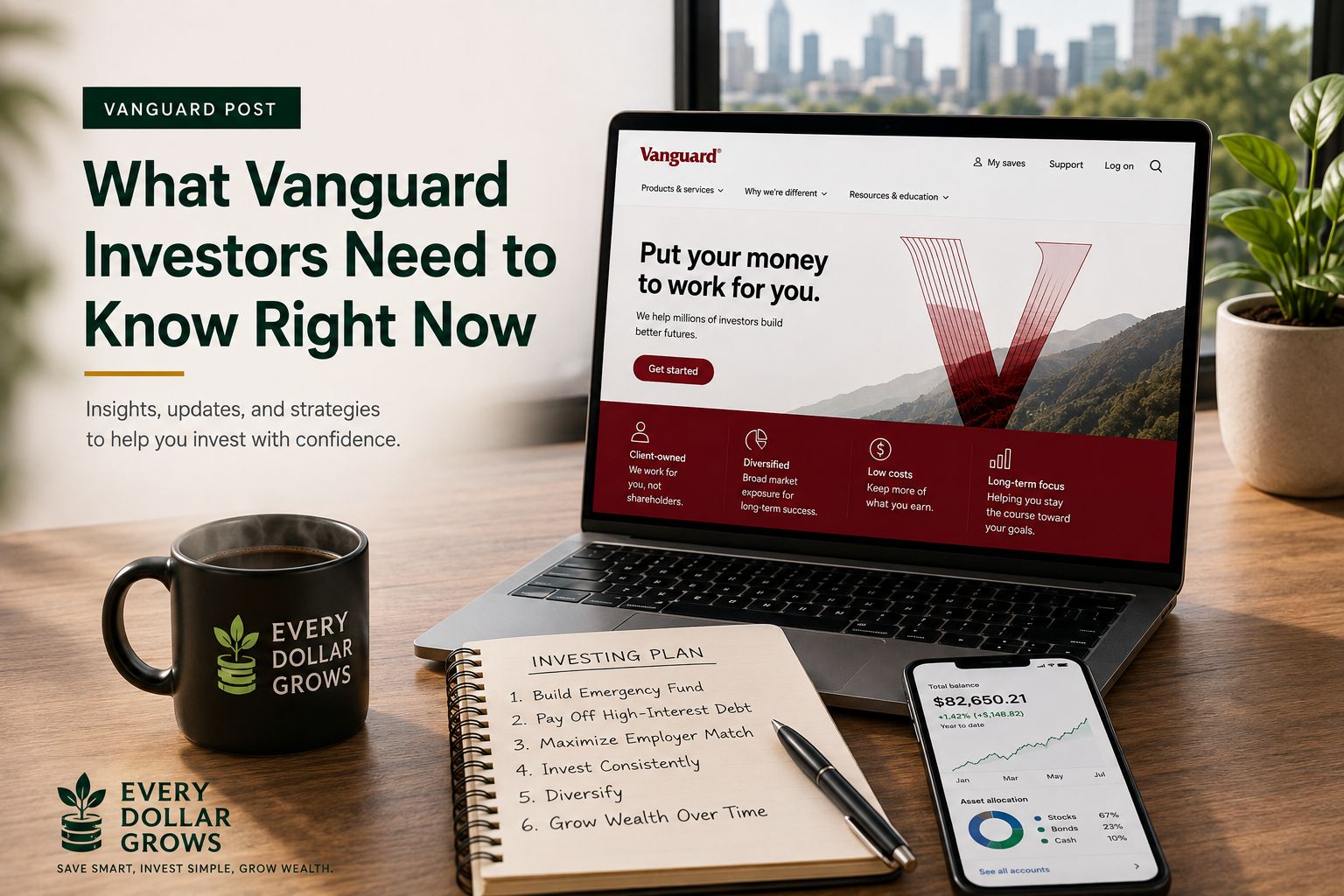
Vanguard Mutual Funds and ETFs remain popular with long-term investors because Vanguard offers a large lineup of broad, low-cost index funds. Vanguard is also owned by its funds, which in turn are owned by Vanguard fund shareholders. See Vanguard’s current company and cost information.
The biggest mistake when comparing funds is starting with the ticker instead of the plan. Your asset allocation — how much you hold in stocks, bonds, and cash — generally matters more to your investing experience than whether you use the ETF or mutual-fund share class of a broad index strategy.
When you are ready to turn the investing concepts into a simple allocation, use the Beginner Portfolio Builder.
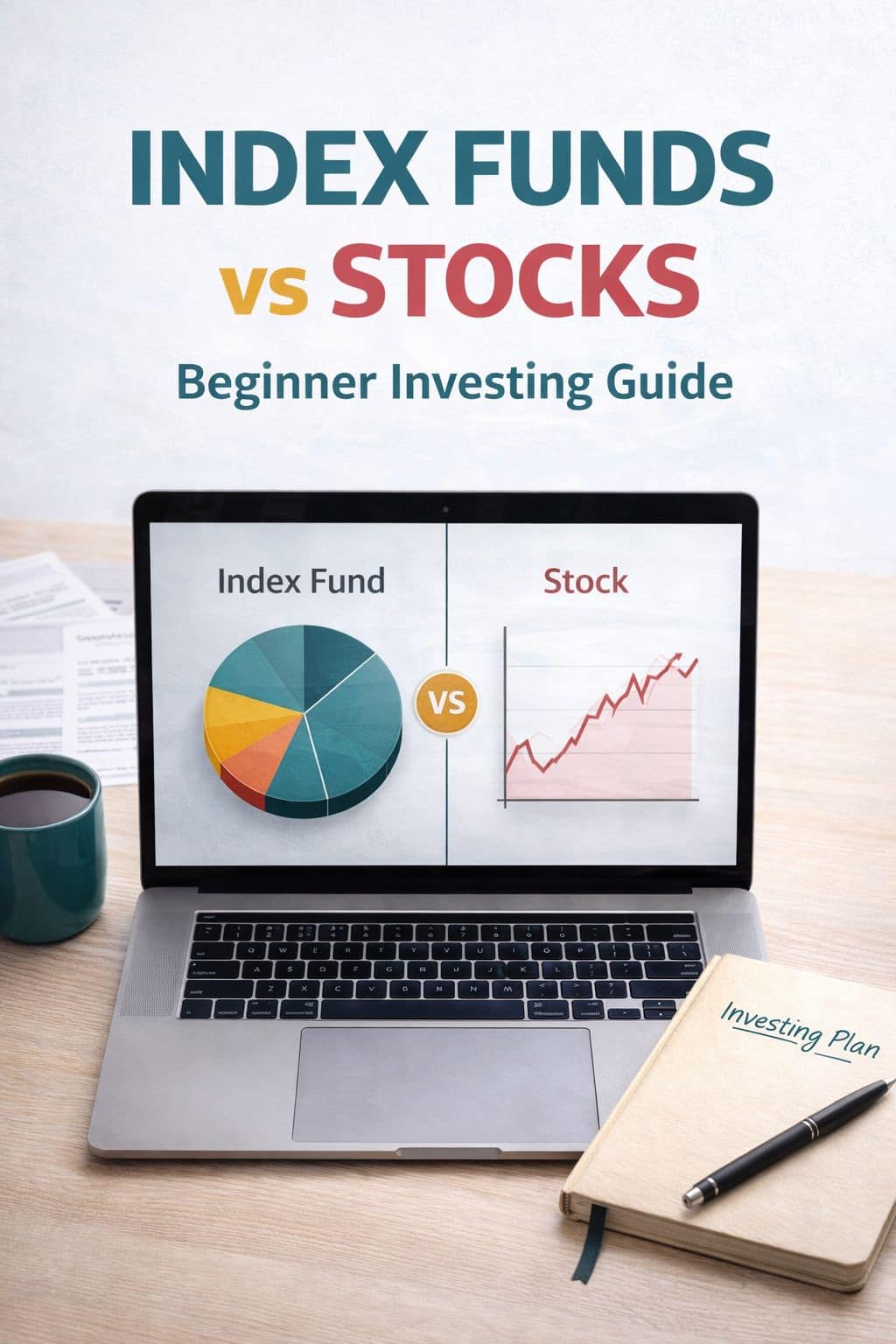
If you are still building the financial foundation underneath investing, start with the EDG Budgeting Guide. If you are ready to compare investment types more broadly, read Index Funds vs. Stocks for Beginners and How to Choose ETFs and Mutual Funds.
Why Vanguard Remains Popular for Long-Term Investors
Vanguard built its reputation around low-cost, diversified investing. Many of its flagship index funds hold hundreds or thousands of securities, which lets an investor get broad exposure without selecting individual stocks or bonds.
- Low costs: Vanguard’s core index funds typically carry expense ratios measured in hundredths of a percent.
- Broad diversification: Total-market stock and bond funds can cover large portions of an asset class in one holding.
- Simple portfolio construction: A diversified portfolio can be built with only a few broad funds.
- Investor-owned structure: Vanguard is owned by its funds, and those funds are owned by their shareholders.
Vanguard itself emphasizes asset allocation and diversification before fund selection. Its educational material notes that a portfolio’s mix of stocks, bonds, and cash has a major influence on both volatility and return experience. Read Vanguard’s asset-allocation guidance.
Vanguard Mutual Funds vs. ETFs: What’s the Real Difference?
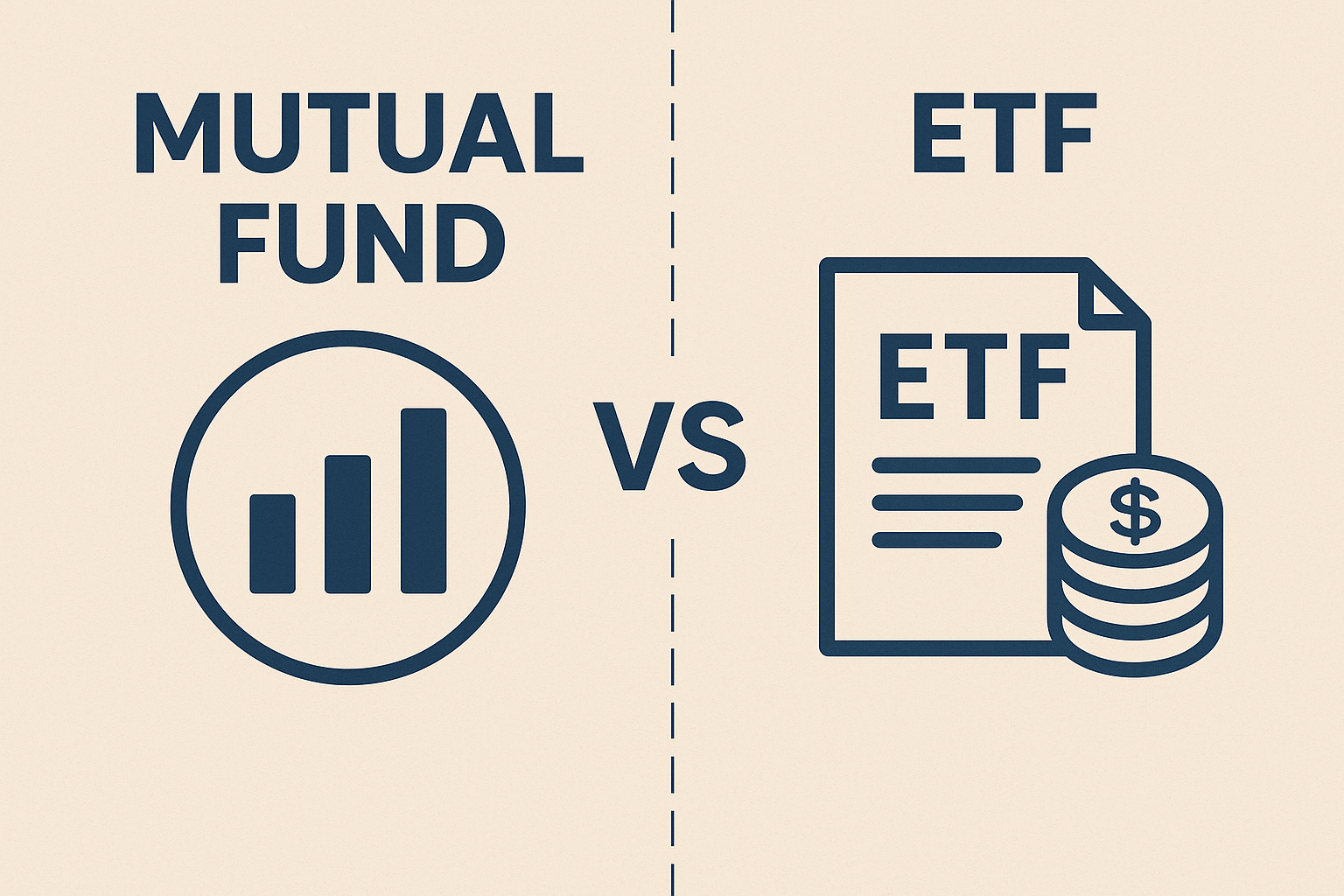
Many Vanguard strategies are available in both mutual-fund and ETF form. For example, VTSAX and VTI provide broad exposure to the U.S. stock market, while VFIAX and VOO both track the S&P 500. The underlying investment idea can be nearly identical even though the way you buy and hold the fund is different.
| Feature | Vanguard ETF | Vanguard Mutual Fund |
|---|---|---|
| Trading | Trades throughout the market day at market prices. | Orders execute once per day at that day’s NAV. |
| Minimum at Vanguard | Vanguard ETFs can be purchased for as little as $1. | Most Vanguard mutual funds currently require $3,000, though some differ. |
| Recurring investing | Available at many brokerages; exact features vary by platform. | Traditionally convenient for exact-dollar automatic contributions. |
| Tax efficiency | ETFs may have an additional structural tax advantage in taxable accounts. | Broad index mutual funds can also be tax-efficient; account type and fund structure matter. |
| Best fit | Low starting minimums and intraday trading flexibility. | Investors who prefer NAV pricing and traditional mutual-fund automation. |
Vanguard’s current comparison says Vanguard ETFs can be purchased for as little as $1, while most Vanguard mutual funds have a $3,000 minimum. It also notes that ETFs may offer an additional tax advantage because of how ETF transactions settle. See Vanguard’s ETF vs. mutual fund comparison.
Practical takeaway: For a long-term investor using broad index funds, the choice between an ETF and its mutual-fund counterpart is often secondary to choosing the right asset allocation, keeping costs low, contributing consistently, and staying invested.
How to Choose the Right Vanguard Mutual Funds and ETFs for You
- Define the goal. Retirement, college, a long-term taxable account, and a home down payment can require very different levels of risk.
- Match the time horizon. Money needed soon generally should not take the same market risk as money you will not touch for decades.
- Choose the stock/bond allocation first. Decide how much volatility you can realistically tolerate before choosing tickers.
- Add diversification. A portfolio may include U.S. stocks, international stocks, U.S. bonds, and potentially international bonds.
- Choose ETF or mutual-fund format. Pick the structure that best matches your brokerage, contribution size, and automation preferences.
- Keep it understandable. If you cannot explain why a fund is in the portfolio, you probably do not need to add it yet.
There is no universal percentage. International stocks can reduce dependence on one country, but the right allocation depends on your overall plan, risk tolerance, and willingness to hold international markets through long periods of underperformance. See Vanguard’s current international diversification guidance.
7 Vanguard Mutual Funds and ETFs to Know for Long-Term Investing
This is not a list of the “seven best investments” for every person. It is a practical map of seven major Vanguard building blocks and the portfolio role each one can fill. The goal is to understand what job the fund does before deciding whether it belongs in your portfolio.
VOO / VFIAX
Role: S&P 500 exposure.
Useful when you specifically want large U.S. companies as the core of the stock allocation. VOO is the ETF format; VFIAX is the mutual-fund format.
VTI / VTSAX
Role: Broad U.S. stock-market exposure.
Adds mid- and small-cap stocks beyond the S&P 500. VTI is the ETF format; VTSAX is the mutual-fund format.
VXUS / VTIAX
Role: Developed and emerging markets outside the U.S.
Useful when you want geographic diversification instead of relying entirely on U.S. companies.
BND / VBTLX
Role: Broad investment-grade U.S. bond exposure.
Often used to reduce portfolio volatility and add fixed-income exposure. Bond funds can still lose value.
VYM
Role: Higher-dividend U.S. stock tilt.
Best viewed as an intentional tilt rather than a replacement for broad diversification. Total return still matters more than dividend yield alone.
VNQ / VGSLX
Role: Publicly traded real estate investment trusts.
Can add a dedicated real-estate sleeve, but REIT funds are still equity investments and can be volatile.
LifeStrategy Funds
Role: Prebuilt stock/bond allocation with automatic rebalancing.
Useful when simplicity matters more than choosing and rebalancing several separate funds. Vanguard offers multiple fixed-allocation versions.
Do not choose a fund because it appears on a “best funds” list. Choose the portfolio role first — U.S. stocks, international stocks, bonds, real estate, or an all-in-one allocation — and then compare the current Vanguard fund that fills that role.
Start by deciding whether you need U.S. stocks, international stocks, bonds, real estate, or an all-in-one allocation. Then compare the Vanguard fund or ETF that fills that role.
VOO vs. VTI: Which U.S. Stock Fund Is Broader?
VOO and VTI overlap heavily because the largest U.S. companies make up a large portion of both funds. The difference is breadth: VOO tracks the S&P 500, while VTI covers the broader U.S. stock market, including mid- and small-cap companies.
| Question | VOO | VTI |
|---|---|---|
| What does it track? | S&P 500 | Broad U.S. stock market |
| Includes small and mid caps? | No, not as a dedicated segment | Yes |
| Best reason to choose it | You specifically want S&P 500 exposure | You want broader U.S. market coverage in one fund |
Owning both does not automatically create much additional diversification because their largest holdings overlap substantially. Pick the exposure you actually want rather than assuming two similar U.S. funds are better than one.
VTI vs. VTSAX: Same Market Idea, Different Wrapper
VTI and VTSAX are a useful example of why ETF-versus-mutual-fund decisions should not be confused with asset-allocation decisions. Both target broad U.S. stock-market exposure. The more important differences are how they trade, the minimum investment, the way your brokerage handles recurring purchases, and any tax or operational considerations that matter in your account.
- Choose VTI if you prefer ETF trading, lower starting-dollar requirements, or your brokerage makes recurring ETF purchases easy.
- Choose VTSAX if you prefer the traditional mutual-fund format and meet the current minimum.
- Do not own both just because they have different tickers. Their job in the portfolio is essentially the same.
Which Vanguard Funds Fit Which Account Types?
The fund and the account are two separate decisions. A Roth IRA, traditional IRA, 401(k), and taxable brokerage account are account structures. VTI, VOO, VXUS, BND, and Vanguard mutual funds are investments that may be held inside those accounts when available.
| Account | What matters most | Vanguard-fund consideration |
|---|---|---|
| 401(k) / workplace plan | Use the menu your employer actually offers. | You may have institutional or target-date options rather than the retail tickers in this article. |
| IRA | Long-term allocation, simplicity, and contribution discipline. | ETF-versus-mutual-fund tax differences are generally less important inside a tax-advantaged account. |
| Taxable brokerage | Taxes, turnover, distributions, and flexibility. | ETF structure can be attractive, but the entire tax picture matters more than one product feature. |
This is one reason “What is the best Vanguard fund?” is incomplete. The better question is: What job does this money need to do, in what account, over what time horizon?
How Much Should You Invest Each Month?
There is no Vanguard-specific percentage that everyone should invest. The sustainable amount is the amount that fits after essential expenses, minimum debt obligations, and an appropriate emergency cushion while still allowing you to stay consistent.
A practical sequence is:
- Protect current cash flow and near-term bills.
- Build enough emergency savings that normal surprises do not force you to sell investments.
- Capture any employer retirement match you are eligible for, when appropriate.
- Increase investing as your cash flow improves.
- Automate a repeatable amount rather than waiting for the “perfect” month.
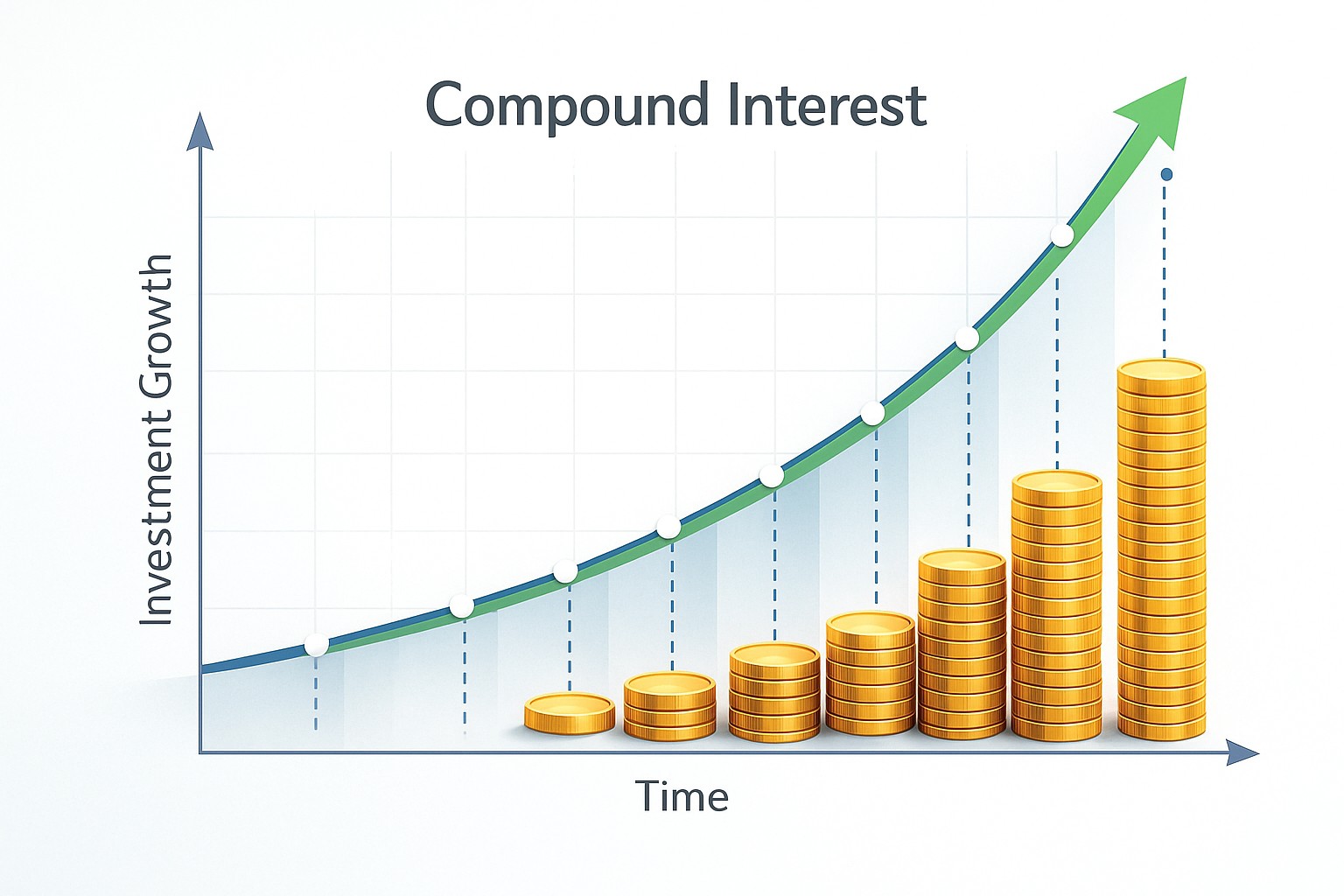
If you want to see how recurring contributions may compound over time, use the EDG calculators and tools rather than relying on a fixed example that becomes stale.
How to Avoid Unnecessary Vanguard Fund Overlap
Owning more funds does not automatically make a portfolio more diversified. Investor.gov specifically warns that even investors who own several mutual funds or ETFs should check whether the holdings are actually different. A narrowly focused or highly overlapping group of funds may provide less diversification than it appears to.
- VOO + VTI: heavy overlap because VTI already owns the large U.S. companies inside VOO.
- VTI + VYM: VYM adds a dividend tilt, but many VYM companies are already inside VTI.
- VTI + sector ETFs: the sector holdings may already exist inside VTI; the added ETF increases the weight of that sector.
- LifeStrategy fund + separate core funds: check what the all-in-one fund already owns before adding more.
The right question is not “How many funds do I own?” It is “What distinct exposure does each fund add?” That keeps the portfolio understandable and makes rebalancing much easier.
Sample Portfolios Using Vanguard Mutual Funds and ETFs
These are educational illustrations, not personalized recommendations. The percentages are examples of how different asset classes can be combined. Your appropriate allocation depends on your goals, time horizon, risk tolerance, tax situation, and ability to stay invested during market declines.
100% Stock Example
- 60% VTI / VTSAX
- 40% VXUS / VTIAX
Risk: High. No bond allocation to dampen stock-market volatility.
80/20 Example
- 48% VTI / VTSAX
- 32% VXUS / VTIAX
- 20% BND / VBTLX
Risk: Growth-oriented, with some bond exposure.
60/40 Example
- 36% VTI / VTSAX
- 24% VXUS / VTIAX
- 40% BND / VBTLX
Risk: More moderate than stock-heavy portfolios, but still subject to market losses.
One-Fund Examples
- VASGX — LifeStrategy 80/20 Fund
- VBIAX — Balanced Index Fund Admiral Shares
Benefit: Automatic diversification and rebalancing inside one fund.
Notice that the sample portfolios do not add dividend, REIT, sector, or ESG funds by default. Those can be reasonable intentional tilts, but a portfolio does not become better simply because it owns more tickers.
How to Buy Vanguard Mutual Funds and ETFs
- Choose the account type first. Decide whether the goal belongs in a workplace retirement plan, IRA, taxable brokerage account, or another account type.
- Choose your asset allocation. Decide the stock/bond mix before selecting the specific fund.
- Choose the fund structure. Compare the ETF and mutual-fund versions if both exist.
- Confirm current costs and minimums. Read the current fund page and prospectus.
- Place the order. ETFs trade during the day; mutual funds execute at end-of-day NAV.
- Automate future contributions when practical. Consistency matters more than trying to guess the perfect day to invest.
- Reinvest distributions if that fits your plan. Many long-term investors choose automatic dividend and capital-gain reinvestment.
- M1 Finance — useful for automated portfolio allocations and fractional-share investing.
- Robinhood — offers ETF investing and fractional shares.
- Morningstar — independent fund research and portfolio analysis.
Some links above are affiliate links. Brokerage features and fees can change; verify current terms before opening an account.
Why Fund Fees Still Matter
Expense ratios look small because they are quoted as percentages, but they are deducted from fund assets year after year. Investor.gov notes that even small differences in fund fees can create large differences in long-term investment results because higher costs leave less money compounding for the investor.
That does not mean you should automatically choose the lowest expense ratio on a screen. Compare funds that do the same job. A total U.S. stock-market fund and an international bond fund are not interchangeable simply because one is cheaper.
When two funds provide essentially the same exposure, costs, tracking quality, trading structure, taxes, and convenience can help break the tie. When the funds provide different exposure, choose the portfolio role first and compare costs second.
Common Vanguard Investing Mistakes to Avoid
- Choosing a ticker before choosing an allocation. Start with goals, time horizon, and risk.
- Assuming more funds means more diversification. Several overlapping U.S. stock funds may own many of the same companies.
- Chasing the best recent performer. Past performance does not guarantee future results.
- Ignoring the account type. Taxable and retirement accounts can have different tax considerations.
- Using dividend yield as the definition of return. Total return includes both income and price change.
- Treating bonds as risk-free. Bond funds can lose value when rates or credit conditions change.
- Using an age-based bond rule as if it were a law. There is no universal “your age in bonds” formula. Risk tolerance, time horizon, spending needs, and ability to withstand losses matter more.
- Constantly tinkering. A simple diversified allocation that you can hold through difficult markets is often more useful than a complicated portfolio you continually change.
Vanguard’s own diversification guidance emphasizes matching the allocation to the investor rather than applying one universal mix. Review Vanguard’s diversification framework.
Vanguard Mutual Funds and ETFs FAQ
Are Vanguard mutual funds or ETFs better?
Neither is universally better. ETFs offer intraday trading and, at Vanguard, can currently be purchased for as little as $1. Mutual funds trade once per day at NAV and can be convenient for automatic investing. For long-term investors using equivalent broad index strategies, asset allocation and consistent contributions are usually more important than the wrapper.
Should I choose VOO or VTI?
VOO tracks the S&P 500 and focuses on large U.S. companies. VTI tracks the broader U.S. stock market and includes large-, mid-, and small-cap stocks. VTI therefore provides broader domestic-market coverage, while VOO is specifically an S&P 500 strategy.
How much international stock should I own?
There is no universal percentage. Vanguard says at least 20% international exposure can add diversification and suggests about 40% of the stock allocation for investors seeking fuller global diversification. Your actual allocation should reflect your own plan and risk tolerance.
Do I need bonds if I am young?
Not automatically. A younger investor with a long horizon and high tolerance for volatility may choose a very stock-heavy portfolio, while another investor of the same age may need bonds to stay invested during large market declines. The right allocation is based on risk capacity and behavior, not age alone.
Is VASGX still the Vanguard LifeStrategy Growth Fund?
The ticker VASGX remains, but Vanguard changed the fund’s name to Vanguard LifeStrategy 80/20 Fund after Vanguard’s 2026 naming update. Its 80% stock / 20% bond target strategy remained in place.
Is VBINX still the Vanguard Balanced Index fund to use?
The older Investor share-class ticker VBINX is no longer the current retail share class highlighted by Vanguard. The current Admiral share class is VBIAX, which Vanguard lists with a $3,000 minimum.
Are Vanguard ETFs more tax-efficient than mutual funds?
ETFs can have an additional structural tax advantage in taxable accounts because of how ETF shares are created and redeemed. However, broad index mutual funds can also be tax-efficient. In IRAs and other tax-advantaged accounts, the ETF-versus-mutual-fund tax difference is generally less important.
Beginner-Friendly Next Steps
If you are starting from scratch, use this order:
- Make sure the money you plan to invest is not needed for near-term bills or emergencies.
- Choose the account type.
- Choose a stock/bond allocation.
- Choose broad funds that fill those roles.
- Automate contributions.
- Review periodically instead of reacting to every market move.
If you need help with the investment-selection step, continue with How to Choose ETFs and Mutual Funds. If you want a guided way to turn your goals and risk preferences into a simple diversified starting allocation, the EDG Beginner Portfolio Builder is the natural next step.
If cash flow is still the obstacle, fix that first with How to Make a Budget for Beginners.
Recommended Vanguard Investing Books
If you want to understand the philosophy behind low-cost index investing instead of simply copying a fund list, these books are useful starting points.
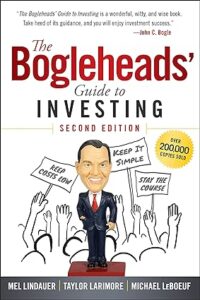
As an Amazon Associate, EveryDollarGrows.com earns from qualifying purchases at no additional cost to you.
Related Investing Guides
This article is educational and is not individualized financial, tax, or investment advice. Investing involves risk, including possible loss of principal. Fund names, expense ratios, minimums, holdings, and brokerage features can change over time; verify current information directly with Vanguard before investing.