
Small Business Finance Books: 16 Best Picks for Entrepreneurs
These small business finance books help entrepreneurs, freelancers, contractors, and side-hustle owners understand profit, cash flow, owner pay, accounting, taxes, business structure, financial statements, and sustainable growth.
Affiliate disclosure: As an Amazon Associate, Every Dollar Grows earns from qualifying purchases at no additional cost to you.
Small Business Finance Books for Profit, Cash Flow & Owner Pay
Start here if revenue comes in but cash still feels tight, owner pay is inconsistent, or you need a clearer system for deciding where business money goes.

Profit First
A cash-management system that allocates incoming revenue among profit, owner compensation, taxes, and operating expenses instead of waiting to see what remains at the end.
EDG Quick Review
Strongest point: Gives owners a concrete banking and allocation routine instead of treating profit as an accounting number they will worry about later.
Know first: The suggested percentages are starting frameworks, not universal targets. Businesses with different margins, payroll structures, or capital needs may need substantial adjustment.
Key idea: Profit is more likely to happen intentionally when it receives an allocation before operating spending consumes every available dollar.

Simple Numbers, Straight Talk, Big Profits
A plain-language framework for understanding profitability, owner compensation, labor productivity, cash requirements, taxes, and the financial numbers that matter in an operating business.
EDG Quick Review
Strongest point: Connects accounting numbers to practical management decisions instead of discussing financial statements in isolation.
Know first: Benchmark ranges are useful reference points, but industry economics vary and should be compared with the realities of your own business.
Key idea: Revenue alone says very little about business health if owner pay, labor efficiency, profit, and cash needs are not understood.

Cash Confident
A modern guide to understanding business money, building a financial plan, recognizing financial strengths and weaknesses, improving profitability, and becoming more confident making decisions with the numbers.
EDG Quick Review
Strongest point: Written specifically for owners who need practical financial understanding without turning themselves into professional accountants.
Know first: It is a broad financial-management framework rather than an in-depth accounting, bookkeeping, or tax reference.
Key idea: Business owners make better decisions when they can interpret their financial position instead of outsourcing every financial question.

The Money Book for Freelancers, Part-Timers, and the Self-Employed
A financial system for independent workers dealing with uneven income, late-paying clients, taxes, benefits, emergency savings, retirement, debt, and the challenge of paying yourself consistently.
EDG Quick Review
Strongest point: Addresses money problems that salaried-worker finance books often miss, especially unpredictable cash flow and the lack of employer-provided benefits.
Know first: Tax limits, account rules, and health-insurance details have changed since publication, so verify current implementation details separately.
Key idea: Irregular income needs a stronger cash-management system, not permission to ignore saving, taxes, and long-term planning.
Small Business Finance Books for Accounting & Financial Statements
You do not need to become an accountant, but you should understand what your income statement, balance sheet, cash-flow statement, margins, and break-even point are telling you.

Accounting Made Simple
A compact introduction to accounting concepts including the accounting equation, financial statements, journal entries, depreciation, inventory, cash flow, and commonly used financial ratios.
EDG Quick Review
Strongest point: Gets a non-accountant through the core vocabulary quickly without requiring a full textbook.
Know first: Its brevity is intentional; owners needing bookkeeping procedures or business-specific analysis will need a more detailed resource afterward.
Key idea: Understanding the basic language of accounting makes conversations with bookkeepers, CPAs, lenders, and advisors far more useful.
Accounting for the Numberphobic
A small-business-specific explanation of the income statement, cash-flow statement, balance sheet, break-even point, profitability, and how those numbers affect management decisions.
EDG Quick Review
Strongest point: Starts with the assumption that the owner is uncomfortable with numbers and explains what each statement means operationally.
Know first: It helps you understand reports; it does not replace bookkeeping software, accurate records, or professional accounting help where needed.
Key idea: Financial statements are a management dashboard, not paperwork that only matters to the accountant.
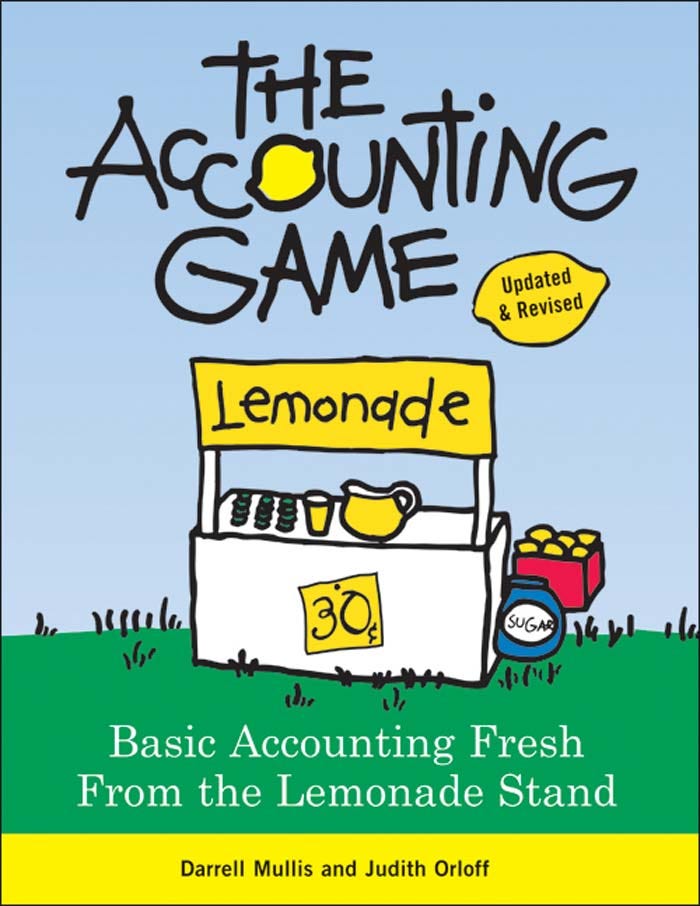
The Accounting Game
An interactive accounting primer that uses a lemonade stand to demonstrate revenue, expenses, profit, cash flow, balance sheets, income statements, and the way transactions move through a business.
EDG Quick Review
Strongest point: Makes accounting concrete by letting the reader watch one simple business change transaction by transaction.
Know first: The deliberately simple lemonade-stand model is for learning the concepts, not reproducing the complexity of a real company’s books.
Key idea: Accounting becomes much easier once you can visualize how one business decision changes several financial numbers at once.
Financial Intelligence for Entrepreneurs
A deeper guide to the income statement, balance sheet, cash-flow statement, ratios, return on investment, assumptions inside accounting, and using financial information to make better business decisions.
EDG Quick Review
Strongest point: Goes beyond defining financial statements and explains the estimates, judgments, and assumptions behind many accounting numbers.
Know first: It is more analytical than the other books in this section and may be better after a basic accounting introduction.
Key idea: Financial literacy means understanding not only the number on a report, but how that number was created and what decision it should influence.
Small Business Finance Books for Taxes & Business Structure
Tax books age faster than the other books on this page. Use them to understand the framework, then verify current rules, limits, eligibility, and entity-specific decisions before acting.

Tax-Free Wealth
A strategy-oriented look at how tax incentives, business ownership, investing, entity decisions, and proactive tax planning can affect the amount of income an owner ultimately keeps.
EDG Quick Review
Strongest point: Encourages owners to treat taxes as an ongoing planning issue rather than something considered only when a return is due.
Know first: Tax rules change frequently, and broad strategies do not establish eligibility in an individual situation. Verify current law with authoritative sources and a qualified tax professional.
Key idea: Legal tax planning generally works best before transactions occur, not after the year is already over.

J.K. Lasser’s Small Business Taxes 2026
A current tax reference covering business organization, recordkeeping, deductions, credits, depreciation, home offices, retirement plans, filing, audits, succession planning, and new tax-law developments.
EDG Quick Review
Strongest point: Unlike evergreen strategy books, this edition is specifically updated for 2025 returns and 2026 planning and includes newer laws, IRS rulings, limits, and tax developments.
Know first: Even a current annual tax book cannot account for every later IRS notice, state rule, court decision, or business-specific circumstance.
Key idea: A current tax reference helps identify questions and opportunities early enough to verify them before filing or making a major business decision.

The Tax and Legal Playbook
A small-business guide covering entity choice, tax planning, deductions, credit, asset protection, partners, retirement planning, and other legal and financial questions owners commonly face.
EDG Quick Review
Strongest point: Connects legal structure and tax planning instead of treating the two as unrelated business decisions.
Know first: The revised edition was published in 2019 and reflects tax law from that period. Use the planning concepts to frame questions, but verify today’s law before implementation.
Key idea: Entity, tax, liability, partner, and retirement decisions interact, so changing one area can create consequences elsewhere.

The Business Owner’s Guide to Financial Freedom
A broader owner-finance book about business value, debt, investments, retirement plans, succession, exit strategy, asset protection, and building wealth outside the operating company.
EDG Quick Review
Strongest point: Addresses a common blind spot: an owner can have a valuable business while still lacking a diversified personal financial plan.
Know first: Specific tax, retirement, insurance, and investment rules should be checked against current law and the owner’s actual circumstances.
Key idea: A business can be an important asset without needing to remain the owner’s only meaningful asset.
Small Business Finance Books for Systems & Sustainable Growth
Once the numbers are under control, these books help turn owner-dependent work into repeatable processes, test growth ideas more carefully, and build a business that is easier to manage.

The E-Myth Revisited
Explains the difference between doing technical work and building a business, with an emphasis on documented systems, repeatability, roles, and creating an operation that does not depend entirely on the founder.
EDG Quick Review
Strongest point: Helps skilled workers recognize that being good at the work itself is different from building a company capable of delivering that work consistently.
Know first: It is a systems and management book rather than a direct guide to bookkeeping or finance.
Key idea: A business becomes more durable when important work is governed by a process instead of living only in the owner’s head.

Clockwork
A framework for identifying critical work, clarifying responsibilities, documenting processes, delegating more effectively, and building an operation that can continue functioning when the owner steps away.
EDG Quick Review
Strongest point: Focuses directly on the operational bottleneck created when every decision and exception has to pass through the owner.
Know first: Delegation and systems do not eliminate the need for controls, financial reporting, or accountability.
Key idea: Growth becomes healthier when the business can produce consistent results without requiring the founder to touch every task.

The Lean Startup
A framework for testing assumptions through small experiments, minimum viable products, customer feedback, measurement, and iteration before committing more resources to an unproven idea.
EDG Quick Review
Strongest point: Encourages entrepreneurs to obtain evidence before spending heavily to build something customers may not actually want.
Know first: It originated in startup and technology environments; a local service business may need to adapt rather than copy the methods literally.
Key idea: Learning cheaply and early can preserve cash that would otherwise be lost scaling an incorrect assumption.

Traction
Introduces the Entrepreneurial Operating System framework for clarifying vision, people, data, issues, processes, and execution so an entrepreneurial company can operate with greater consistency and accountability.
EDG Quick Review
Strongest point: Turns broad goals such as “get organized” or “grow the company” into a structured operating rhythm built around measurable responsibilities.
Know first: EOS is a specific management framework. Some businesses will use the entire system; others may only find certain components useful.
Key idea: Growth is easier to manage when goals, metrics, responsibilities, recurring issues, and core processes are visible instead of informal.
Turn Small Business Finance Books Into a Working Money System
Separate business and household decisions, know what the business needs to keep, and build a personal financial foundation that can handle irregular entrepreneurial income.
More Small Business, Entrepreneurship and Money Books
Continue into entrepreneurship, budgeting, financial behavior, or the complete Every Dollar Grows Personal Finance Books Library.