Financial Checklist Before Getting Married (With Free Tools)
Getting married is a life transition where small money choices turn into big outcomes. This guide gives you a clear checklist, the conversations to have, and simple calculators you can use in minutes.
If you’re still building your financial foundation before marriage, start with our financial independence checklist for young adults. It walks through budgeting, emergency funds, investing, and preparing for major life milestones.
Quick Win (15 minutes): Write down both incomes, all debts, and fixed monthly bills.
Get the Free Monthly Money Plan
Plan your income, expenses, savings, sinking funds and debt on one simple printable page.
Quick summary
- Agree on a shared money plan (even if you keep separate accounts).
- Pick a system for bills + spending + saving before the wedding.
- Use the tools below to decide a fair split, a debt plan, and a first-year savings target.
If you need a beginner-friendly foundation first, read: How to Make a Budget for Beginners and Ultimate Guide to Budgeting and Saving Money.
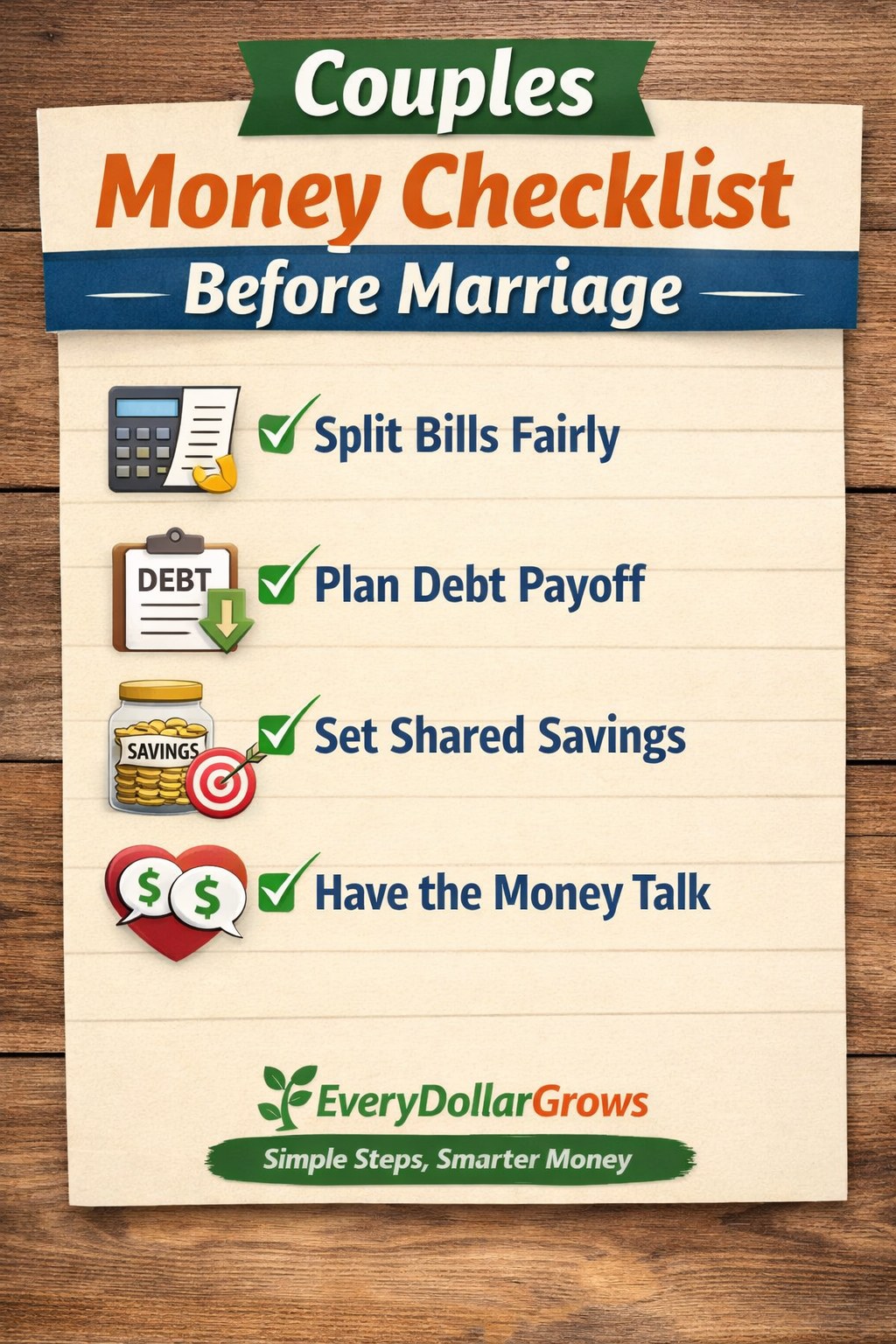
Financial checklist before getting married: the step-by-step plan
This order prevents the most common “we’ll figure it out later” money stress.
- Put everything on the table: income, debts, and monthly bills.
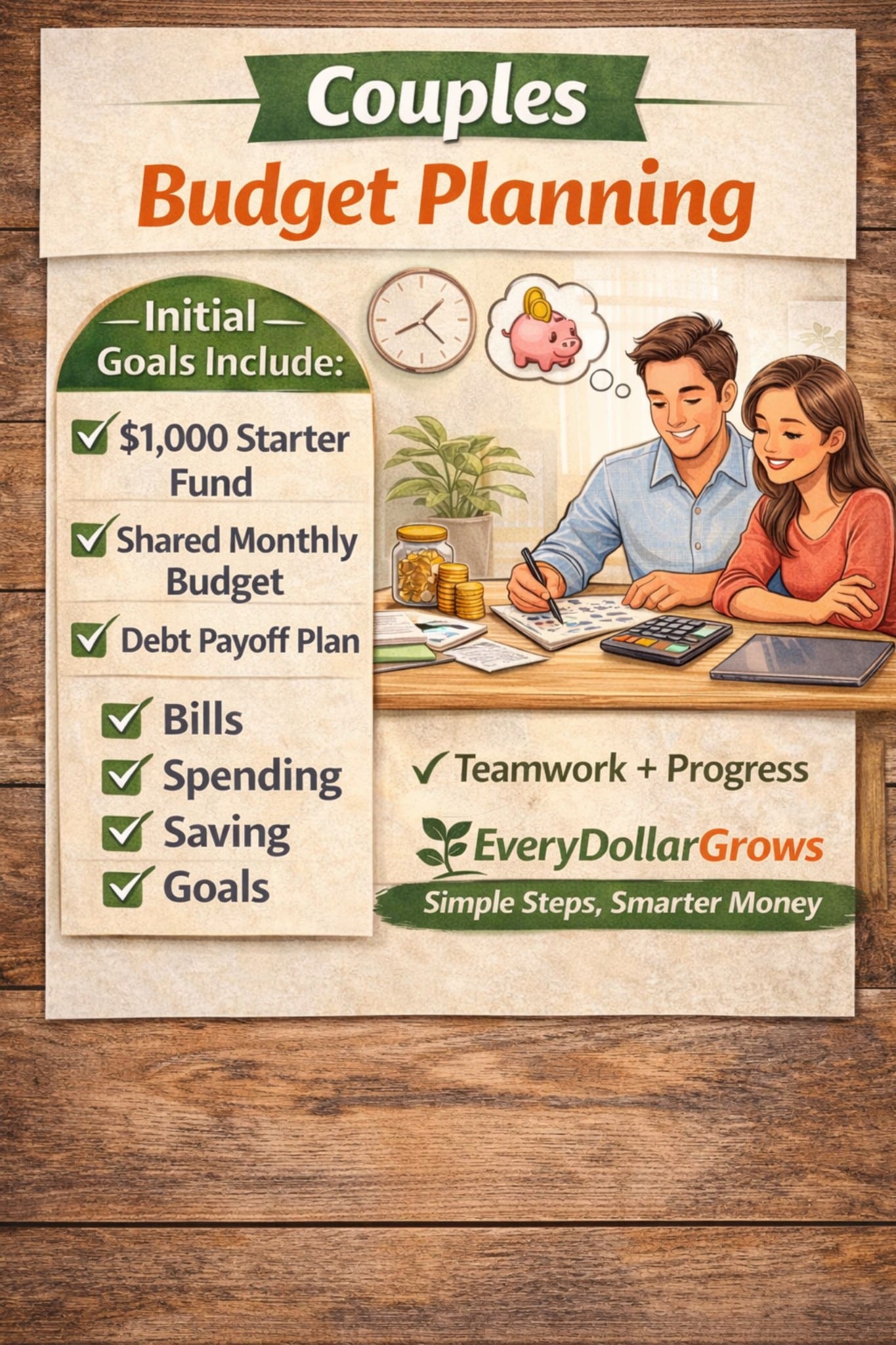
- Choose your budgeting system: categories + limits + a weekly money meeting.
- Pick your debt plan: who pays what, and how aggressive you want to be.
- Set first-year targets: emergency fund + sinking funds + investing basics.
- Update legal + insurance items: beneficiaries, coverage, and documents.
Related EDG reads: Budgeting Mistakes to Avoid • Emotional Spending • Money Mindset Habits
The money conversation script
Use this like a checklist. No judgment — just clarity.
1) Reality check (numbers)
- Monthly take-home pay (each)
- Debts (balance + interest + minimums)
- Fixed bills (rent/mortgage, car, insurance, subscriptions)
- Typical spending (food, shopping, fun)
2) Values + priorities
- What does “security” mean to you?
- What’s your biggest money fear?
- What purchase needs a “we both agree” rule?
- How often do we talk money? (Weekly works.)
A simple weekly money meeting (10 minutes)
- Check balances
- Confirm bills paid
- Set this week’s spending limits
- Pick one goal to push
Rule: talk about the plan, not each other’s personality.
Tool #1: “Fair Split” bill calculator
If you’re not combining everything right away, this suggests a proportional split based on income. (Example: if one person earns 60% of total household income, they cover ~60% of shared bills.)
If you want a simple spending plan right away, your freebies here help: Free Budget Tracker • Free Savings Goal Planner
Tool #2: Debt payoff estimator
Enter total debt, average interest rate, minimum payments, and extra payment. You’ll get an estimated payoff timeline. (For exact results, list each debt separately.)
- Snowball: best if motivation is the problem (fast wins).
- Avalanche: best if math is the priority (highest interest first).
Deep dive: Debt Payoff Plan That Works
Tool #3: First-year savings target calculator

This helps you set a realistic emergency fund target (3–6 months of essential expenses) and the timeline to reach it.
Helpful EDG reads: How to Build a $1,000 Emergency Fund • High Yield Savings Accounts • How to Save Money Fast
Should you combine accounts?
There’s no single “correct” structure. The best structure is the one you’ll actually follow.
Option A: Fully combined
- One household budget
- Simple bill-paying
- Best for “we’re a team” mindset
Option B: Yours / Mine / Ours
- Shared account for bills + goals
- Individual accounts for personal spending
- Often reduces conflict early on
If money triggers stress or arguments, this helps: Money Mindset That Builds Wealth • Investing Mindset
Insurance + legal checklist
- Update beneficiaries (life insurance, retirement accounts, bank accounts)
- Review health insurance options and timing (enrollment windows)
- Check auto insurance coverage + deductibles
- Create/refresh a simple will (especially if you plan for kids)
- Set emergency contacts everywhere that matters
Not legal advice — use this as a practical checklist and talk to a professional for your situation.
Common mistakes (and how to avoid them)
Mistake #1: “We’ll talk about money after the wedding.”
Fix: schedule one 30-minute money date per week for 4 weeks. Keep it calm. Keep it simple.
Mistake #2: Lifestyle upgrades before stability.
Fix: build a starter emergency fund and decide your debt plan before upgrading everything at once.
Mistake #3: No shared system.
Fix: even if accounts stay separate, build one shared plan for bills, saving, and goals.
Quick related win: 30-Day No Spend Challenge (great for couples who want to reset habits together).
Next steps + helpful EDG resources
Not engaged yet but preparing for the future? This financial independence checklist for young adults shows how to build the financial habits and stability that make marriage finances much easier.
Investing (for couples building wealth)
Investing Category
Index Funds vs Stocks
Choose ETFs & Mutual Funds
Mindset (where most couples get stuck)
Want the done-for-you system?
Start here: EveryDollarGrows.com/start-here/
If you want a “fast win” money buffer, go here: Save $500 This Month or grab the kit: Save $500 Starter Kit
Looking for tools instead of reading? Digital Budgeting Tools • Digital Investing Tools
FAQs
Should we combine bank accounts when we get married?
Only if it reduces friction and increases teamwork. Many couples do well with “yours/mine/ours” early on, as long as bills and goals are shared and clear.
What’s the #1 money conversation to have before marriage?
Debt + spending habits + expectations. The goal isn’t agreement on everything — it’s honesty and a shared plan.
How much should we save before the wedding?
At minimum, avoid putting the wedding on high-interest debt. Then build a starter emergency fund and decide your first-year savings targets together.
Is it okay to keep some finances separate?
Yes — if the system is fair, transparent, and both partners feel respected. Separate accounts don’t fix trust problems; a shared plan does.
Do we pay off debt or save first?
Many couples do best with a small starter emergency fund first (to avoid new debt), then attack high-interest debt while steadily growing savings.
Sources + helpful links
- Consumer Financial Protection Bureau (CFPB)
- IRS (tax filing status, withholding basics)
- MyMoney.gov (general financial education)
For site navigation: EDG HTML Sitemap