
Financial Independence Checklist for Young Adults and Teens (4 Free Tools)
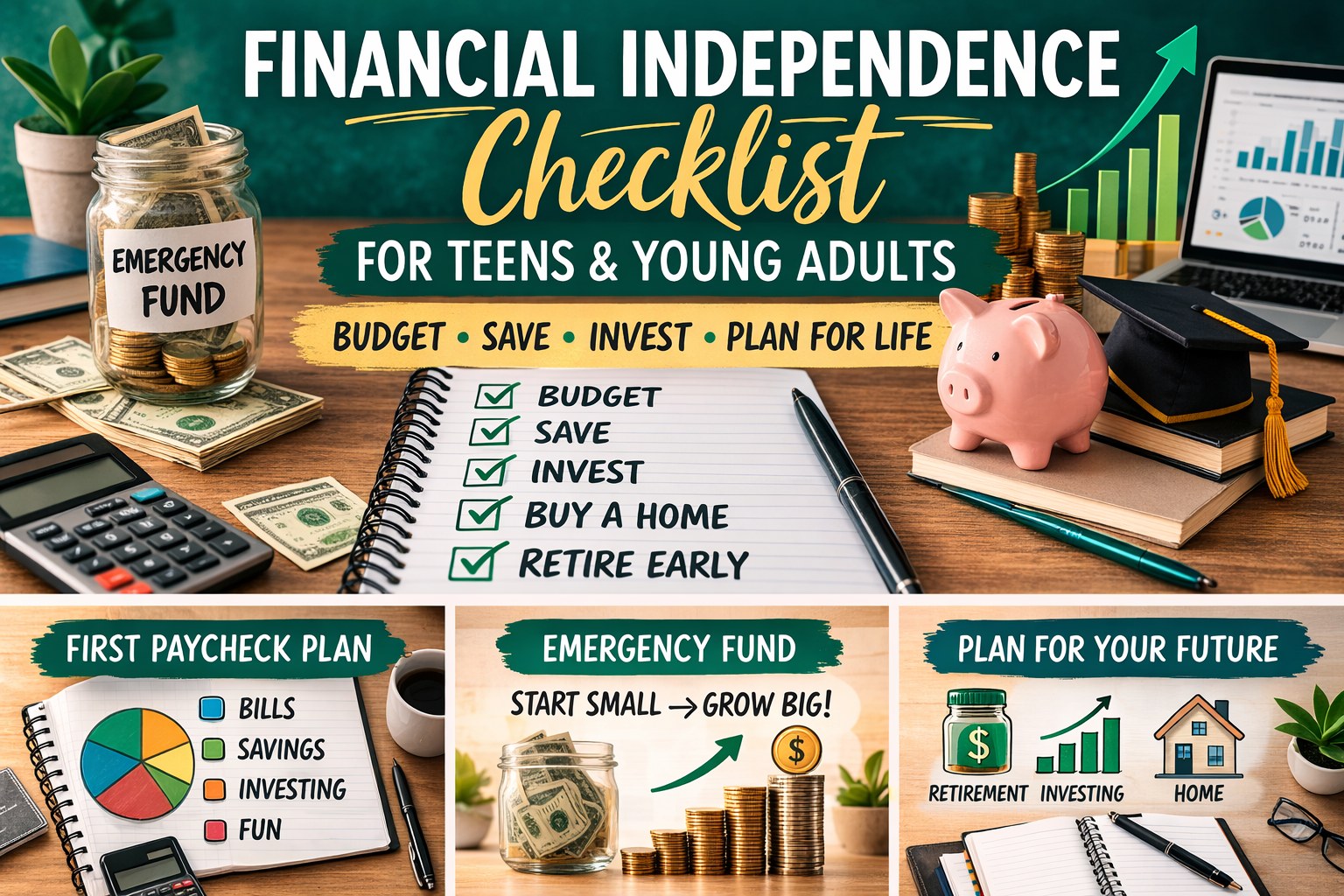
Going from “dependent” to “on your own” is one of the biggest life transitions you’ll ever make. This guide gives you a step-by-step plan to build stability: a budget, an emergency fund, credit basics, retirement, and a path to a future home.
Preparing for marriage soon? See the next stage: Financial Checklist Before Getting Married.
Start here (simple): Build a basic budget, save your first $1,000, and avoid high-interest debt.
Start Here: Free Money Systems Save $500 This Month (Free Guide)Quick summary
- Step 1: Build a simple budget you can follow.
- Step 2: Save a starter emergency fund (then grow it).
- Step 3: Protect yourself from expensive mistakes (credit, insurance, and debt).
- Step 4: Start retirement early—even small contributions matter.
- Step 5: Build “future you” funds (car, moving, wedding, down payment).
- Step 6: Begin long-term investing when your foundation is stable.
If you want the beginner version first, read: How to Make a Budget for Beginners and Ultimate Guide to Budgeting and Saving Money.
Your first real budget
A budget is simply a plan for your money. It’s how you stop reacting and start building.
Start with 4 categories
- Needs: housing, food, transportation
- Bills: phone, insurance, subscriptions
- Future you: emergency fund, sinking funds
- Fun: guilt-free spending
The one rule that prevents failure
Track weekly, not monthly. A 10-minute weekly check-in beats “perfect” once a month.
Helpful: Free Budget Tracker and Budgeting Mistakes to Avoid.
Tool #1: Paycheck budget splitter

Enter your paycheck amount. This tool gives a simple starting plan you can adjust.
Not sure what your take-home paycheck will be?
If you know your salary or gross pay but are not sure what will actually reach your bank account after taxes and deductions, use the TakeHomeDollar Take-Home Pay Calculator first. Then bring that estimated take-home amount back here to split your paycheck into a working budget.
Estimate Your Take-Home Pay ↗External calculator provided by TakeHomeDollar. Results are estimates; your actual paycheck may differ.
Emergency fund: starter → real

An emergency fund prevents “small problems” from becoming debt. Start small, then build to 3–6 months of essential expenses.
Starter plan
- First goal: $500 (fast win)
- Next: $1,000 starter emergency fund
- Then: 3–6 months of essential expenses
Read: How to Build a $1,000 Emergency Fund and High Yield Savings Accounts.
Tool #2: Young Adult Financial Foundation Planner
Enter a few numbers and get a simple starting plan for your emergency fund, investing, and a future home down payment. This is meant to be a practical baseline you can adjust.
Optional: House down payment goal
If you don’t know this yet, leave it blank and the tool will still work.
Retirement: start earlier than you think
The earlier you start, the less you need to contribute later. If your employer offers a match, take it.
Simple retirement ladder
- Get employer match (if offered).
- Build your emergency fund.
- Increase retirement contributions as you stabilize.
Investing foundation: Choose ETFs and Mutual Funds, Index Funds vs Stocks for Beginners, and Unlock Your Wealth Potential With Smart Investing.
Tool #3: Retirement starter contribution calculator
This estimates a simple starting contribution based on your take-home pay.
Future funds: car, move, wedding, and a down payment
A “future fund” is money you set aside for a goal so you don’t need debt later. This is how you prepare for big life moments—moving out, getting married, and buying a house.
If marriage is on the horizon, read the full guide: Financial Checklist Before Getting Married. It walks through shared budgeting, debt planning, and financial conversations couples should have before the wedding.
Your financial Independence Checklist for Young Adults should include 3 sinking funds
- Moving fund: deposits, furniture, setup costs
- Car fund: repairs or next vehicle
- Future home fund: down payment and closing costs
If you need a mindset reset: Money Mindset That Builds Wealth and Save Money Without Feeling Deprived.
Tool #4: Rent affordability check
Many young adults get trapped by rent that’s too high. This tool estimates a safer rent range so you still have room to save and build.
Long-term investing: building income investments
Once your budget is working and you’re saving consistently, investing is how you grow wealth over time. The goal isn’t to get rich fast—it’s to build assets that grow while you live your life.
Simple investing foundation
- Start with broad, diversified funds (many people begin with index funds).
- Contribute monthly, even if it’s small.
- Increase contributions when income rises.
Learn more: Choose ETFs and Mutual Funds and Vanguard Mutual Funds and ETFs.
What to avoid
- High fees you don’t understand
- Anything that promises guaranteed returns
- Investing before you can handle basic bills
If you need tools: Digital Investing Tools.
Next steps + helpful EDG resources
Want a simple system you can follow?
Start here: EveryDollarGrows.com/start-here/
If you want a fast win: Save $500 This Month or Save $500 Starter Kit.
If you want tools instead of reading: Digital Budgeting Tools.
FAQs
What’s the first money goal I should hit after high school?
Build a simple budget, save $500, then work toward a $1,000 emergency fund. Those steps prevent debt from small surprises.
Should I start investing if I don’t have much money?
If you can pay your bills and save consistently, small investing contributions are worth it—especially if you get an employer match. If money is tight, stabilize first.
How much should I save before moving out?
Many people aim for a starter emergency fund plus a moving fund for deposits and setup costs. The rent affordability tool above helps you avoid rent that’s too high.
What’s the biggest mistake young adults make?
Overcommitting to fixed costs—especially rent and car payments—before they have a stable emergency fund and a working budget.
How do I prepare to buy a house someday?
Build credit responsibly, keep debt low, save consistently, and create a “future home fund” so a down payment is realistic when the time comes.
Sources + helpful links
Site navigation: EDG HTML Sitemap