Save, Spend, Give Printable for Kids: My First Money Plan
Three simple choices can teach a child how to handle their first money: save some for later, spend some thoughtfully, and give some to help others.
This free activity for ages 4–9 includes an interactive money planner, printable worksheets, and easy ways to practice with coins or pretend money.
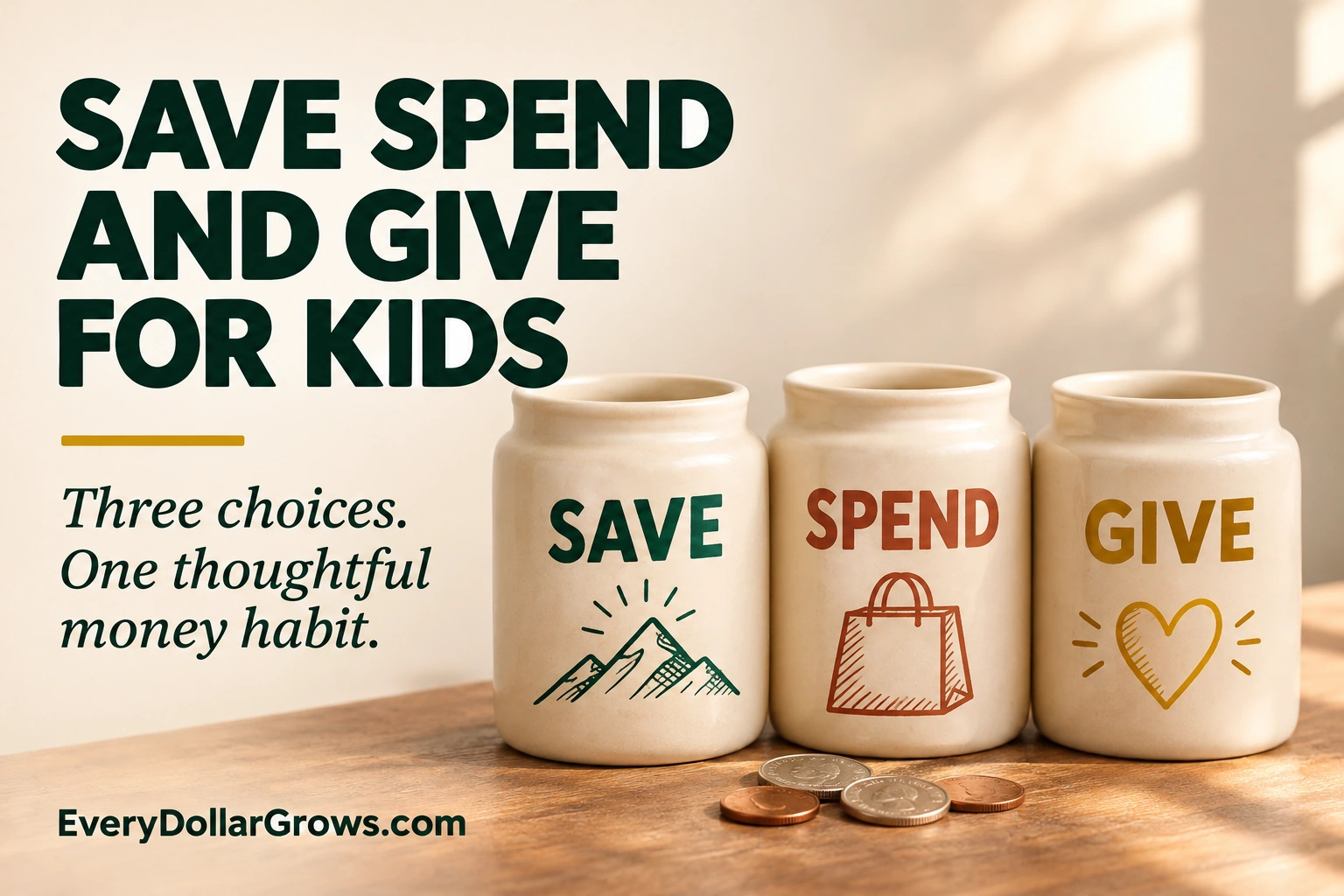
Save, Spend, Give: Three Ways Kids Can Use Money
Children often first think of money as something to spend. But money can also be kept for something important later or shared to benefit someone else.
A simple three-part money plan introduces those choices without requiring a child to understand bills, taxes, investing, or an adult household budget.
By the end of this activity, your child should be able to identify the three purposes, assign a small amount among them, and explain at least one reason for the choices.
There is no required percentage. The goal is thoughtful planning, not memorizing a particular split.

Save
Keep money for later. Saving means choosing not to spend some money today because you want it available for a future purpose.
Ask: “What would you like to save up for?”
Spend
Use money to buy something. Spending is a choice. Before buying, think about whether the item is needed, wanted, or worth the price.
Ask: “What would you like to buy, and why?”
Give
Use money to help others. Giving may include helping a family, supporting a charitable cause, or sharing with someone in need.
Ask: “Who might benefit from something you give?”
What Could You Do With $10?
Imagine receiving $10. You could decide to save part for a future goal, spend part now, and give part away.
$4 + $4 + $2 = $10. Every dollar has a purpose, and nothing has been assigned twice.
This is only one example, not a recommended formula. Your child may choose a different plan, including saving most of the money for an important goal.
My Save, Spend, Give Money Plan
Enter how much money you have, decide what to do with it, and print your plan. Parents can help younger children with the numbers.
🌱 Save
🛒 Spend
💛 Give
Great! Your entire amount has a purpose.
Step 2 — Explain one choice.
Both versions print on ordinary paper. You can also choose Save as PDF in your browser’s print settings. Your entries stay in this browser and are not submitted to the website.
How to Teach Save, Spend, Give in 10 Minutes
This lesson works with real coins, pretend money, or small tokens. No special supplies or expensive activity kit is necessary.
- Set out three containers. Label them Save, Spend, and Give. Cups, envelopes, or small boxes work.
- Choose a small amount. Start with an amount the child can comfortably count.
- Ask three questions. What do you want later? What would you like now? Who could you help?
- Let the child divide the money. Encourage the child to make the choices, using your help for counting.
- Check the total together. Money assigned to the three purposes should not exceed the starting amount.
- Explain the plan. Ask the child to explain one decision in their own words.
For ages 4–6, you can skip written numbers and use one token at a time. Focus on making a choice and telling the reason for it.
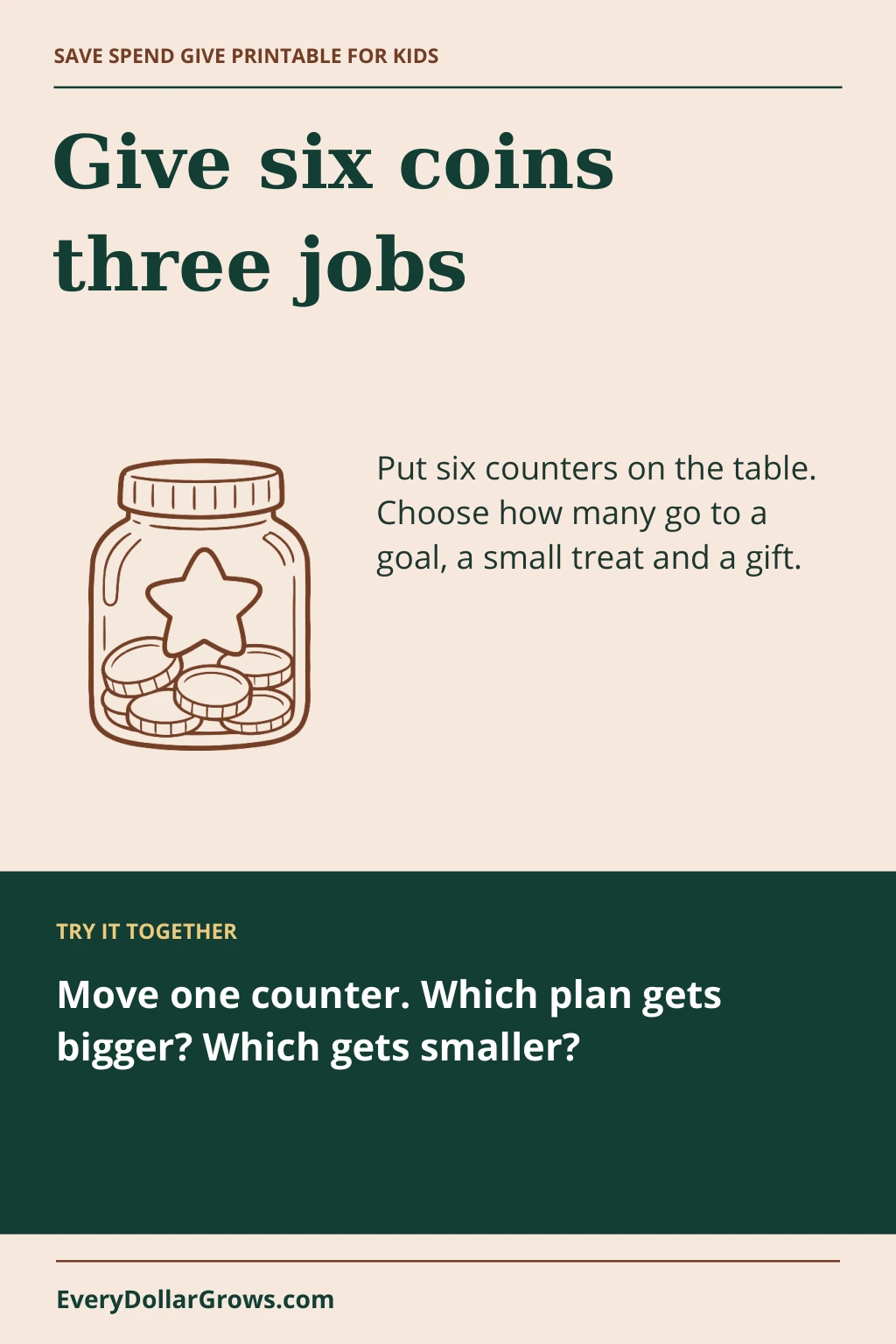
Three Ways to Practice Again
1. The Birthday Money Plan
Imagine receiving birthday money. Decide how much to save, spend, and give before making any purchases. Ask whether the plan would change if the amount were smaller.
2. The Saving Goal Challenge
Pick a future goal and keep the Save portion in a separate envelope. Check progress occasionally. Discuss why waiting can help you reach a larger goal.
3. The Giving Choice
Think of someone or a cause the child cares about. Discuss ways to help, including sharing time or effort when money is not available.
4. Make a New Plan
Try the same amount again but choose different priorities. Compare the two plans and explain the reasons behind the new decisions.
Adjust the Lesson to Your Child’s Age
Ages 4–6: See and Choose
Use pretend coins, simple choices, and physical envelopes. An adult can write down the plan. Counting every cent is not the goal.
Ages 7–9: Count and Explain
Introduce written dollar amounts, simple addition, and named goals. Let the child fill in the worksheet and check the total independently when possible.
Children learn at different speeds. This activity is a starting point, not a test of financial ability. The same simple plan can be repeated with greater independence over time.
What Makes This Lesson More Useful?
Let the Child Make Decisions
Adults can guide without choosing every amount. If a child prefers to save more or spend less, ask why. The explanation may be more valuable than the exact amounts.
Use Realistic Goals
Choose something the child understands. Avoid abstract financial targets that mean little to a young learner.
Keep Giving Meaningful
Discuss generosity positively. Help children understand why someone might need assistance, without using giving as a punishment.
Repeat the Habit
Revisit the money plan when a child receives new money or has a new goal. A repeated habit is more useful than a worksheet completed once and forgotten.
More Free Money Activities for Kids
Once your child understands saving, spending, and giving, build on the lesson with more planning activities.
Frequently Asked Questions
What does Save, Spend, Give mean for kids?
Save means keeping money for a future use. Spend means using money to buy something. Give means sharing money to benefit someone else. These three choices introduce children to basic money planning.
How much should a child save, spend, or give?
There is no single required percentage for young children. The main goal is to make an intentional plan and explain the choices. Families may teach different priorities and expectations.
Can a four-year-old use this worksheet?
Yes, with adult help. Use pretend money or tokens and allow the adult to write the amounts. Focus on recognizing the three purposes instead of completing complicated math.
Can I print a blank Save Spend Give worksheet?
Yes. Use the Print a Blank Worksheet button in the interactive planner. The blank worksheet includes space for starting money, saving, spending, giving, and explaining a choice.
Do I need to create an account?
No. The activity and printable worksheet are free to use without creating an account.
Small Money Choices Build Strong Habits
A child does not need a complicated budget to begin learning financial responsibility. Choosing what to save, spend, and give introduces planning, patience, and generosity in a practical way.
Print a worksheet, practice with a few coins, and repeat the lesson when your child has another opportunity to make a decision.
For more age-appropriate lessons, explore the Teaching Kids About Money hub .
View the activity pages