Investing Education · Every Dollar Grows
HSA Investing for Retirement: Rules, Taxes & How to Invest
Learn how HSA investing works, how much to keep available for medical bills, when investing may make sense, and how the account can support long-term healthcare and retirement costs.
Quick Answer
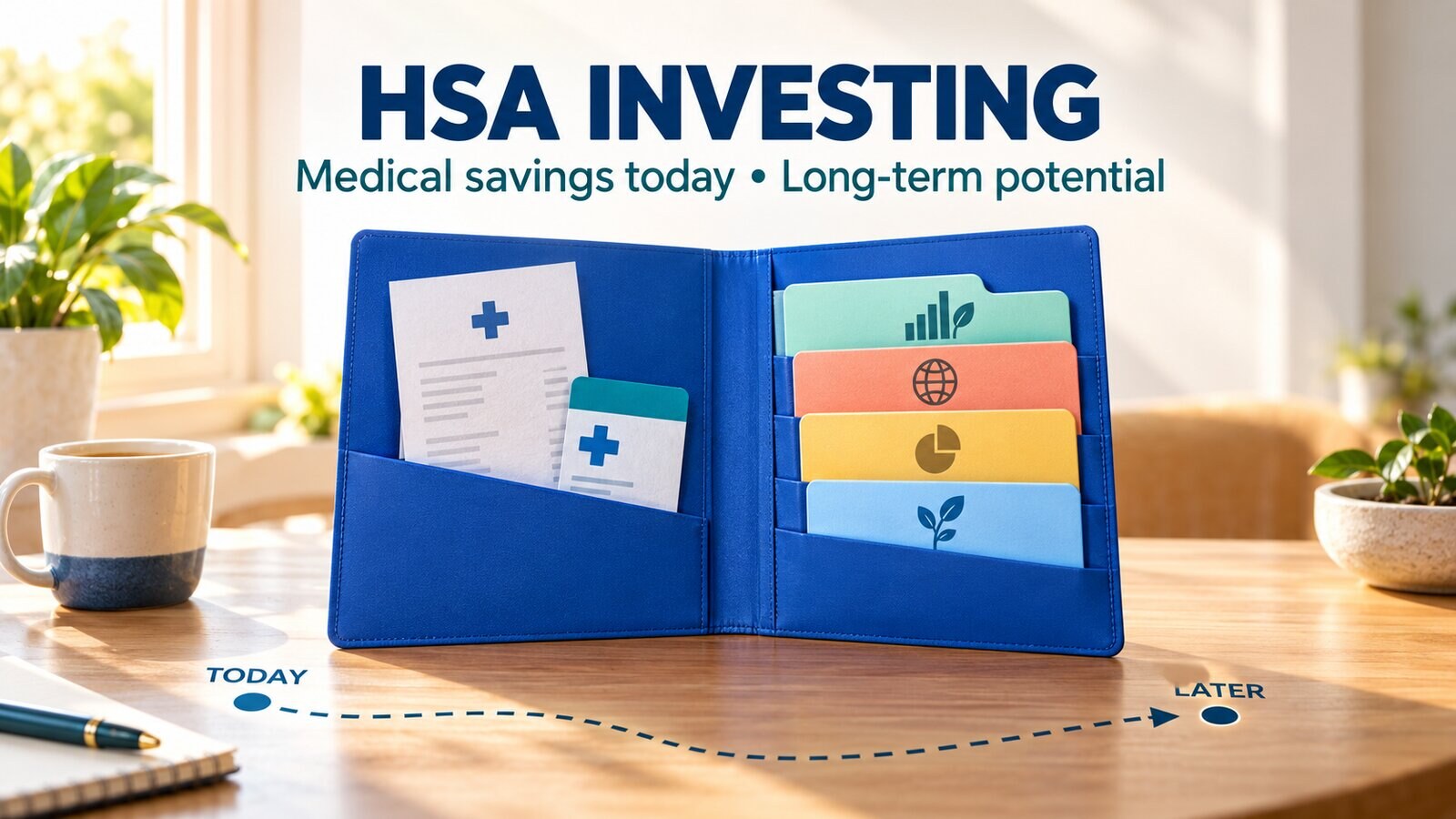
HSA investing means investing some of the money inside a Health Savings Account instead of leaving the entire balance in cash. An eligible HSA can offer tax-deductible or pre-tax contributions, tax-deferred investment growth, and tax-free withdrawals for qualified medical expenses.
But the tax advantages do not make every HSA dollar long-term investment money. Medical expenses can occur at any time. The central decision is therefore: How much should remain liquid for healthcare costs, and how much can remain invested through a market decline?
HSA Investing: 2026 Rules at a Glance
Before deciding how to invest an HSA, make sure you are eligible to contribute and understand the current limits.
2026 HDHP Limits
| 2026 HDHP rule | Self-only | Family |
|---|---|---|
| Minimum annual deductible | $1,700 | $3,400 |
| Maximum annual out-of-pocket expenses | $8,500 | $17,000 |
HSA eligibility involves more than simply having a large deductible. Other health coverage can affect eligibility. Enrollment in Medicare also stops HSA contribution eligibility, although an existing HSA can continue to be used.
Why HSA Investing Can Be So Powerful
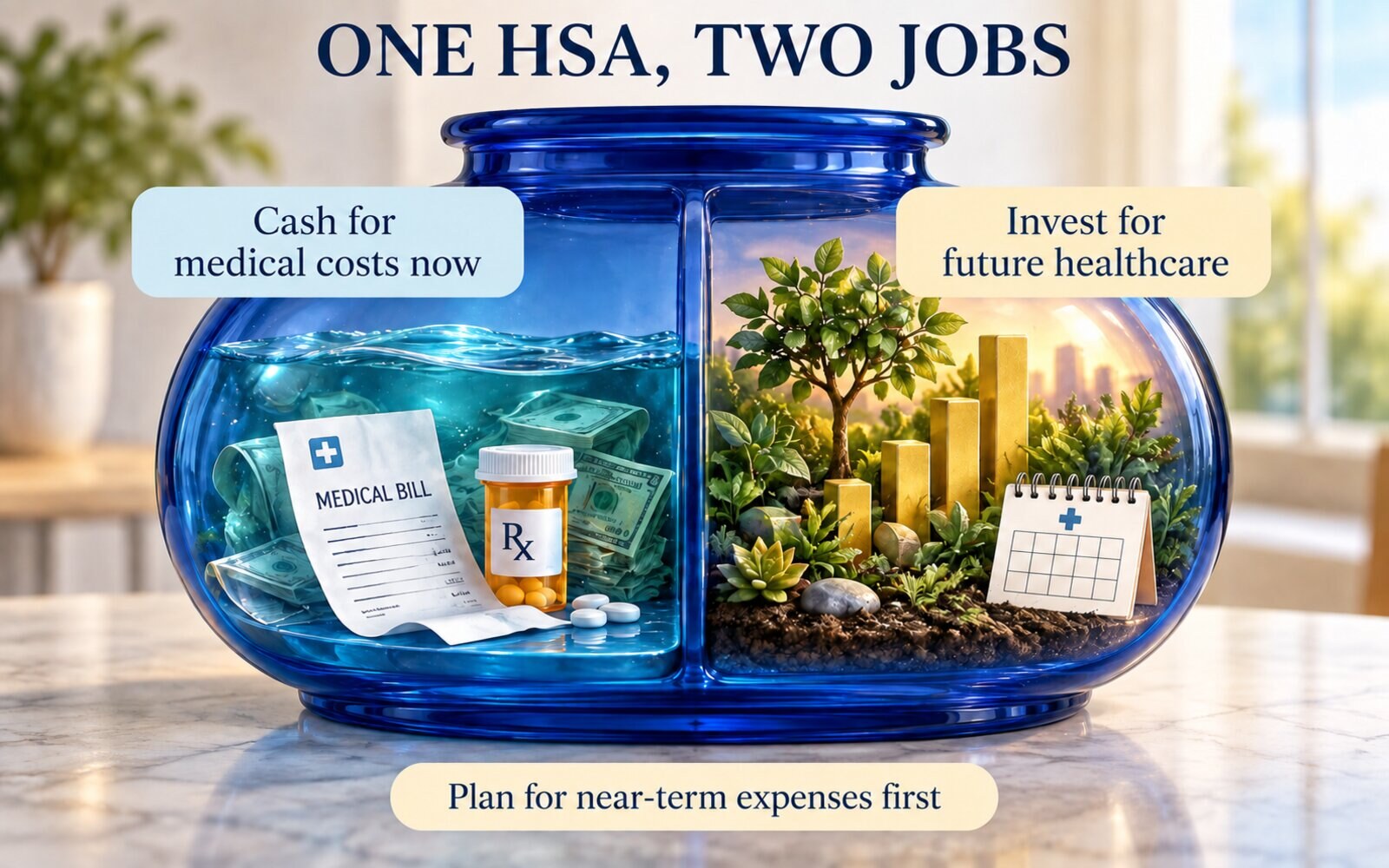
An HSA has a tax structure that is unusual among household financial accounts.
- Eligible personal contributions can generally be deductible for federal income-tax purposes.
- Qualifying employer contributions generally are not included in taxable income.
- Investment earnings inside the HSA generally are not included in current federal taxable income.
- Distributions used for qualified medical expenses can be federally tax-free.
That combination creates the potential for an HSA to serve two jobs: paying healthcare expenses today and accumulating assets for healthcare expenses later in life.
But the account's tax treatment does not change basic investing principles. Money needed soon should not depend on stock-market returns.
HSA Investing: Cash vs. Investing
The most important HSA investing decision is usually not which fund to buy. It is deciding which HSA dollars are genuinely available for long-term investing.
Consider three different pools of money:
- Known near-term medical expenses. Prescriptions, scheduled procedures, recurring therapy, expected dental costs, and other reasonably predictable expenses.
- Medical contingency money. Money you want readily available if healthcare expenses are higher than expected.
- Long-term HSA money. Money that can remain untouched through market declines because near-term medical costs can be covered elsewhere.
Only the third category is an obvious candidate for long-term investment.
The HSA investing question
If the stock market dropped significantly tomorrow, could you leave the invested portion of the HSA alone and still pay the medical expenses your household is likely to face?
If not, more of the HSA may need to remain liquid.
A Practical HSA Cash-Reserve Framework
There is no universal rule saying every household should keep one deductible, one year's expenses, or some fixed percentage of an HSA in cash.
The appropriate amount depends on factors such as:
- predictable healthcare spending,
- prescription costs,
- planned procedures,
- the health plan deductible and out-of-pocket exposure,
- the household emergency fund,
- cash flow available outside the HSA,
- investment time horizon,
- and willingness to pay medical bills from non-HSA money.
HSA balance − healthcare reserve you want readily available = amount that can be evaluated for long-term investing.
That is a planning framework, not a recommendation that every remaining dollar should be invested. Your asset allocation and ability to absorb losses still matter.
Save Your Documentation Before Delaying HSA Reimbursement
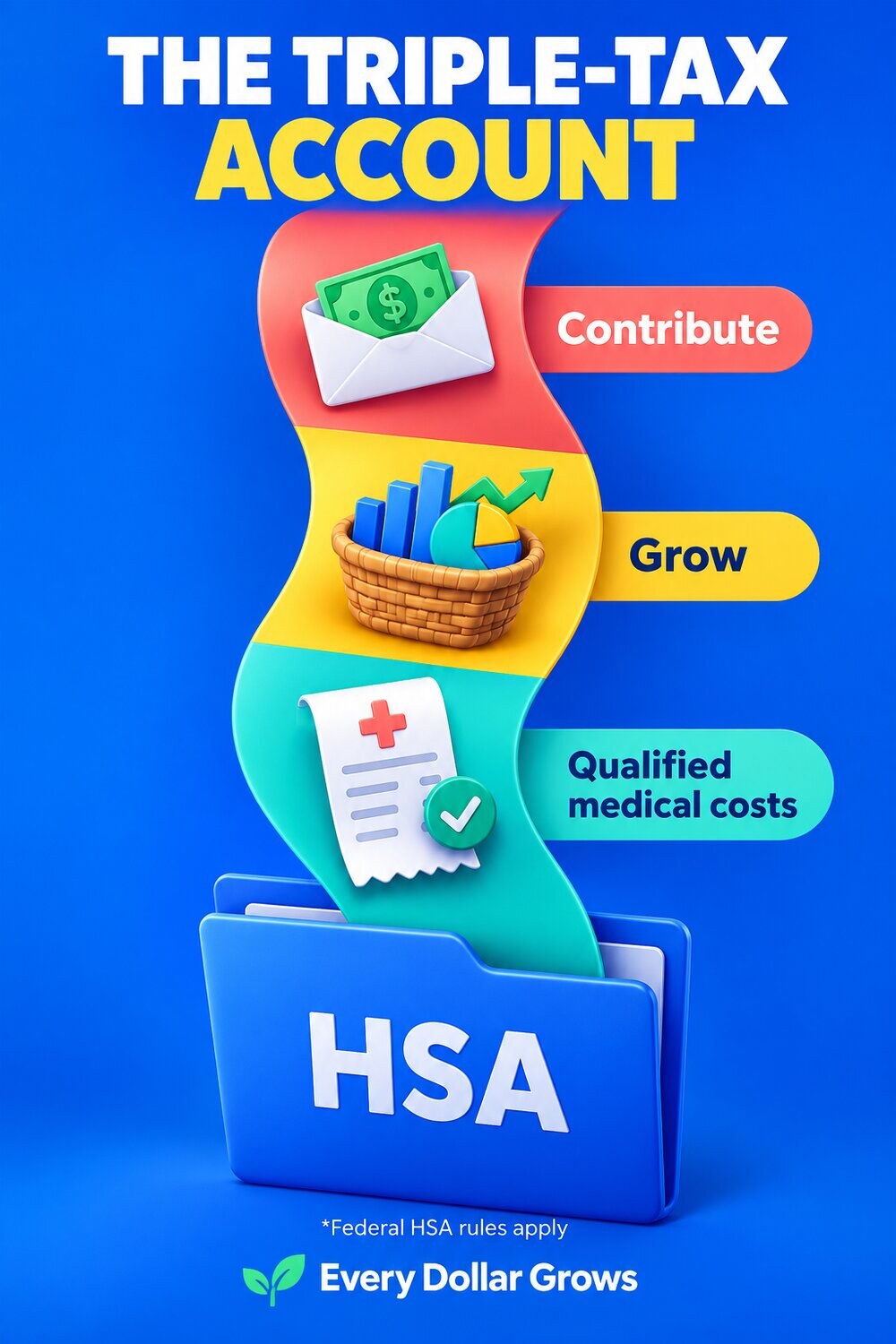
One HSA strategy is to pay qualified medical expenses with non-HSA money, keep the HSA invested, and reimburse those expenses later.
IRS guidance does not impose a general deadline for taking that later reimbursement, provided the expense was incurred after the HSA was established and the requirements for a qualified reimbursement are satisfied.
That makes recordkeeping essential.
Keep documentation showing that:
- the expense was a qualified medical expense,
- it was incurred after the HSA was established,
- it was not already reimbursed from another source,
- and it was not also used as an itemized medical deduction.
A digital archive with the receipt, date, provider, amount, and proof of payment can make long-term recordkeeping easier.
How to Invest an HSA for Long-Term Goals
Once the household has determined that part of the HSA can remain invested, treat that money like part of the overall investment portfolio.
Start with asset allocation rather than searching for the fund with the strongest recent performance.
Review the HSA investment menu
Depending on the provider, an HSA may offer mutual funds, ETFs, a brokerage window, or a more limited investment menu.
Compare:
- fund expense ratios,
- HSA administrative or investment fees,
- minimum cash requirements,
- minimum investment balances,
- available index funds or diversified options,
- automatic investing,
- transfer rules,
- and whether investments overlap heavily with other retirement accounts.
Think across all accounts
An HSA does not need to be diversified completely on its own if it is intentionally coordinated with the household's 401(k), IRA, and taxable investments.
But the HSA's shorter potential spending horizon may justify a different risk level from money that is almost certain to remain untouched for decades.
Use asset allocation for beginners and the diversification guide when deciding how HSA investments fit the broader portfolio.
A Real-World HSA Investing Example
Suppose a household has an HSA balance of $10,000. It expects roughly $2,000 of qualified medical expenses during the coming year and wants another $2,000 readily available for unexpected healthcare costs.
It could choose to keep $4,000 in the HSA's cash option and evaluate the remaining $6,000 for long-term investing.
That does not mean $4,000 is the right reserve or that $6,000 should automatically be invested. The example simply separates near-term healthcare money from money that may have a longer investment horizon.
Now stress-test the decision
Assume the invested portion falls 30% during a difficult market.
Would the household still be comfortable leaving those investments alone? Could it cover an unexpected medical bill from the HSA cash reserve, regular cash flow, or its emergency fund?
If a market decline would force the household to sell HSA investments to pay immediate medical bills, the invested portion may be too large or too aggressive.
HSA Investing After Age 65
The HSA does not disappear at retirement. Existing HSA money can continue to be used for eligible qualified medical expenses.
Once the account owner reaches age 65, the additional 20% federal tax that generally applies to nonqualified HSA withdrawals no longer applies.
However, a nonqualified withdrawal is generally still included in taxable income. Qualified medical withdrawals can remain federally tax-free.
That distinction is one reason an HSA can remain useful during retirement: healthcare expenses can continue for decades, while the account also gains more flexibility after age 65.
Compare HSA Investing Fees and Provider Rules
A strong tax structure does not make investment costs irrelevant.
Some HSA providers charge:
- monthly account fees,
- investment-access fees,
- fund expenses,
- transfer or closure fees,
- or require a minimum amount to remain in cash before investing.
Employer-sponsored HSAs can also become less attractive after leaving the employer if the employer had previously paid some of those costs.
Because the HSA belongs to the individual, changing employers does not normally mean giving up the account. Compare transfer or rollover options before moving investments or cash.
Use the investment fee calculator to see how recurring investment expenses can affect long-term growth.
HSA Investing Mistakes Worth Avoiding
- Investing money likely to be needed for near-term medical expenses.
- Assuming the tax advantages eliminate investment risk.
- Contributing more than the applicable annual limit.
- Forgetting that employer contributions count toward the contribution limit.
- Continuing HSA contributions after Medicare enrollment.
- Choosing investments based primarily on recent performance.
- Ignoring the HSA provider's investment or administrative fees.
- Failing to save receipts for qualified medical expenses.
- Assuming every healthcare expense is HSA-qualified.
- Taking excessive investment risk simply because the money may eventually be used in retirement.
HSA Investing Checklist
- Confirm that you are currently eligible to contribute to an HSA.
- Verify the current annual contribution limit.
- Include employer contributions when tracking the limit.
- Estimate known near-term qualified medical expenses.
- Decide how much additional medical contingency money you want readily available.
- Identify the portion of the HSA that can realistically remain untouched through a market decline.
- Review the HSA provider's required cash minimum.
- Compare investment options and expenses.
- Coordinate the HSA allocation with 401(k), IRA, and taxable investments.
- Store qualified-medical-expense receipts and proof of payment securely.
- Recheck IRS rules and contribution limits each year.
Helpful Primary Sources
Frequently Asked Questions About HSA Investing
Can I invest all of my HSA?
That depends on the HSA provider's rules and your household's healthcare needs. Some providers require a minimum cash balance before investing. Even when the provider allows more to be invested, money likely to be needed soon for medical expenses may be better kept accessible.
What is the 2026 HSA contribution limit?
For 2026, the federal HSA contribution limit is $4,400 for eligible individuals with self-only HDHP coverage and $8,750 for eligible individuals with family HDHP coverage. Eligible individuals age 55 or older can generally make an additional $1,000 catch-up contribution. Employer contributions count toward the applicable limit.
Should I pay medical bills from my HSA or let the HSA stay invested?
Either approach can be reasonable. Using the HSA now preserves non-HSA cash. Paying qualified expenses from other funds can allow the HSA to remain invested, provided the household can afford the expense and maintains the necessary documentation.
Can I reimburse myself years later for an old medical bill?
IRS guidance generally allows a later tax-free HSA reimbursement for a qualified medical expense incurred after the HSA was established, provided the expense was not previously reimbursed or deducted and sufficient records are retained.
What happens to an HSA when I turn 65?
Qualified medical withdrawals can continue to be federally tax-free. Nonqualified withdrawals generally become taxable income, but the additional 20% federal tax normally no longer applies after age 65.
Can I contribute to an HSA after enrolling in Medicare?
Generally no. Medicare enrollment ends HSA contribution eligibility. Existing HSA funds can remain in the account and continue to be used under HSA distribution rules.
What investments should I hold in an HSA?
There is no single investment that fits every HSA owner. Start with the portion of the account that can remain invested long term, determine an appropriate asset allocation, and compare diversified investment options, costs, and risk.
Is HSA investing risk-free because of the tax benefits?
No. The tax treatment does not protect investments from market losses. Stocks, bonds, mutual funds, and ETFs inside an HSA retain the risks of those investments.
Keep learning