Fund Research · Every Dollar Grows
Vanguard ETF: List, Differences & How to Choose
A practical ETF list, portfolio roles, and mutual fund alternatives.
Quick answer
A Vanguard ETF is an exchange-traded fund managed by Vanguard. The useful starting point is the exposure you need: U.S. stocks, international stocks, bonds, or a narrower dividend or sector strategy. A familiar ticker is not a portfolio plan. VTI, VOO, and VT all hold stocks, but they answer different questions about the companies and countries you want to own.
Comparing more than Vanguard? Start with the ETF and Mutual Fund Companies comparison to compare major providers before narrowing your research to individual funds.
Vanguard ETF: what you are comparing
A Vanguard ETF is an exchange-traded fund managed by Vanguard. The useful starting point is the exposure you need: U.S. stocks, international stocks, bonds, or a narrower dividend or sector strategy. A familiar ticker is not a portfolio plan.
Choose the account and portfolio role before the ticker. A Roth IRA is an account with tax rules; an ETF or mutual fund is an investment you can hold inside an eligible account. A fund issuer manages the investment, while a brokerage handles access and trading.
Vanguard ETF: selected funds and research categories
Use the searchable table to narrow the research list by exposure. Named tickers are examples, not recommendations. This is a selected educational list rather than Vanguard's complete catalog. Check the official Vanguard fund page and prospectus for current details.
Search this Vanguard ETF research list
12 research entries
| Fund | Format | Exposure | What to compare |
|---|---|---|---|
| VTI — Total Stock Market ETF | ETF | U.S. stocks | Broader company-size coverage than VOO; substantial overlap with it |
| VOO — S&P 500 ETF | ETF | U.S. stocks | Large U.S. companies; does not include the entire U.S. market |
| VT — Total World Stock ETF | ETF | Global stocks | Includes U.S. and international stocks; still an all-stock fund |
| VXUS — Total International Stock ETF | ETF | International stocks | Developed and emerging markets outside the U.S. |
| VEA — FTSE Developed Markets ETF | ETF | International stocks | Developed markets; compare emerging-market coverage separately |
| VWO — FTSE Emerging Markets ETF | ETF | International stocks | Emerging markets can add political, currency, and liquidity risks |
| BND — Total Bond Market ETF | ETF | Bonds | Broad U.S. investment-grade bonds; interest-rate risk remains |
| BNDX — Total International Bond ETF | ETF | Bonds | International bonds with currency hedging; not a cash account |
| VGSH — Short-Term Treasury ETF | ETF | Bonds | Short duration does not guarantee a stable share price |
| VIG — Dividend Appreciation ETF | ETF | Dividend stocks | Dividend-growth strategy; distributions are not guaranteed |
| VYM — High Dividend Yield ETF | ETF | Dividend stocks | Yield-focused stocks can overlap a broad stock fund |
| VNQ — Real Estate ETF | ETF | Real estate | Listed real estate securities; a concentrated sector allocation |
No entries match. Try a broader phrase or reset the filters.
Examples support research, not a ranking. Verify current details in the official prospectus.
How Vanguard ETFs work when you buy and hold
A Vanguard exchange-traded fund holds a portfolio under its stated mandate, and ETF shares trade on an exchange. Retail investors usually buy shares through a brokerage. Market prices can differ from net asset value, and a bid-ask spread is an implicit trading cost.
For recurring purchases, confirm your brokerage's ETF automation and fractional-share rules rather than assuming every provider works alike. Reinvestment of distributions and recurring purchases are separate settings.
VTI vs. VOO vs. VT: decide what your stock allocation covers
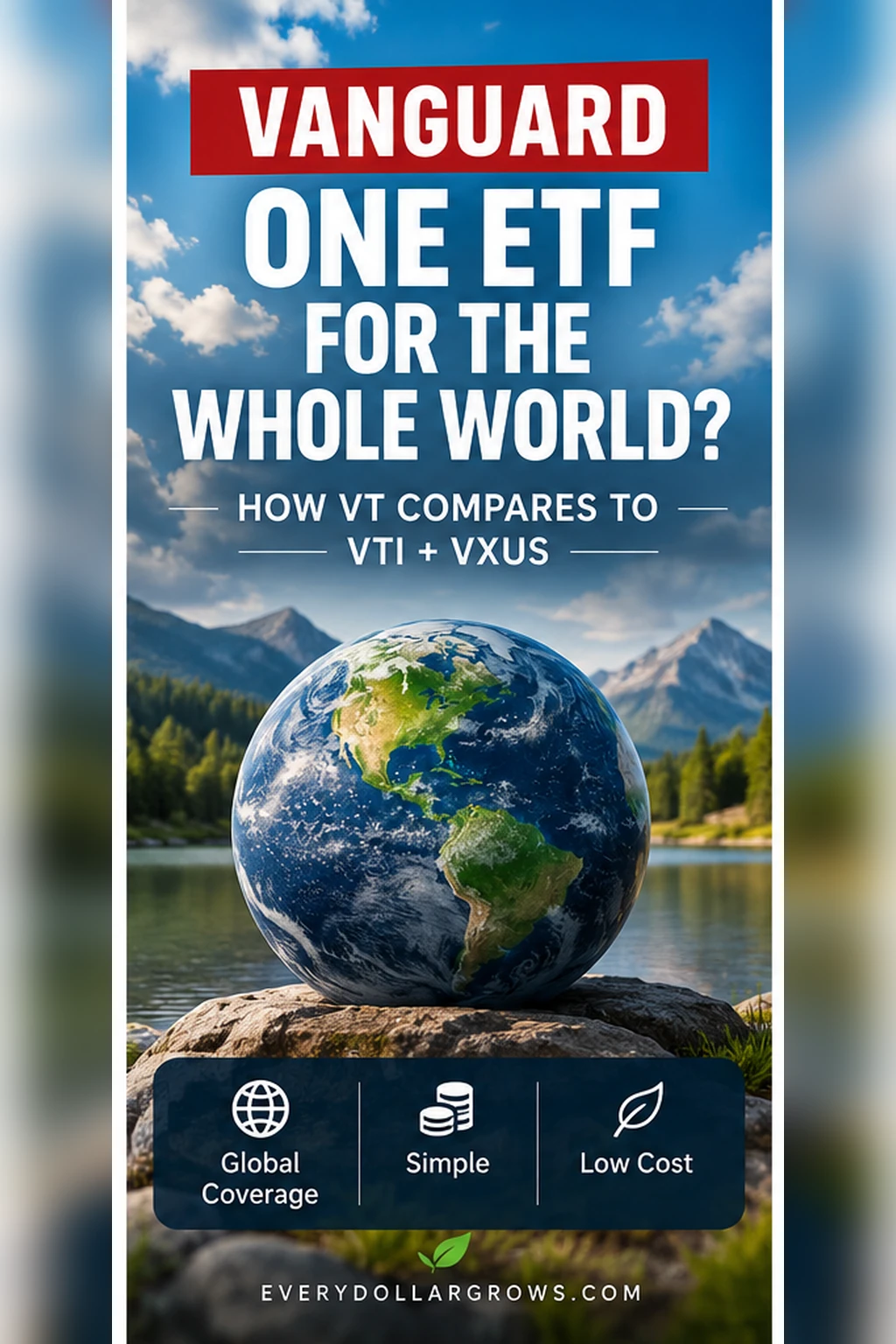
VTI covers the broad U.S. stock market, while VOO follows the S&P 500 and focuses on large U.S. companies. VT holds stocks across U.S. and international markets.
VTI plus VOO generally adds overlap, not a new asset class. VT plus a separate international fund can overweight international stocks unless that is deliberate. Choose the geographic and company-size coverage first, then compare fund details.
VXUS vs. VEA and VWO: one international fund or two pieces
VXUS combines developed and emerging markets outside the United States. VEA focuses on developed markets; VWO focuses on emerging markets.
Splitting the international allocation creates more control, but also more maintenance. The two-fund approach is useful only if you want to choose the split, maintain it, and rebalance it deliberately.
Another decision is whether to use separate U.S. and international funds, such as VTI and VXUS, or a global stock fund such as VT. Neither structure is automatically better. The important issue is understanding what geographic exposure your portfolio already contains.
BND, BNDX, and VGSH: bond exposure is not one thing
BND is a broad U.S. investment-grade bond-market fund. BNDX provides international investment-grade bonds with currency hedging. VGSH focuses on short-term U.S. Treasuries.
Duration, credit exposure, and currency treatment matter more than the word bond. Bond ETFs can lose value; an ETF holding Treasuries is not the same as holding one Treasury security until maturity.
Vanguard ETF vs mutual fund: compare the actual pair
VTI and VTSAX, VOO and VFIAX, VXUS and VTIAX, and BND and VBTLX are familiar comparisons between ETF and mutual fund share classes.
Compare the current prospectus, minimum investment, expense ratio, automation features, and brokerage access for the exact share class. An ETF trades during the day at market prices; a mutual fund generally transacts once daily at net asset value.
A practical Vanguard ETF comparison
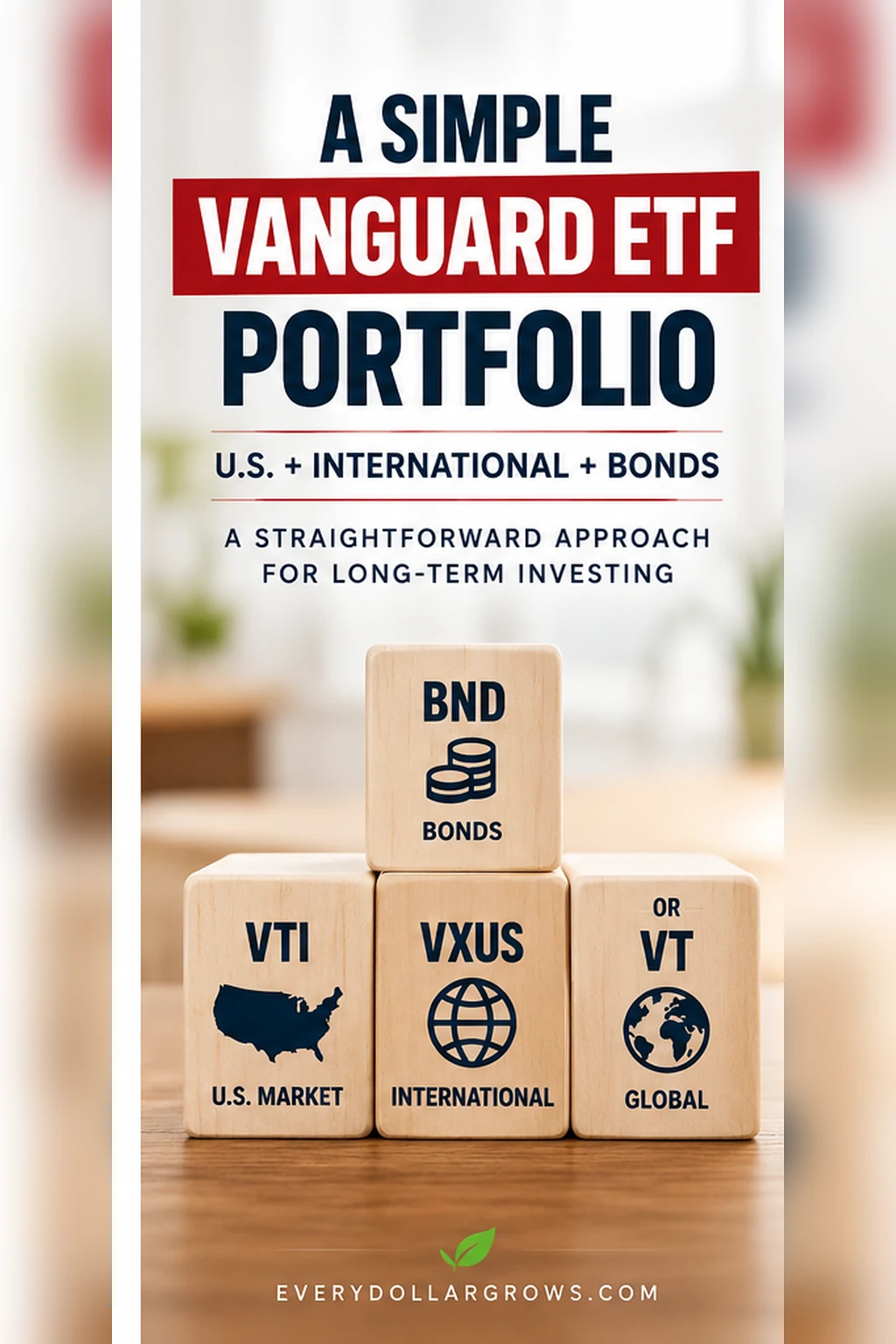
Suppose a retirement investor writes a hypothetical allocation of 60% U.S. stocks, 20% international stocks, and 20% bonds.
The research list could include VTI for the U.S. role, VXUS for the international role, and BND for the bond role. That is an educational framework to evaluate, not a recommended allocation.
Adding VOO on top of VTI would not create a fourth independent building block. A person who chooses VT for the stock allocation would need a different international comparison because VT already contains international stocks.
Compare costs without changing the investment question
Compare funds with similar exposures before using fees to choose between them. The expense ratio is an annual percentage charged inside the fund; it is not usually a separate monthly bill.
For a hypothetical $10,000 balance, a 0.05% annual ratio is about $5 and a 0.50% ratio is about $50, before balance changes. These are teaching assumptions, not quoted fees for the funds listed here.
A zero commission does not remove fund expenses. A cheaper specialty fund is not a substitute for a broad fund unless the exposure also matches the portfolio role.
Vanguard mistakes worth catching
- Buying VTI, VOO, and several growth funds without checking repeated holdings.
- Using dividend yield to judge whether a stock ETF is safe.
- Choosing a bond ETF for next month's bills because the name contains Treasury.
- Assuming every Vanguard mutual fund has a matching ETF share class.
- Adding more ETFs without identifying what new exposure they actually add.
Your Vanguard ETF research checklist
- Write one sentence describing the investment's job.
- Record the exact fund name and ticker.
- Review the benchmark or investment mandate.
- Check geographic and company-size exposure.
- Review major holdings and concentration.
- For bonds, review duration and credit quality.
- Compare current annual expenses and trading costs.
- Check fractional-share and recurring-investment support.
- Compare the fund with investments already owned.
- Consider taxes before selling an existing taxable position.
Build the allocation before picking the brand
An investing brand is not a complete household plan. Money needed soon should be evaluated differently from money intended for retirement decades away.
Decide how stock and bond exposure fit the goal, then choose products that fill those roles with understandable costs and risks.
Use asset allocation for beginners to define the mix, the diversification guide to check concentration, and the investment fee calculator to test recurring cost assumptions.
Compare other ETF and mutual fund companies when you want to research another provider for the same portfolio role.
Vanguard ETF list versus the existing long-term fund guide
This Vanguard ETF guide focuses on ETF coverage, trading format, overlap, and a selected research list.
The Vanguard mutual funds and ETFs guide covers a broader group of long-term fund choices across both formats.
Use that article when you want a broader Vanguard fund overview. Use this page when the main question is which Vanguard ETF exposure belongs in a particular portfolio role.
Helpful primary sources
Frequently asked questions
What is the best Vanguard ETF for beginners?
There is no single best Vanguard ETF for every beginner. Start with the job the investment needs to perform: U.S. stocks, global stocks, international stocks, bonds, or another clearly defined exposure. Then compare coverage, risk, costs, and account access.
Should I own both VTI and VOO?
VTI and VOO have substantial overlap because many of the largest U.S. companies appear in both. Owning both does not automatically create more diversification. The useful question is whether you deliberately want to increase the weight of large U.S. companies.
What is the difference between VTI and VT?
VTI focuses on the U.S. stock market. VT includes U.S. and international stocks. The choice therefore changes geographic exposure, not simply the number of stocks held.
Are the examples ranked from best to worst?
No. The table groups selected Vanguard ETFs by research role. It is not a ranking, return forecast, complete fund catalog, or personalized recommendation.
Where can I find current Vanguard ETF fees?
Use Vanguard's official fund page and current prospectus for the exact ticker, and verify any brokerage-specific transaction or account rules separately.
Put the research into practice
Turn Vanguard ETF Research Into a Simple Starting Portfolio
You have compared the funds. The Every Dollar Grows Beginner Portfolio Builder helps beginning investors move from individual fund research to a simple, diversified starting portfolio using Vanguard, Fidelity, or Schwab fund options.
Educational portfolio-planning tool · Not personalized investment advice
Keep learning