
Vacation Budgeting: How to Plan, Save, and Spend Without Financial Stress
A vacation should leave you with great memories—not credit card debt, unexpected bills, or the feeling that you spent far more than you planned. Whether you’re saving for a weekend camping trip, a Disney vacation, a family road trip, a cruise, or the vacation of a lifetime, building a realistic vacation budget is one of the best ways to enjoy your trip with confidence.
Many people believe they simply need to save enough money before they leave. In reality, that’s only part of the process. A successful vacation budget helps you estimate the true cost of your trip, save toward it over time, protect money that’s already committed to reservations, and confidently decide what you can still afford while you’re traveling.
In this guide, you’ll learn a practical step-by-step system for planning your vacation budget from the first dollar you save until the day you return home. Along the way, you’ll discover common budgeting mistakes, practical money-saving strategies, and a simple way to organize every vacation dollar so you always know where your money stands.

Why Vacation Budgeting Matters
Almost everyone has heard a vacation story that ended with the phrase, “It cost a lot more than we expected.” Most of the time, the problem wasn’t one expensive purchase—it was dozens of small decisions that seemed harmless at the moment.
A quick coffee during a travel stop. Parking at the airport. Snacks for the kids. A nicer restaurant than originally planned. An attraction you didn’t know existed until you arrived. Souvenirs. Resort fees. Extra fuel. One by one, these expenses rarely feel significant. Together, they can quietly add hundreds or even thousands of dollars to the total cost of a vacation.
That’s why vacation budgeting isn’t about restricting your fun. It’s about making intentional decisions before emotions, convenience, or excitement begin making those decisions for you.
A good vacation budget answers important questions before you ever pack your suitcase:
- How much will this trip actually cost?
- How much should I save each month?
- Which expenses are already spoken for?
- How much money is safe to spend today?
- Can I afford another vacation while continuing to save for a larger one?
When those questions already have answers, your vacation becomes significantly more relaxing because your financial decisions have already been made.
Vacation Budgeting Is About Buying Peace of Mind
The goal isn’t to spend as little as possible. The goal is to enjoy your vacation knowing you’ve already planned for transportation, lodging, food, activities, shopping, and unexpected expenses before they happen.
What Is Vacation Budgeting?
Vacation budgeting is the process of estimating the total cost of a trip, saving for it intentionally, assigning every vacation dollar a purpose, and tracking your spending so you don’t accidentally use money that belongs somewhere else.
Instead of looking at your checking account balance and wondering whether you can afford another excursion or dinner out, you already know how much money is available because your vacation budget has done the planning for you.
This is very similar to envelope budgeting. Rather than treating all of your vacation savings as one large pool of money, each category receives its own purpose. Transportation has its budget. Lodging has its budget. Food has its budget. Entertainment has its budget. Shopping has its budget. When every dollar has a job, it’s much easier to stay in control without constantly doing mental math.
If you’re new to budgeting, we recommend reading our complete guide to creating a budget. Building a strong household budget makes saving for vacations much easier because every financial goal has a place before the money is ever spent.
The Biggest Mistake Most People Make
The biggest vacation budgeting mistake isn’t forgetting to save money—it’s assuming that one savings balance tells the whole story.
To turn the goal into a target amount and pace, use the free savings goal planner.
Imagine you’ve saved $6,000 for travel. That sounds fantastic, but what does that number actually represent?
Perhaps $2,000 is for a family beach vacation this summer. Another $1,500 has already been mentally reserved for airfare on next year’s cruise. Maybe $800 is intended for a fall camping trip, while the remainder is slowly growing toward a dream vacation you’ve been planning for years.
A bank account doesn’t know any of that. It simply shows one balance.
That’s where many vacation budgets begin to fall apart. Money that was intended for one trip quietly disappears because there was no system separating one vacation from another or distinguishing money that had already been committed from money that was still available.
The rest of this guide will show you how to solve that problem with a simple, repeatable budgeting system that works whether you’re planning one vacation or ten.
STEP 1
Know What Your Vacation Will Really Cost
Every successful vacation budget starts with one question:
“How much will this trip actually cost from the day we leave until the day we get home?”
Many people underestimate the answer because they only budget for the largest expenses. They know the hotel costs $1,600 and the flights cost $1,200, so they assume they’ve planned well. Unfortunately, those are only part of the total cost.
A realistic vacation budget includes every dollar that leaves your wallet before, during, and immediately after your trip. That includes obvious expenses like lodging and transportation, but it also includes the dozens of smaller purchases that quietly add up throughout your vacation.
For example, imagine a family taking a week-long beach vacation:
- Hotel reservations are booked months in advance.
- Fuel or airfare is paid before departure.
- Meals are purchased every day.
- Parking fees appear unexpectedly.
- Children want ice cream, snacks, and souvenirs.
- A rainy day leads to an unplanned indoor attraction.
- Gas prices are higher for the drive home.
None of these expenses are unusual. They’re part of traveling. The problem is that many families never planned for them, so they end up borrowing from money that was intended for something else.
The purpose of vacation budgeting isn’t to remove the fun from your trip. It’s to remove the financial surprises.
Break Your Vacation Into Individual Categories
Instead of thinking about your vacation as one large number, separate it into categories. This approach makes planning easier before your trip and spending decisions easier while you’re traveling.
Although every vacation is different, most trips include the same basic types of expenses:
- Transportation — airfare, fuel, parking, tolls, rental cars, rideshares, trains, or public transportation.
- Lodging — hotels, cabins, vacation rentals, campgrounds, or resorts.
- Food — restaurants, groceries, snacks, drinks, and coffee stops.
- Activities — tours, museums, theme parks, excursions, entertainment, and admission fees.
- Shopping — souvenirs, gifts, clothing, and travel supplies.
- Emergency or Miscellaneous — unexpected costs that almost every vacation eventually encounters.
Breaking your vacation into categories gives every dollar a purpose. It also helps you recognize where you’re staying on budget and where adjustments may be needed before a small problem becomes an expensive one.

Separate Fixed Expenses From Flexible Spending
One of the easiest ways to improve your vacation budget is to recognize that not every expense behaves the same way.
Some expenses are known long before your vacation begins. Others depend entirely on the decisions you make during the trip.
Fixed Expenses
- Flights
- Hotels
- Vacation rentals
- Cruise fares
- Theme park tickets
- Travel insurance
Flexible Expenses
- Restaurants
- Coffee
- Snacks
- Entertainment
- Shopping
- Souvenirs
Your fixed expenses are usually decided before your vacation begins. Flexible expenses are where your daily decisions matter most. Having a separate budget for each category makes it much easier to enjoy your vacation without wondering whether today’s purchases will create tomorrow’s financial stress.
Build Your Vacation Savings Before You Travel
Once you know approximately what your vacation will cost, the next step is deciding how you’ll save for it.
The most effective approach is to save gradually over time instead of trying to find a large amount of money shortly before departure. Setting aside a smaller amount each month turns an intimidating goal into something much more manageable.
For example, if your family expects to spend $3,600 on a vacation next summer, saving $300 per month for one year fully funds the trip without relying on debt or disrupting your regular household budget.
This approach is commonly known as a sinking fund. Instead of borrowing from your future income, you’re preparing for a future expense one month at a time.
If you’re looking for ways to free up more money each month, our guide on how to save money fast includes practical ideas that work well alongside a vacation savings plan.
EDG Tip
Round your estimates up instead of down. Fuel prices change, attractions raise admission fees, and unexpected opportunities almost always appear during a vacation. Returning home with money left over feels much better than discovering halfway through your trip that your budget has already been exhausted.
Planning Becomes Much Easier When Every Dollar Has a Job
At this point you’ve estimated the cost of your vacation, divided it into meaningful categories, and created a savings plan. The next challenge is keeping those dollars organized.
That’s where many people struggle. A checking account only shows one balance. It doesn’t tell you how much belongs to lodging, how much has already been committed to attractions, or how much is still safe to spend on dinner tonight.
In the next section, you’ll learn how to organize those dollars, reserve money for upcoming expenses, and track your vacation budget with confidence from the day you begin saving until the day you return home.
STEP 4
Protect Money You’ve Already Committed
Saving for a vacation is only half the challenge. Once you’ve accumulated the money, you also need a way to protect it.
Imagine you’ve saved $4,500 for an upcoming trip. You reserve your hotel, purchase attraction tickets, and pay for airfare over several months. Although those expenses haven’t all occurred yet, that money is no longer available for something else.
This is where many vacation budgets begin to fall apart. A checking account simply displays one balance. It doesn’t know that $1,850 is already committed to your hotel or that another $900 has been set aside for flights. Looking only at your bank balance makes it easy to spend money that already has another purpose.
Instead of asking, “How much money is in my account?”, ask a better question:
“How much money is actually available to spend today?”
That single change in thinking can prevent one of the most common vacation budgeting mistakes—accidentally spending dollars that have already been promised to future expenses.
Reserve Future Expenses Before They Become Problems
As your departure date gets closer, you’ll often begin paying for portions of the trip in advance. Hotels may require deposits, airfare is usually purchased weeks or months before departure, attraction tickets may be bought online, and some excursions require advance reservations.
Although those purchases may not occur on the same day, they should still be reflected in your vacation budget as soon as you commit to them.
By reserving those dollars immediately, you’ll always know how much of your vacation fund is already spoken for and how much remains flexible.
Understand Your Safe-to-Spend Balance
Many budgeting tools focus on how much you’ve spent. That’s useful information, but it isn’t always the number that matters most while you’re traveling.
The question you’ll ask repeatedly during your vacation is much simpler:
“Can we afford this?”
Whether you’re considering another attraction, a nicer restaurant, or an unexpected shopping stop, the answer depends on what remains after accounting for every planned expense.
A safe-to-spend balance removes the guesswork. Instead of estimating what’s left or trying to remember which purchases you’ve already planned for, you immediately know how much money can still be spent without affecting the rest of your vacation.
That clarity makes spending decisions much less stressful because every purchase is measured against the plan you created before your trip began.
Why Envelope Budgeting Works So Well for Vacations
Traditional envelope budgeting has helped families manage everyday spending for decades. The idea is simple: give every dollar a specific purpose before it’s spent.
The same principle works exceptionally well for vacations.
Instead of treating your vacation fund as one large pool of money, each category receives its own allocation. Transportation has one balance. Food has another. Entertainment, shopping, lodging, and emergency expenses each have their own budget.
When you purchase dinner, only your food category changes. Buying souvenirs doesn’t reduce your hotel budget. Paying for an excursion doesn’t affect the money you’ve already set aside for fuel on the drive home.
This simple separation makes your vacation budget much easier to understand throughout the entire trip.
See the Entire Vacation at a Glance
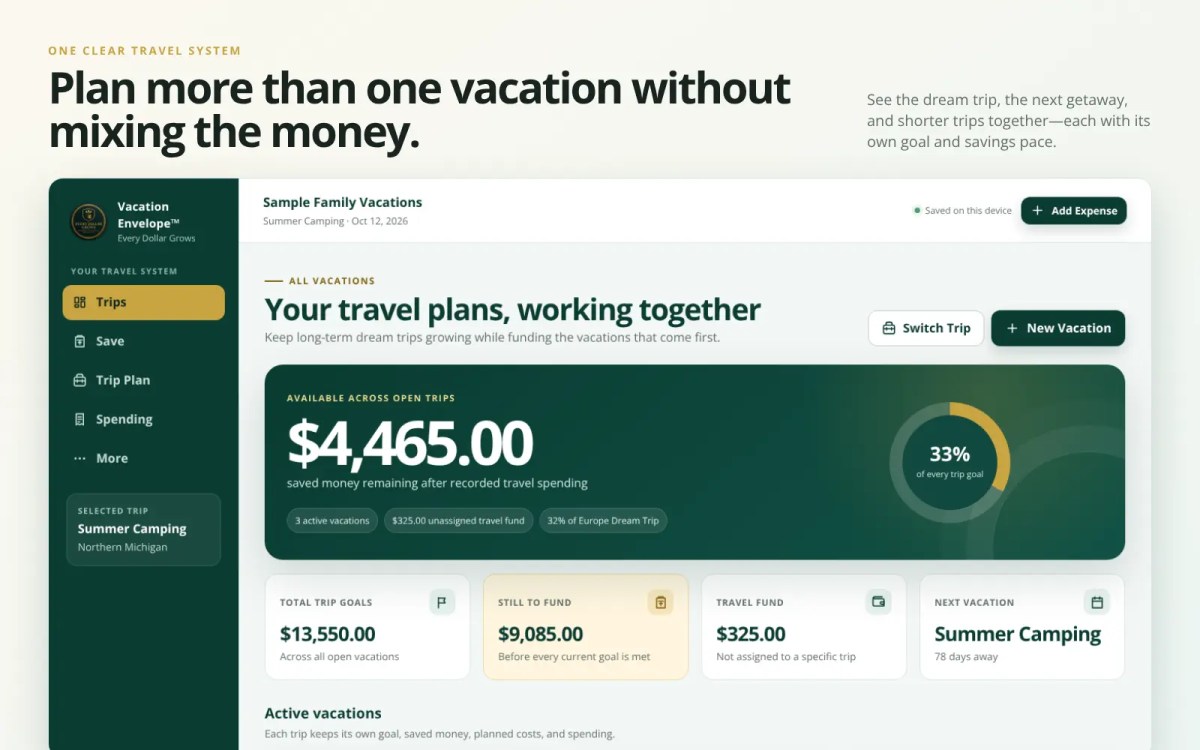
One of the biggest advantages of using Vacation Envelope™ is that your entire vacation plan is visible in one place.
Rather than juggling spreadsheets, handwritten notes, banking apps, and reservation emails, you can quickly see:
- Your total vacation budget.
- How much you’ve already saved.
- Money reserved for upcoming expenses.
- Remaining balances by category.
- How much is still safe to spend.
Because every category updates as you record expenses, you always know where your vacation stands without performing mental calculations or checking multiple accounts.
Vacation Envelope™ Turns Your Budget Into a Working Plan
Vacation Envelope™ was built to answer the questions travelers ask most often:
- How much have I saved?
- What expenses have already been reserved?
- How much is left for food?
- Can we still afford another activity?
- Will today’s spending affect tomorrow’s plans?
Instead of relying on estimates, you’ll have current answers every time you open the app.
STEP 5
Track Your Spending While You’re Traveling
Creating a vacation budget before you leave is important, but your budget becomes most valuable once your vacation actually begins.
Every purchase you make changes the amount available for the rest of your trip. The sooner you record those purchases, the more accurate your budget remains. Waiting until the end of the day—or worse, until you return home—often leads to forgotten purchases and inaccurate balances.
A vacation budget should be a living plan, not something you create once and never look at again.
Whether you’re buying fuel for a road trip, paying for lunch after visiting a national park, purchasing attraction tickets, or picking up souvenirs on your final day, updating your budget regularly helps you make informed decisions instead of relying on estimates.
Record Expenses While They’re Fresh
One of the easiest habits to develop is recording expenses immediately after you make them. It only takes a few seconds, but it eliminates the guesswork that often happens later.
Instead of trying to remember:
- How much did we spend on dinner?
- Did I already record today’s parking fee?
- Was that fuel purchase before or after lunch?
- How much have we spent on souvenirs so far?
…your budget already has the answers.
Accurate information leads to better decisions. If your entertainment budget is running low, you can adjust before overspending. If you’ve spent less on restaurants than expected, you might decide to enjoy a nicer dinner on your final night. The budget becomes a decision-making tool instead of a record of mistakes.

See the Impact of Every Purchase
Every expense affects your vacation differently. Spending an extra $50 on dinner doesn’t matter if your food budget has plenty of room, but that same purchase could create problems if you only have $40 remaining in the category.
When each category is tracked independently, you don’t have to wonder whether you’re still on budget. You can immediately see which categories have room to spare and which ones deserve a little more attention.
That visibility gives you flexibility. You might decide to spend less on shopping so you can enjoy another excursion, or you may discover you’ve saved enough in one category to upgrade another part of the trip.
Those decisions become much easier when your budget reflects what’s happening in real time.
STEP 6
Manage Multiple Vacations Without Mixing the Money
Many families aren’t saving for just one vacation. While you’re enjoying this summer’s beach trip, you may already be setting aside money for next year’s cruise, a fall camping weekend, or a long-awaited international adventure.
Keeping all of those savings together in one account quickly becomes confusing. A single balance doesn’t tell you which dollars belong to which trip, and it’s easy to accidentally spend money that was intended for a future vacation.
Keeping each vacation separate eliminates that confusion.
Vacation Envelope™ Works for Every Type of Trip
Every vacation is different, but the budgeting principles remain the same. Whether you’re traveling for two days or two weeks, every trip benefits from a clear financial plan.
Vacation Envelope™ works well for:
- Family vacations
- Disney vacations
- Road trips
- Camping weekends
- Cruises
- Beach vacations
- International travel
- Weekend getaways
- Anniversary trips
- Bucket-list vacations
Because you create your own categories, the budget adapts to your trip instead of forcing every vacation into the same template.
Built for Real Life
Vacation plans change. Weather changes. Prices change. Sometimes you’ll spend less than expected. Other times you’ll decide an unexpected experience is worth every penny.
A good budget isn’t designed to eliminate flexibility. It’s designed to give you the confidence to make those decisions without wondering whether they’re hurting the rest of your financial plan.
When you know exactly how much remains available, you can enjoy the vacation instead of constantly checking your bank balance or trying to remember every purchase you’ve made.

Designed to Stay With You Trip After Trip
Vacation budgeting isn’t something you learn once and never use again. Every trip teaches you something new about how your family travels and where your money goes.
Over time, those experiences make future vacations easier to budget because you already understand your typical transportation costs, dining habits, entertainment preferences, and spending patterns.
Vacation Envelope™ keeps that information organized so planning your next trip becomes faster and more accurate than planning your first.
Whether you’re saving for one vacation or building a lifetime of family adventures, having an organized system helps you spend less time worrying about money and more time making memories.
Ready to Simplify Your Vacation Budget?
Vacation Envelope™ helps you organize multiple trips, reserve future expenses, track spending by category, and always know how much is safe to spend—before, during, and after every vacation.
COMMON MISTAKES
10 Vacation Budgeting Mistakes That Can Cost You Hundreds of Dollars
Even the best vacation plans can fall apart if you overlook a few important details. Fortunately, most vacation budgeting mistakes are easy to avoid once you know what to watch for.
Here are the mistakes we see most often and how you can avoid them on your next trip.
1. Only Budgeting for the Big Expenses
Hotels, airfare, and vacation rentals usually receive the most attention because they’re often the largest purchases. However, smaller expenses such as parking, snacks, drinks, fuel, tolls, tips, and souvenirs frequently add up much faster than people expect.
When planning your vacation, walk through the trip one day at a time and think about every purchase you’ll likely make—not just the expensive ones.
2. Waiting Too Long to Start Saving
Saving $2,400 over twelve months only requires setting aside $200 each month. Waiting until two months before your trip means finding $1,200 every month instead.
Starting early gives your budget room to breathe and makes vacations much easier to afford.
3. Forgetting About an Emergency Buffer
Unexpected expenses are part of traveling. Weather delays, vehicle repairs, medical needs, forgotten supplies, or spontaneous opportunities happen on almost every trip.
Including a small miscellaneous category can prevent these surprises from disrupting the rest of your vacation budget.
4. Using Credit Cards Without a Repayment Plan
Credit cards can offer convenience, fraud protection, and travel rewards, but they should never become a substitute for planning.
If you use a credit card while traveling, your vacation budget should already include the money needed to pay that balance when the statement arrives.
5. Not Tracking Spending Until the Trip Is Over
Recording expenses after your vacation may tell you where your money went, but it doesn’t help you make better decisions during the trip.
Updating your budget throughout your vacation allows you to adjust before overspending becomes a problem.
6. Mixing Multiple Vacations Together
Saving for several trips in one general account makes it difficult to know which dollars belong to which vacation.
Keeping vacations separate helps prevent accidentally spending money that was intended for a future trip.
7. Underestimating Food Costs
Restaurants often become one of the largest variable expenses during a vacation. Breakfast, lunch, dinner, snacks, coffee, bottled water, and convenience purchases can easily exceed your original estimate.
Researching restaurant prices before you travel—or planning to prepare some meals yourself—can significantly reduce costs.
8. Ignoring Exchange Rates and Local Costs
If you’re traveling internationally, remember that exchange rates, taxes, tipping customs, and local pricing may differ significantly from what you’re used to at home.
Planning ahead helps prevent unpleasant surprises once you arrive.
9. Forgetting to Review Your Budget Each Day
A quick daily review helps you identify problems while they’re still small. Spending five minutes each evening checking your categories can prevent much larger surprises later in the trip.
10. Thinking Budgeting Takes the Fun Out of Traveling
A vacation budget isn’t designed to limit your enjoyment—it’s designed to remove financial uncertainty.
When you’ve already decided how much you’re comfortable spending, you can focus on enjoying the experience instead of worrying about every purchase.
PRACTICAL TIPS
Simple Ways to Stretch Your Vacation Budget
- Travel during off-peak seasons whenever possible.
- Book flights and lodging early.
- Compare attraction prices online before you arrive.
- Use grocery stores for breakfasts and snacks.
- Carry reusable water bottles where appropriate.
- Leave room in your schedule for free activities.
- Review your vacation budget every evening.
- Save consistently throughout the year instead of rushing before departure.
Small savings in several categories often produce a much larger impact than finding one dramatic discount.
Frequently Asked Questions About Vacation Budgeting
How much should I budget for a vacation?
Every vacation is different, so there isn’t a single dollar amount that works for everyone. Start by estimating transportation, lodging, food, entertainment, shopping, and emergency expenses. Build your budget around the trip you actually want to take rather than using someone else’s numbers.
How early should I start saving?
The earlier you begin, the easier the process becomes. Saving a smaller amount over several months is usually much less stressful than trying to fund an entire vacation shortly before you leave.
Should I budget for every day of the trip?
Many travelers find it helpful to estimate spending by day, especially for food and entertainment. Daily planning makes it easier to adjust if one day costs more than expected.
Should I use cash or cards while traveling?
Either method can work. The important part is tracking your spending so your budget stays accurate regardless of how you pay.
What if my vacation costs less than expected?
That’s excellent news. Leave the remaining money in savings for your next vacation, add it to your emergency fund, or put it toward another financial goal.
Continue Building Strong Financial Habits
Vacation budgeting works best when it’s part of a larger financial plan. The stronger your everyday budgeting habits become, the easier it is to save confidently for future travel without sacrificing your other financial goals. For the full household framework, use the complete budgeting guide.
You may also find these guides helpful:
THE COMPLETE SYSTEM
How to Create a Vacation Budget From Start to Finish
Vacation budgeting becomes much easier when you follow the same repeatable process for every trip. You do not need to predict every purchase perfectly or build an overly complicated spreadsheet. You simply need a plan that keeps your savings, reservations, categories, and actual spending connected.
- Choose the trip you want to take. Decide where you are going, approximately when you will travel, and how many people will be included.
- Estimate the complete cost. Research transportation, lodging, food, activities, shopping, insurance, and less obvious travel expenses.
- Divide the trip into categories. Give each major part of the vacation its own budget rather than tracking one large total.
- Create a monthly savings target. Divide the amount you need by the number of months remaining before departure.
- Protect committed money. Reserve dollars for hotels, tickets, flights, and other expenses as soon as you commit to them.
- Track purchases during the trip. Record expenses while they are fresh so your category balances remain accurate.
- Adjust intentionally. If one category runs high, decide where the difference will come from instead of allowing the entire budget to drift.
- Review the trip afterward. Use what you learned to make your next vacation budget faster and more accurate.
Following these steps turns vacation budgeting into a practical system rather than a one-time estimate.
WHY WE BUILT IT
Why Vacation Envelope™ Was Created
Traditional bank accounts are good at showing how much money you have, but they do not explain what that money is supposed to accomplish.
They do not know that part of your balance belongs to next month’s campground reservation. They cannot tell you that another portion has already been promised to airfare. They do not separate this summer’s family trip from the cruise you are planning for next year.
Spreadsheets can help, but they often require manual calculations, repeated updates, and more effort than most people want to manage while traveling.
Vacation Envelope™ was created to make the envelope budgeting method practical for real vacations. It gives each trip its own plan, each category its own balance, and each committed expense a protected place.
The result is a clearer answer to the question that matters most during a trip:
How much is still safe to spend?

What Vacation Envelope™ Helps You Do
Before Your Vacation
- Create separate plans for multiple trips.
- Set a target budget for each vacation.
- Organize savings into clear categories.
- Reserve money for upcoming expenses.
- See how much remains available.
During Your Vacation
- Record purchases as they happen.
- See category balances update.
- Identify overspending early.
- Adjust one category without losing track of the entire trip.
- Make spending decisions with confidence.
Vacation Envelope™ works directly in your browser and is designed for convenient use on mobile devices. You can plan at home and continue tracking from your phone while traveling.
It also supports different currencies and includes backup and restore tools so your vacation plans can remain useful trip after trip.
Plan the Vacation. Protect the Money. Enjoy the Trip.
Vacation Envelope™ gives every travel dollar a purpose, keeps multiple trips separate, protects money already promised to future expenses, and shows what is still safe to spend.
Instead of returning home wondering where the money went, you can travel with a clear plan from the first savings deposit through the final purchase.
Helpful Vacation Planning Resources
A strong budget is only one part of preparing for a successful trip. Before international travel, confirm current passport, visa, document, safety, insurance, medication, and destination requirements using official government resources.
FINAL THOUGHTS
A Better Vacation Begins With a Better Plan
Vacation budgeting is not about removing every spontaneous decision or choosing the least expensive version of every experience. It is about deciding what matters to you, preparing for the real cost, and enjoying your trip without sacrificing the financial progress you have made at home.
When transportation, lodging, food, activities, shopping, and unexpected expenses each have a place in the plan, money becomes less distracting. You can spend with greater confidence because you already know what is affordable.
Start with the trip you want to take. Estimate the complete cost. Save toward it consistently. Protect money that has already been committed. Track what you spend, and use each vacation to improve the next one.
The goal is not merely to come home under budget. The goal is to return with great memories, a clear financial picture, and no vacation debt waiting for you.


