Every Dollar Grows
Starbucks vs Dunkin vs Home Coffee: What Does Your Coffee Habit Really Cost?
I love coffee. I drink multiple cups every day, usually medium or dark roast, and always black. Whether you prefer it black, loaded with cream and sugar, flavored with syrups, or topped with whipped cream, coffee is a daily ritual for millions of people. This article is not written to shame you for buying coffee at Starbucks, Dunkin, McDonald’s, your local coffee shop, or anywhere else. The goal is simply to understand the numbers so you can decide whether the convenience, experience, and taste are worth the cost to you.
If Starbucks fits your budget and makes your day better, it may be worth every penny. If money feels tight, you might discover that a simple change could save hundreds or even thousands of dollars each year.
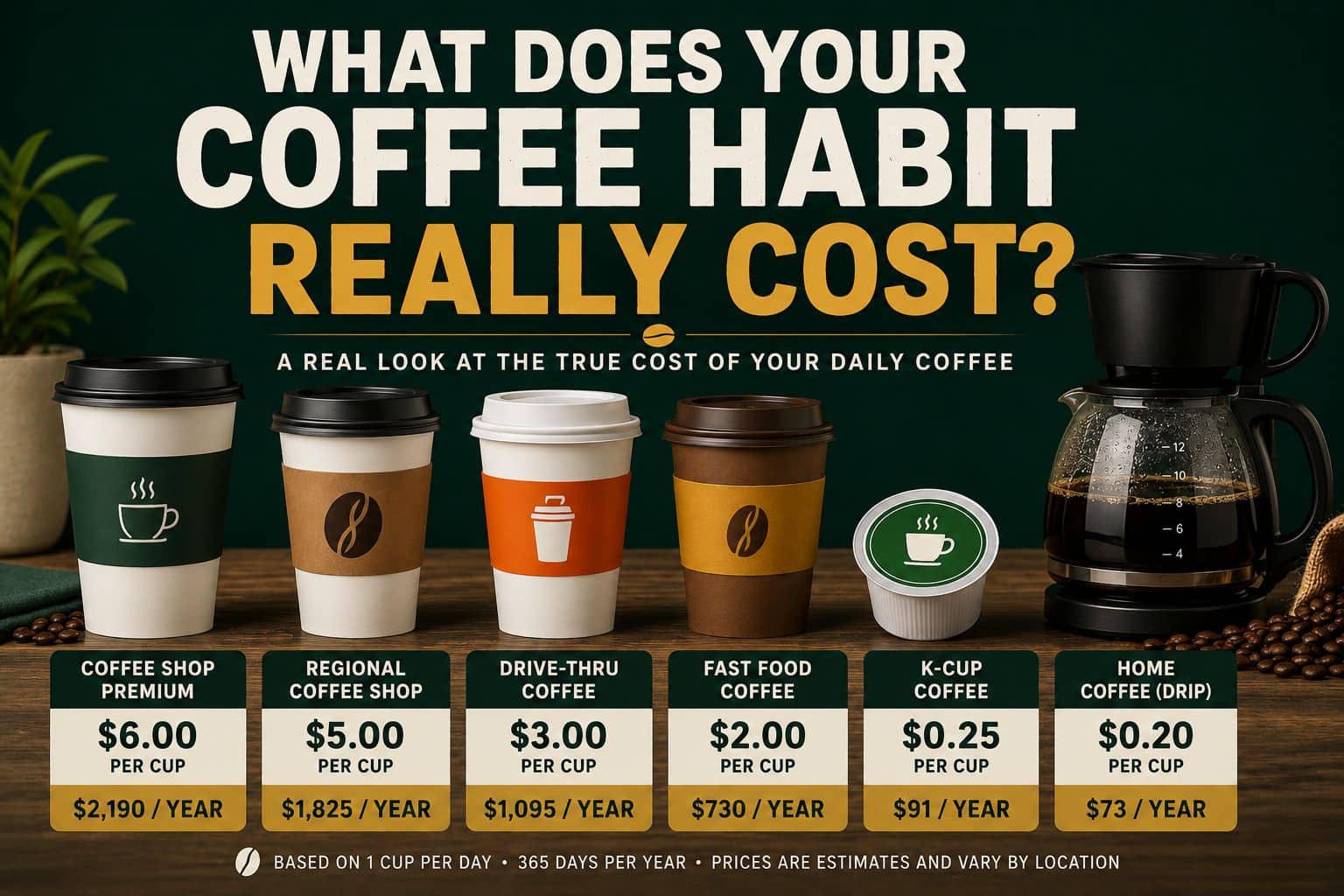
Comparing the estimated yearly cost of coffee shop coffee, K-Cups, and home-brewed coffee.
Quick Answer
The cost of coffee varies dramatically depending on where you buy it.
- Starbucks specialty drinks can exceed $2,000 per year.
- Biggby specialty drinks can approach $1,800+ per year.
- Dunkin coffee often falls near $1,000 per year.
- McDonald’s coffee may cost around $700 per year.
- Keurig coffee bought in bulk can cost under $100 per year.
- Drip coffee at home can cost less than $75 per year.
The goal is not to eliminate coffee. The goal is to understand the tradeoffs.
Why I Decided to Do the Math
Personal finance articles often tell people to stop buying coffee.
That advice never sat right with me because coffee is not the problem.
Spending money without understanding where it goes is the problem.
Coffee may be one of the highlights of your morning. It may be part of your commute, your workday, or your routine with your spouse. Those things have value.
But when a habit happens every day, small purchases become large annual numbers.
That is what makes coffee such an interesting personal finance topic.
The difference between two coffee habits can easily exceed $2,000 per year.
That does not automatically mean the cheaper option is better. It simply means the choice deserves a closer look.
Coffee Cost Comparison Chart
These are general working estimates. Actual prices vary by location, size, taxes, rewards, app offers, tips, and drink type.
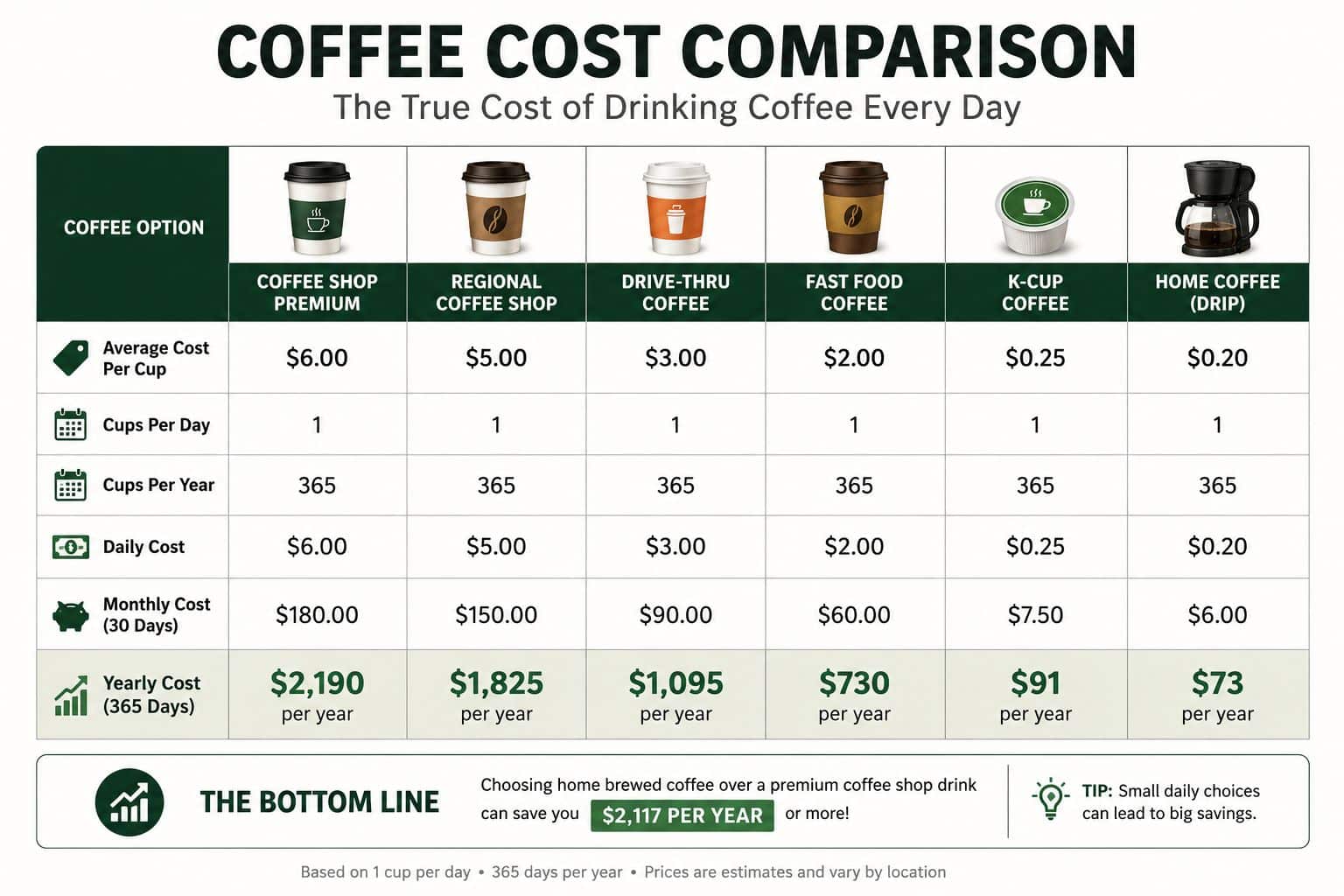
Comparing estimated coffee costs across coffee shops, K-Cups, and home coffee based on one cup per day.
| Coffee Option | Cost Per Cup | 1 Cup Daily | 2 Cups Daily |
|---|---|---|---|
| Starbucks Specialty Drink | $6.00 | $2,190 | $4,380 |
| Biggby Specialty Drink | $5.00 | $1,825 | $3,650 |
| Dunkin Coffee | $3.00 | $1,095 | $2,190 |
| McDonald’s Coffee | $2.00 | $730 | $1,460 |
| Gas Station Coffee | $2.00 | $730 | $1,460 |
| Keurig Retail Pods | $0.75 | $274 | $548 |
| Keurig Bulk Pods | $0.25 | $91 | $183 |
| Home Drip Coffee | $0.20 | $73 | $146 |
One Cup Per Day vs Two Cups Per Day
Coffee costs change quickly when one cup becomes two. That matters because many coffee drinkers do not stop at one cup per day.
A $6 coffee once per day costs about $2,190 per year. Two per day costs about $4,380 per year. Meanwhile, two bulk-purchased Keurig pods at $0.25 each cost about $183 per year.
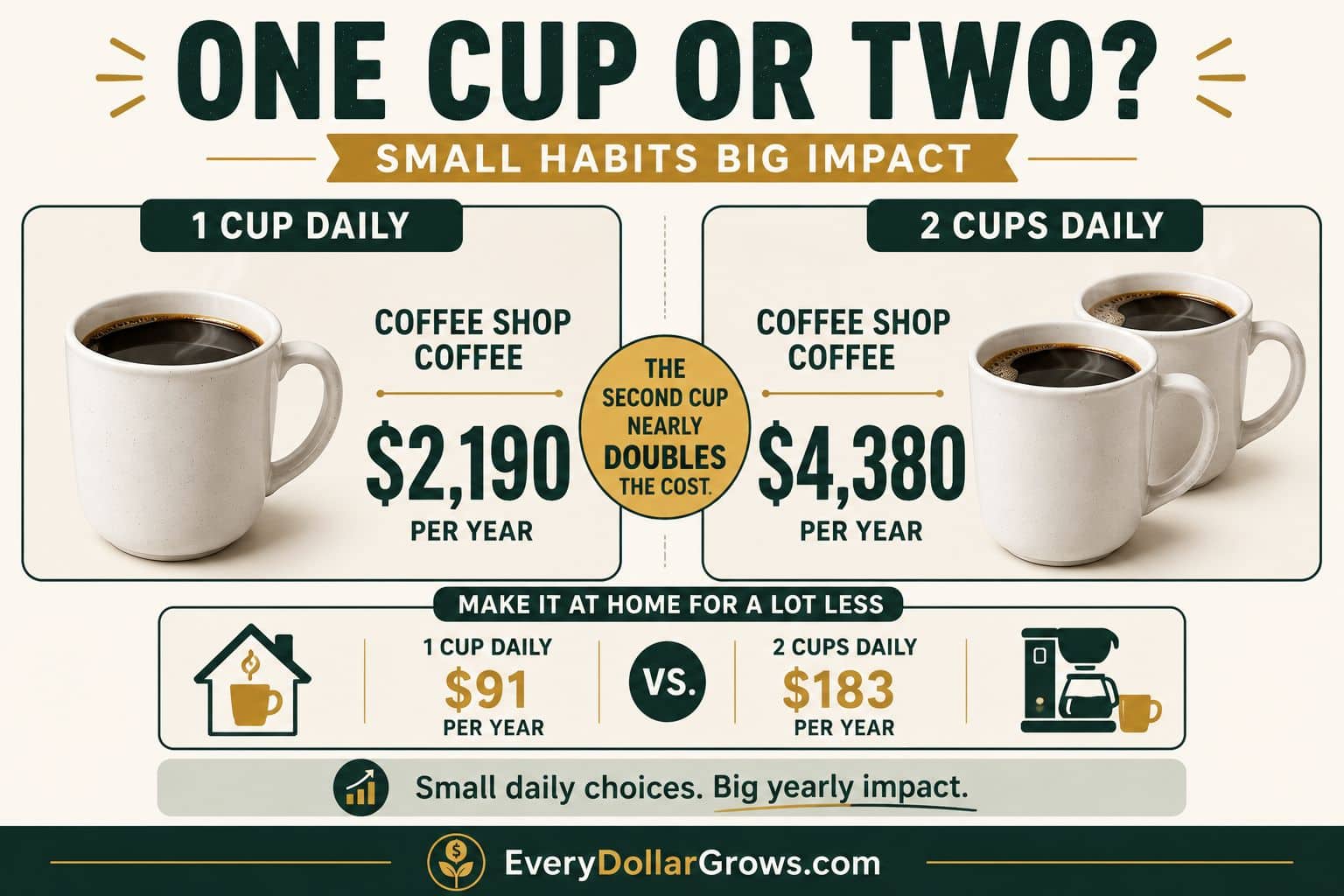
The second daily cup can nearly double your annual coffee spending, especially when buying coffee away from home.
Simple Takeaway
A person buying a $6 Starbucks drink every day spends roughly $2,190 annually.
A person drinking a bulk-purchased Keurig pod every day may spend around $91 annually.
That difference is approximately $2,100 per year.
Again, this does not automatically mean Starbucks is a bad choice. It simply shows what the tradeoff looks like.
Coffee Cost Calculator
The examples above use estimated numbers. Your coffee habit may be completely different. Use this calculator to compare your current coffee habit with a cheaper alternative. You can use the presets or enter your own numbers.
Current Coffee Habit
Alternative Coffee Habit
This is only a hypothetical estimate, not a guarantee.
My Experience With Keurig Coffee Costs
One thing many coffee comparisons get wrong is assuming everyone pays full retail price for coffee pods.
If you buy small boxes at full price, Keurig coffee can absolutely become expensive.
But many people do not buy coffee that way.
Personally, I often buy pods in bulk and wait for sales. Between warehouse clubs, Amazon sales, subscription discounts, and seasonal promotions, I frequently pay around $0.25 to $0.30 per pod.
That dramatically changes the math.
At $0.25 per pod, a daily coffee habit costs about $91 annually.
Even if I drink two cups per day, the annual cost remains around $183.
That is still more expensive than very cheap drip coffee, but dramatically less expensive than most coffee-shop habits.
For many people, Keurig represents a middle ground between convenience and cost.
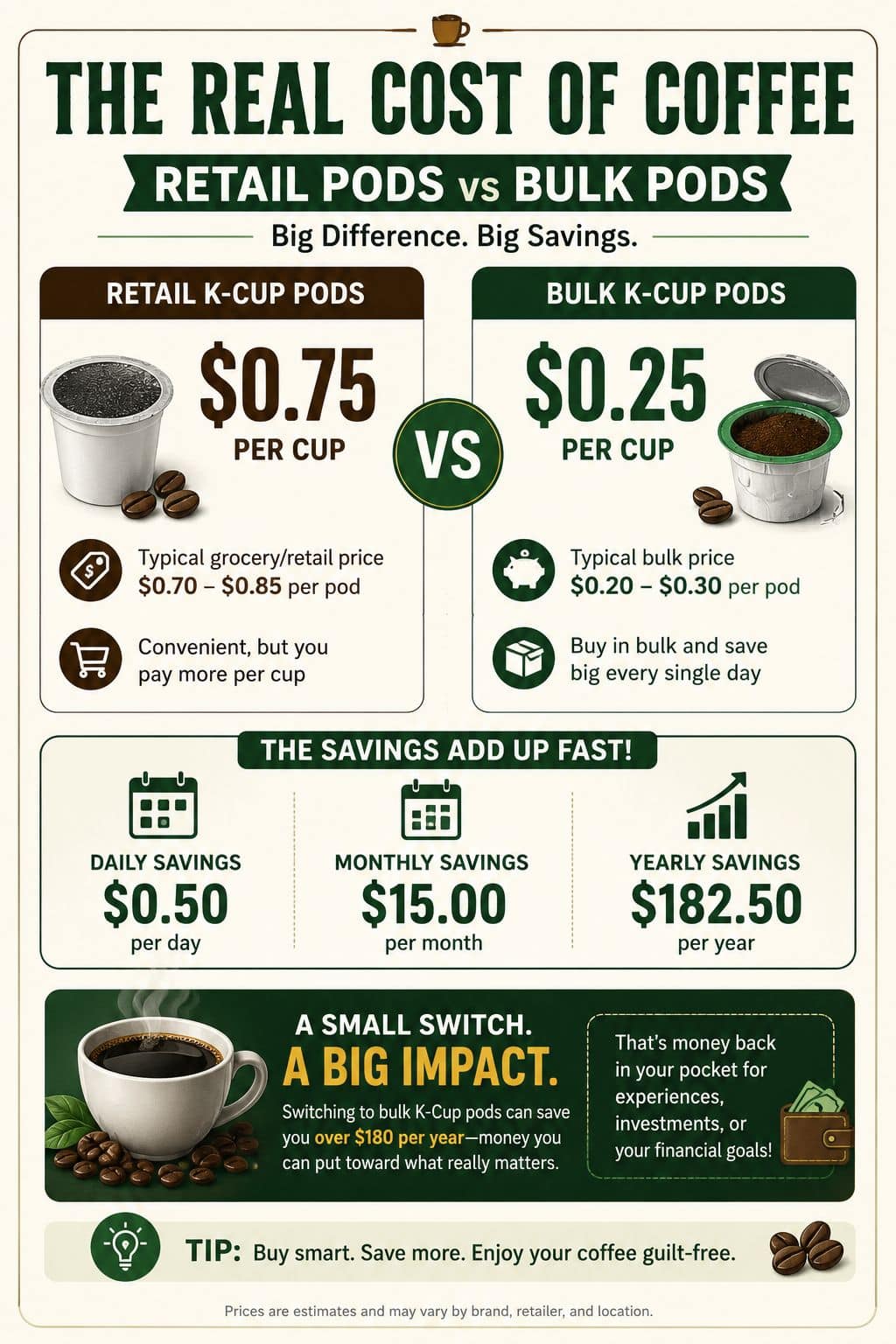
Buying K-Cup pods in bulk can significantly reduce your cost per cup compared with purchasing smaller retail quantities.
How Coffee Shops Make Coffee Feel Affordable
Coffee shop spending feels harmless because the individual purchase is small.
A $5 or $6 drink does not feel like a major financial decision. It feels like a normal part of the day.
That is why recurring expenses are easy to overlook. The daily purchase does not feel dramatic, but the annual total can be.
This is the same pattern that shows up with subscriptions, takeout, convenience purchases, delivery fees, and other small recurring costs.
The issue is not that every small purchase is bad. The issue is that repeated purchases deserve to be measured.
Once you see the yearly number, you can decide whether the habit still earns its place in your budget.
Real Coffee Drinker Scenarios
The numbers become easier to understand when you look at realistic examples.
Scenario #1: Starbucks Every Workday
A person buys one $6 Starbucks drink five days per week.
- Weekly Cost: $30
- Annual Cost: $1,560
Scenario #2: Starbucks Twice Per Week
A person treats Starbucks as an occasional luxury.
- Weekly Cost: $12
- Annual Cost: $624
Scenario #3: McDonald's Every Day
- Daily Cost: $2
- Annual Cost: $730
Scenario #4: Keurig Every Day
- Daily Cost: $0.25
- Annual Cost: $91
Scenario #5: Two Coffee Drinkers
A household with two adults buying one Starbucks drink daily could spend approximately:
$4,380 per year.
A household with two adults drinking bulk-purchased Keurig pods might spend approximately:
$183 per year.
That is a difference of nearly $4,200 annually.
Which Coffee Option Makes the Most Sense?
The best coffee choice depends on what you value most. The cheapest option is not always the best option, and the most convenient option is not always the worst option.
| If You Want... | Best Fit | Why |
|---|---|---|
| Lowest possible cost | Drip coffee at home | Usually the cheapest per cup. |
| Convenience | Keurig with bulk pods | Fast, simple, and much cheaper than coffee shops. |
| Occasional treat | Starbucks, Biggby, or local coffee shop | Works well when planned into the budget. |
| Cheap drive-thru option | McDonald's or gas station coffee | Lower cost than most specialty drinks. |
| Better coffee at home | Premium home setup | Higher upfront cost, but still cheaper than daily coffee shops. |
The point is not to pick the cheapest option every time. The point is to match your coffee habit to your budget, routine, and priorities.
Best Home Coffee Setups for Saving Money
If you decide you want to spend less on coffee, you do not need to choose the cheapest possible option. The best home coffee setup is the one you will actually use.
Some people want the lowest cost per cup. Some want convenience. Some want coffee that feels closer to a coffee shop drink. The right setup depends on what kind of coffee drinker you are.
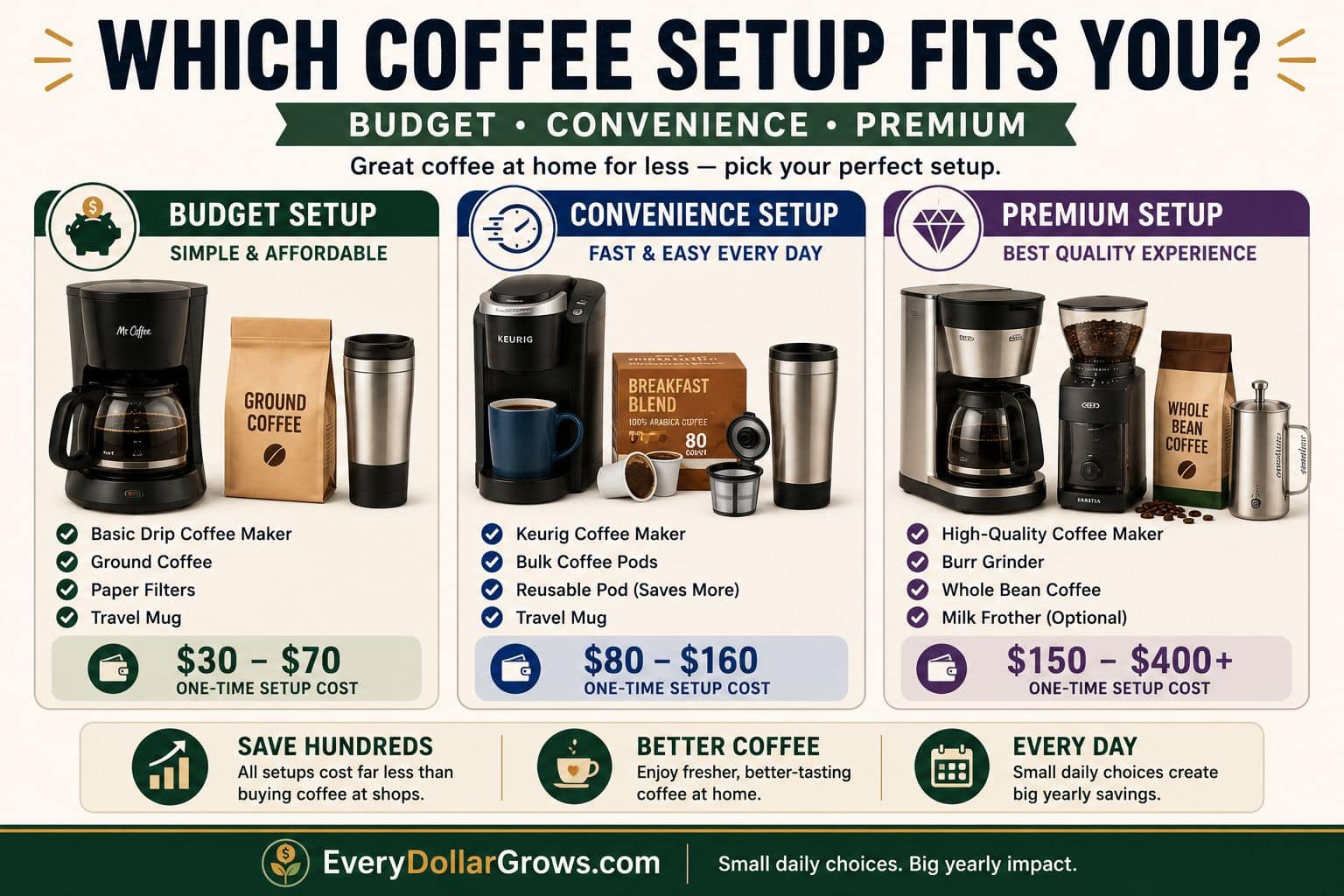
Three common home coffee setups ranging from low-cost brewing to premium coffee experiences.
| Setup | Upfront Cost | Convenience | Best For |
|---|---|---|---|
| Budget Drip Coffee | $30-$70 | Medium | Lowest daily cost |
| Keurig Convenience Setup | $80-$160 | High | Fast home coffee |
| Premium Home Coffee | $150-$400+ | Medium to High | Coffee lovers |
Setup #1: The Budget Coffee Setup
This is the lowest-cost option for most people. A basic drip coffee maker, ground coffee, filters, and a travel mug can replace a daily drive-thru habit quickly.
- Best for: lowest cost
- Estimated setup cost: $30-$70
- Estimated ongoing cost: about $0.20-$0.35 per cup
- Best products to compare: basic coffee maker, ground coffee, filters, travel mug
Setup #2: The Convenience Coffee Setup
This is where Keurig makes sense. It is usually not as cheap as drip coffee, but it is fast, simple, and still far cheaper than most coffee shops.
- Best for: convenience
- Estimated setup cost: $80-$160
- Estimated ongoing cost: about $0.25-$0.75 per cup depending on pod prices
- Best products to compare: Keurig machine, bulk pods, reusable pod, pod organizer
Setup #3: The Premium Home Coffee Setup
If you truly enjoy coffee, you may not want the cheapest possible cup. You may want better coffee at home.
A premium setup can include a grinder, better beans, a stronger brewer, a French press, or a frother. It costs more upfront, but it can still be dramatically cheaper than buying specialty drinks every day.
- Best for: better taste and coffee-shop feel
- Estimated setup cost: $150-$400+
- Estimated ongoing cost: varies by beans and equipment
- Best products to compare: grinder, premium coffee maker, French press, milk frother, whole bean coffee
Coffee Gear That Can Help You Save
If you are trying to spend less on coffee, the right setup can make the habit much easier to stick with. This is where a few carefully chosen products can make sense.
You do not need all of these. The goal is not to buy more stuff just to save money. The goal is to choose the setup that helps you avoid expensive impulse coffee purchases.
Affiliate disclosure: As an Amazon Associate, Every Dollar Grows may earn from qualifying purchases. This does not change your price.
Simple Coffee Maker

A basic drip coffee maker is usually the cheapest long-term way to make everyday coffee at home.
Keurig Coffee Maker

A Keurig-style machine can be a good middle ground if you want convenience without paying coffee shop prices.
Bulk Coffee Pods
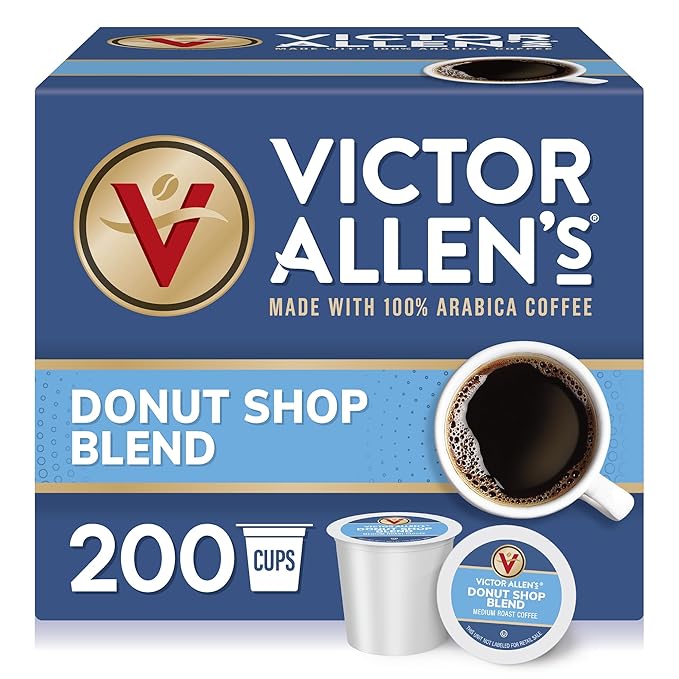
Buying pods in bulk or during sales can lower your cost per cup and make Keurig coffee much more affordable.
Reusable K-Cup Pods

Reusable pods let you use regular ground coffee in a single-serve machine, which can reduce waste and lower the cost per cup.
Ground Coffee

Buying coffee by the bag is usually far cheaper than buying prepared coffee one cup at a time.
Insulated Travel Mug

A good travel mug makes home coffee more practical if you usually buy coffee on the way to work.
Whole Bean Coffee

Fresh whole beans preserve flavor longer than pre-ground coffee and allow you to get the full benefit of a burr grinder.
Grinding beans immediately before brewing can improve aroma, freshness, and overall coffee quality.
Coffee Grinder

If you prefer fresher coffee, a grinder can improve your home coffee without requiring daily coffee shop purchases.
Milk Frother

A frother can help make home coffee feel more like a coffee shop drink, especially if you enjoy lattes or flavored drinks.
French Press

A French press can be a simple, affordable way to make stronger coffee at home without a large machine.
Best Coffee Setup Under $50
If you want the cheapest reasonable starting point, keep it simple.
A budget setup under $50 might include a basic coffee maker, ground coffee, filters, and a low-cost travel mug. This is not the most exciting setup, but it can be the highest-return option if you are replacing daily coffee shop purchases.
- Basic drip coffee maker
- Paper filters
- Medium or dark roast ground coffee
- Reusable travel mug
This setup works best for someone who wants to make coffee quickly, drink it black or with simple add-ins, and avoid spending money on the way to work.
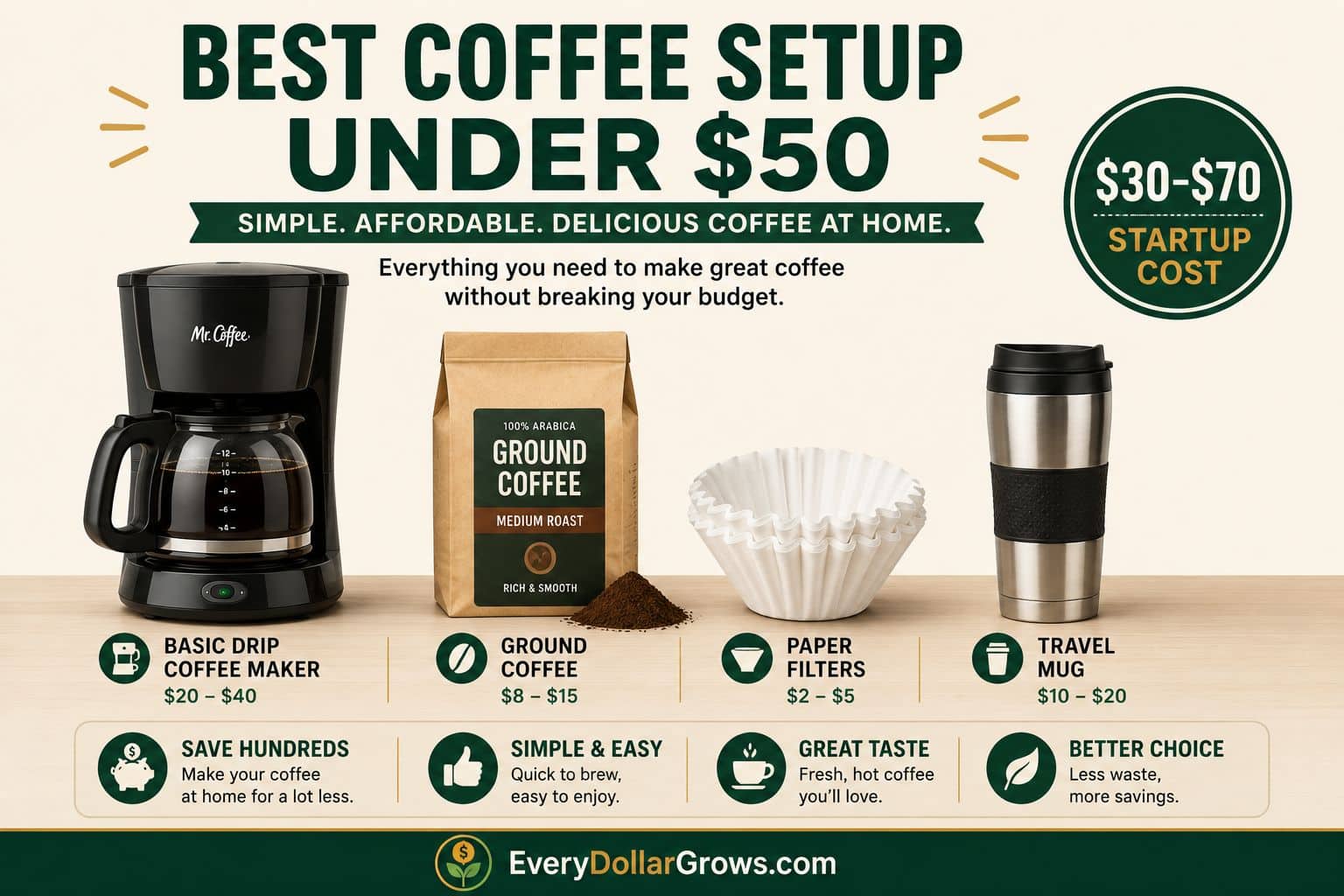
A simple home coffee setup can deliver great coffee for a fraction of the cost of buying coffee away from home.
Best Coffee Setup Under $150
If you want convenience, this is where a Keurig setup can make sense.
A setup under $150 might include a Keurig machine, bulk pods, a reusable pod, and a travel mug. This will usually cost more than drip coffee, but it can still save a lot compared with buying Starbucks, Biggby, Dunkin, or McDonald's every day.
- Keurig-style single-serve coffee maker
- Bulk coffee pods
- Reusable pod for ground coffee
- Travel mug
This setup is ideal for someone who values speed and simplicity. If the alternative is buying coffee every morning because making coffee feels inconvenient, this kind of setup may be worth the upfront cost.
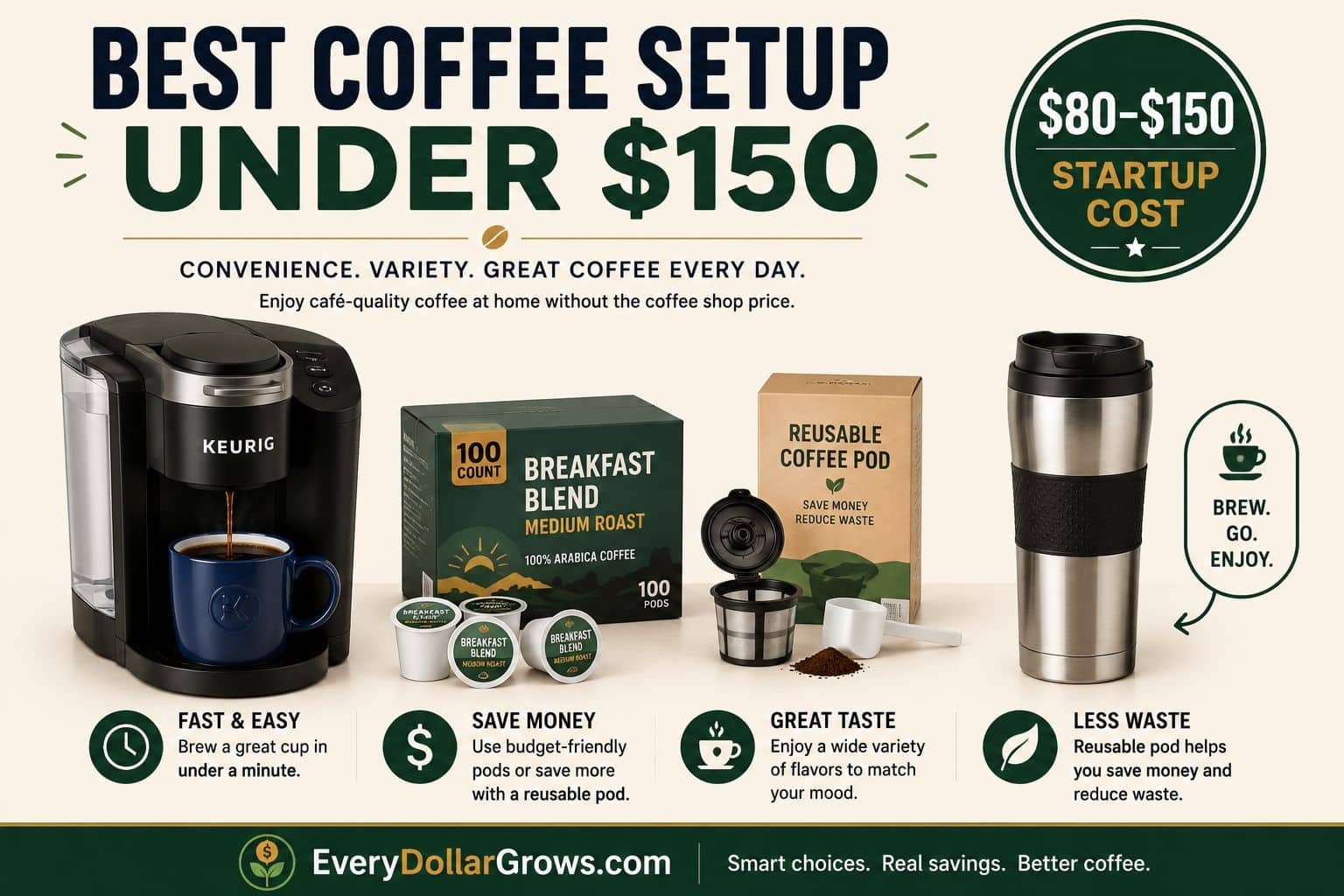
A Keurig setup combines convenience and savings, making it one of the easiest ways to reduce coffee shop spending without giving up daily coffee.
Best Coffee Setup Under $300
If you truly enjoy coffee, a better home setup may help you keep the coffee-shop experience while lowering the long-term cost.
A setup under $300 might include a better brewer, a grinder, whole bean coffee, a frother, and a quality travel mug.
- Better coffee maker or French press
- Burr grinder
- Whole bean medium or dark roast coffee
- Milk frother
- Insulated travel mug
This is not the lowest-cost option, but it may be the best fit for someone who loves coffee and wants quality without relying on coffee shops every day.
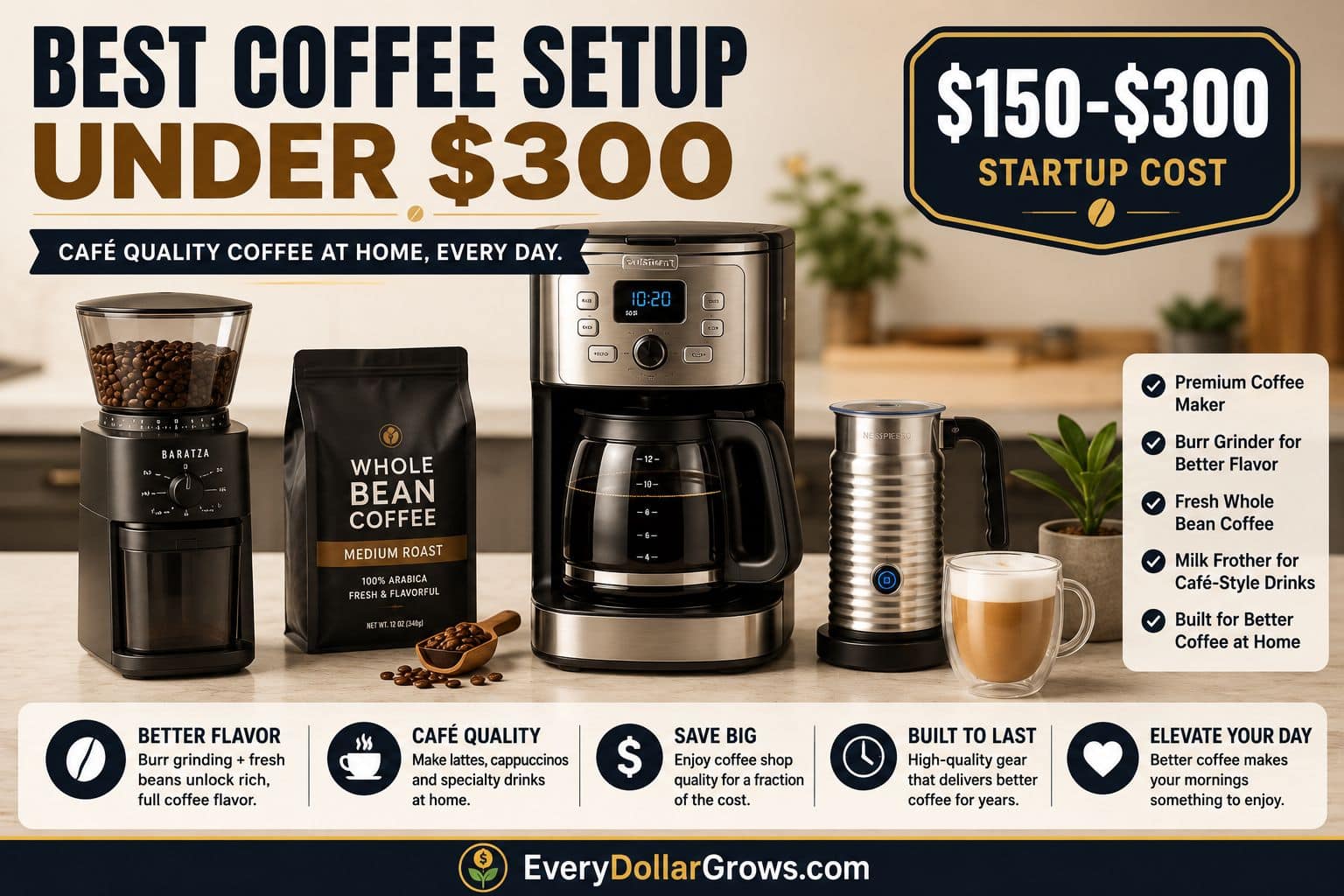
A premium home coffee setup can deliver café-quality coffee while still costing less over time than frequent coffee shop visits.
What Could Coffee Savings Do Instead?
The point of saving money on coffee is not simply to spend less.
The point is to redirect money toward something you value more.
Many households have limited emergency savings, which is one reason recurring expenses deserve attention. According to the Federal Reserve's Survey of Household Economics and Decisionmaking, many Americans continue to face challenges covering unexpected expenses, making even small recurring savings opportunities worth evaluating.
Depending on your current habit, coffee savings could help you:
- Build a starter emergency fund
- Pay down credit card debt
- Start a vacation fund
- Buy Christmas gifts without debt
- Increase retirement contributions
- Cover groceries with less stress
- Create breathing room in your monthly budget
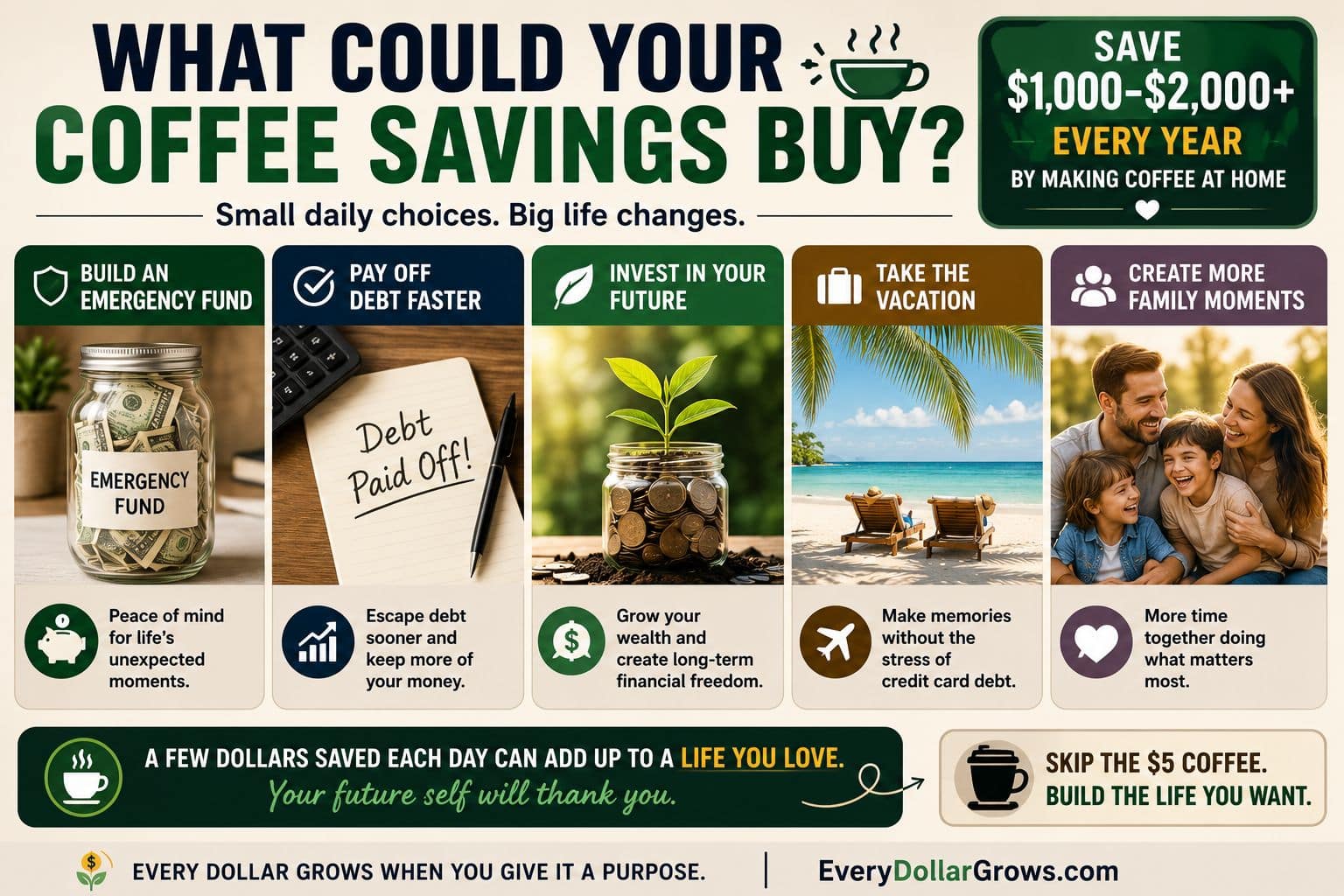
Small daily savings can add up to meaningful financial goals such as building an emergency fund, paying off debt, investing for the future or creating family memories.
For more practical ideas, read How to Save Money Without Feeling Deprived.
If you want a broader savings plan, read How to Save Money Fast.
What If You Invested the Difference?
You do not have to invest your coffee savings. You might use the money for groceries, debt payoff, a family need, or a vacation.
But it can be helpful to see how recurring savings might grow over time.
For example, switching from a $6 daily coffee to a $0.25 home coffee could free up roughly $2,100 per year.
If that money were invested consistently over many years, the potential long-term difference could become much larger than the original coffee savings.
This does not mean investment returns are guaranteed. They are not. It simply shows why small recurring expenses matter when repeated over long periods of time.
Important Note
Investment examples are hypothetical and are not guarantees. Actual returns depend on market performance, fees, taxes, investment choices, timing, and other factors.
If you are new to investing, start here: Smart Investing for Beginners.
You can also read How Much Should You Have Invested by Age? for a broader view of long-term investing goals.
How to Reduce Coffee Spending Without Feeling Deprived
The best plan is not always quitting cold turkey.
If you enjoy coffee shops, cutting them out completely may feel frustrating. A better strategy may be to keep the part you value most and reduce the mindless spending around it.
Try a Coffee Budget Instead of a Coffee Ban
Instead of saying, "I can never buy Starbucks again," try setting a monthly coffee budget.
For example:
- $20 per month for occasional coffee shop treats
- $40 per month for weekend coffee runs
- $60 per month if coffee shops are a planned lifestyle expense
This turns coffee into an intentional choice instead of a daily leak.
Use a Hybrid Coffee Routine
A hybrid routine may work better than an all-or-nothing plan.
- Home coffee Monday through Thursday
- Coffee shop on Friday
- Keurig on workdays
- Starbucks only when meeting a friend
- Dunkin or McDonald's instead of specialty drinks
This lets you reduce the cost without removing the enjoyment entirely.
Make the Cheaper Option Easy
If home coffee is inconvenient, you probably will not stick with it.
Set up your coffee maker the night before. Keep pods stocked. Put your travel mug near your keys. Make the lower-cost option the easiest option.
When Starbucks, Biggby, Dunkin, or McDonald's Might Still Be Worth It
Many personal finance articles make the mistake of assuming the cheapest option is automatically the best option.
Real life is more complicated than that.
If you genuinely enjoy your morning coffee run, it fits comfortably into your budget, and it is not preventing you from reaching your financial goals, it may be worth every penny.
The purpose of this article is not to tell you what to enjoy. The purpose is to help you understand what your choices cost.
A Starbucks habit may still be worth it if:
- You genuinely enjoy the experience.
- You use it as a planned treat rather than an impulse purchase.
- You are still paying bills, saving money, and investing.
- You have little or no consumer debt.
- You simply value coffee more than other discretionary spending categories.
The same applies to Biggby, Dunkin, McDonald's, Tim Hortons, local coffee shops, or any other place you enjoy.
Personal finance is personal.
What matters is that the spending is intentional rather than automatic.
The Goal Is Not Guilt
The goal is clarity.
If your coffee habit is worth the cost after you understand the numbers, enjoy it.
If it is no longer worth the cost, now you know where a meaningful savings opportunity exists.
A Simple Coffee Spending Test
If you are unsure whether your coffee habit is reasonable, try this quick exercise.
- Track your coffee spending for one week.
- Multiply that number by 52.
- Look at the annual total.
- Ask yourself whether the yearly cost still feels worth it.
- If it does, enjoy your coffee.
- If it does not, test a lower-cost alternative for one month.
You do not need to make a permanent decision immediately.
Sometimes the best approach is simply experimenting for a few weeks and seeing whether the lower-cost option actually bothers you.
Many people discover they miss coffee shops less than they expected.
Others discover that the experience is worth paying for.
Either outcome is valuable because it is based on real experience rather than assumptions.
Frequently Asked Questions
Is Starbucks really a waste of money?
Not necessarily. Starbucks is only a problem if the cost prevents you from reaching other financial goals that matter more to you.
If it fits comfortably in your budget and brings you enjoyment, it may be worth the expense.
How much money can you save making coffee at home?
The amount varies depending on your current coffee habit.
Someone replacing a daily $6 specialty coffee with a $0.25 Keurig pod could save roughly $2,100 per year.
Someone switching from a $2 daily coffee might save closer to $600-$700 per year.
Is a Keurig cheaper than Starbucks?
In most cases, yes. Even relatively expensive coffee pods are usually much cheaper than coffee shop drinks.
When pods are purchased in bulk or during sales, the difference can become dramatic.
Is McDonald's coffee cheaper than Dunkin?
Generally, McDonald's coffee is often slightly cheaper than Dunkin coffee, although prices vary by location.
Both are usually significantly cheaper than specialty coffee drinks from Starbucks or Biggby.
What is the cheapest way to make coffee at home?
A basic drip coffee maker combined with ground coffee is usually one of the lowest-cost methods.
The exact cost depends on the coffee you buy, but many people can make coffee for around $0.20-$0.35 per cup.
Are Keurig pods expensive?
They can be. Pods purchased in small quantities at full retail price may cost $0.75-$1.00 or more per cup.
Pods purchased in bulk or during sales can often cost much less.
Should I stop buying coffee to save money?
Not necessarily. The better question is whether the coffee is worth the cost to you.
This article is designed to help you understand the numbers so you can make that decision intentionally.
The Real Question Is Not Coffee
The real question is not whether Starbucks is bad.
The real question is not whether Keurig is better.
The real question is not whether everyone should make coffee at home.
The real question is this:
Is this purchase still worth it after I understand the true cost?
If the answer is yes, enjoy the coffee.
If the answer is no, there are plenty of lower-cost alternatives that can still provide a great cup every morning.
Either way, you are making the decision on purpose.
That is the real win.
Ready to Take Control of Your Spending?
Coffee is only one piece of the bigger financial picture.
If you want to build a stronger budget, save more money, and make intentional spending decisions without feeling deprived, these resources can help:
Enjoy Coffee on Purpose
Coffee is not the enemy.
Understanding your spending is the goal.
Whether you choose Starbucks, Biggby, Dunkin, McDonald's, Keurig, or a simple coffee maker at home, the best choice is the one that fits both your budget and your priorities.
Make the choice intentionally—and enjoy the coffee.